

Why electrical devices get warm at all
Every conductor and every connection has a small amount of resistance, and whenever current flows through resistance, some energy turns into heat. That is physics, not a defect, and it is why a plug powering a space heater, a vacuum cleaner or a window air conditioner can feel faintly warm to the touch. The question is never whether there is any warmth, but how much, where it is, and whether it matches what is plugged in.
A receptacle is built to carry a defined amount of current continuously. When the load stays within that rating and every connection is tight, heat stays modest and spreads harmlessly through the metal and the plastic. Trouble begins when something pushes resistance higher at a single point: a screw that has loosened, a wire pulled back from its terminal, a worn contact that no longer grips the plug tightly, or a load that exceeds the rating of the device.
At that point heat concentrates in a small area, and the temperature climbs quickly because hotter parts conduct worse, which makes more heat in a cycle that feeds itself. Plastic yellows, then browns, then softens. Wire insulation hardens and cracks. Nearby wood framing or insulation can eventually reach ignition temperature. That chain of events is why a warm outlet deserves attention while it is still just warm.
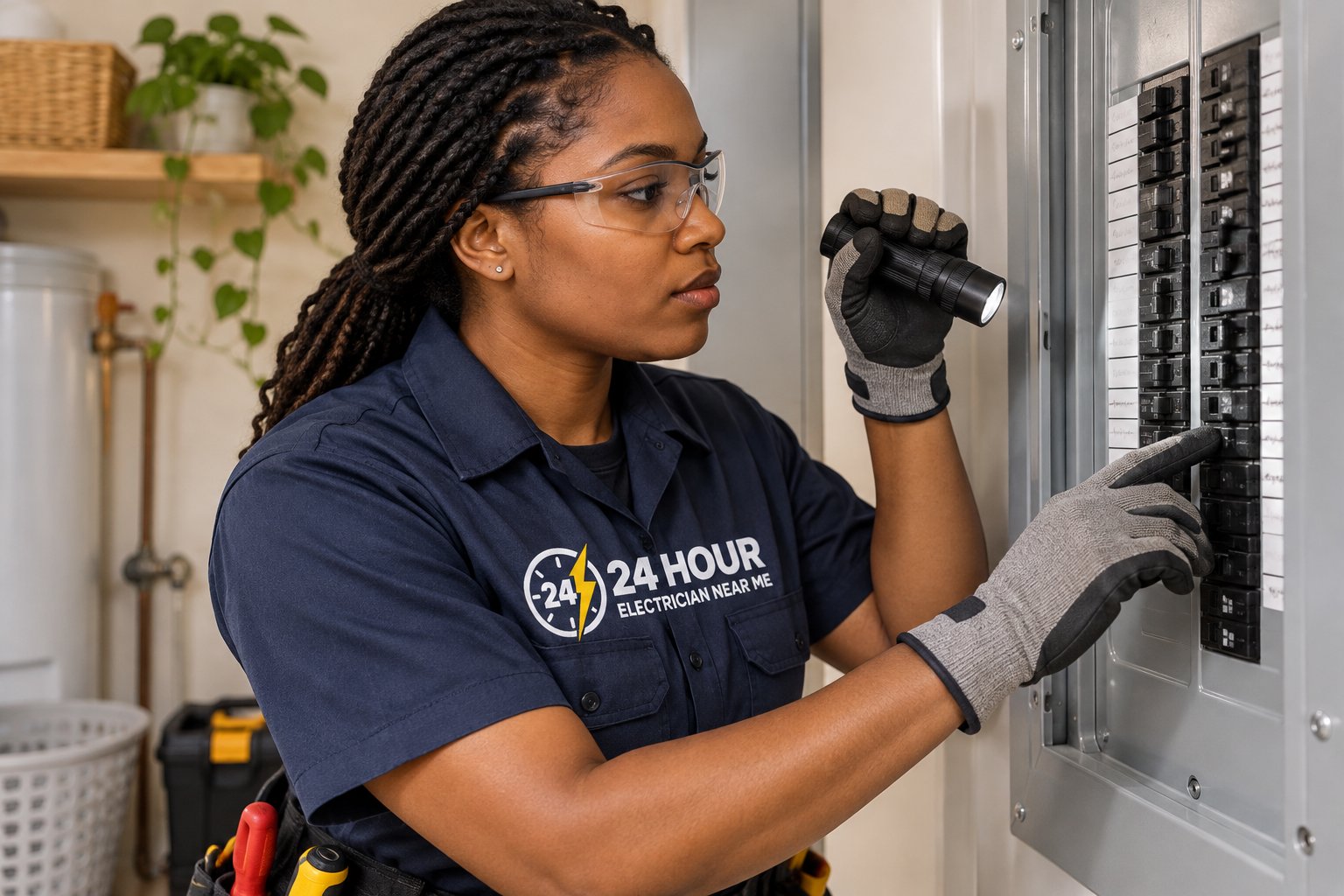
Normal warmth versus overheating
Judging warmth by touch is imprecise, so use a few practical comparisons rather than a single feeling. Ask what is plugged in, how long it has been running, and whether the warmth is limited to the plug and cord or is also in the wall plate and the plastic around the outlet.
A plug that is lukewarm after an hour of running a hair dryer, a toaster oven or a window unit may be within reason. A cover plate that is warm to the touch with nothing plugged in, or with only a lamp or phone charger plugged in, is not. A switch plate that feels warm when a dimmer is controlling a large amount of lighting is a separate matter that depends on the dimmer's rating and the fixtures, and it is covered later on this page.
- Likely ordinary: slight warmth at the plug and cord during a high-draw appliance, which cools quickly when the appliance is unplugged.
- Needs attention: a cover plate or receptacle face that is warm with little or nothing plugged in.
- Needs attention: warmth that is hot enough that you pull your hand away, or that lingers after the load is removed.
- Needs attention: any discoloration, browning, melting, blistering, a burning smell, buzzing or crackling.
- Needs attention: warmth that appears only at one outlet in a room while identical outlets stay cool.
- Needs attention: a plug that feels loose in the receptacle and gets warm, because worn contacts create resistance.
Loose terminations: the most common culprit
The leading cause of a warm receptacle or switch is a loose connection inside the box. Wires attach to screw terminals or push-in terminals on the back of the device. Over time, heating and cooling cycles, vibration from slamming doors and plugging and unplugging, and the natural relaxing of metal can loosen those connections. A wire that no longer presses firmly against the terminal passes current through a smaller contact area, and the resistance, and therefore the heat, rises at exactly that spot.
Push-in terminals, sometimes called back-stabs, are a frequent source in older tract homes and in rental units that have had quick repairs. They rely on a small spring clip, and the clip can lose tension. Aluminum wiring found in some homes from certain building periods behaves differently from copper and needs specific devices and methods, which is explained on the page about aluminum wiring remediation.
Another version of the same problem is a receptacle feeding other receptacles downstream. When the connection on the outgoing terminals is loose, everything beyond that point can fail or flicker, and the loose connection carries the entire downstream load, so it runs hotter than a connection feeding a single device. A technician checks these connections one by one, and the repair is typically a matter of making the termination right, not of replacing the house.
Overloaded receptacles and power strips
A standard residential receptacle is rated for a modest amount of current, and the circuit it sits on has its own limit set by the breaker and the wire. Plugging several heat-producing devices into one outlet through a power strip or multi-plug adapter can exceed what the receptacle itself can carry, even if the breaker never trips, because the breaker protects the wire in the wall, not the cord or the strip.
Space heaters, portable air conditioners, air fryers, microwaves, coffee makers and dehumidifiers all draw a lot of current. Running two of them from the same duplex outlet, or running one of them from a thin extension cord, is a classic cause of a hot plug. Cords labeled for light duty are not designed for continuous high loads, and the heat appears first at the plug blades and the receptacle contacts.
If a heavy appliance needs to run regularly, it likely deserves its own dedicated circuit rather than a shared one. The page about dedicated circuit installation explains when that is appropriate and what is involved. In the meantime, plugging the appliance directly into the wall rather than a strip or a long extension cord reduces the heat and the risk.
Worn receptacles and plugs that no longer grip
Receptacles are mechanical parts. Inside each slot is a pair of metal contacts that spring against the plug blades. Years of plugging, heat and the occasional heavy appliance can weaken that spring tension. A loose-fitting plug makes poor contact, poor contact has higher resistance, and higher resistance produces heat at the plug blades.
You can often tell by feel: a plug that slides out under its own weight, a charger that must be propped up to work, or a plug that is warm and a receptacle face that is browned around the slots. The fix is not to jam the plug harder or to wrap tape around it. The receptacle should be replaced with a properly rated device by a qualified technician, who also checks the wiring behind it, because a worn receptacle is sometimes a symptom of a larger problem rather than the cause.
In kitchens, bathrooms, garages and outdoors, the replacement may need to be a GFCI or weather-resistant device. Those categories are discussed on the outlet and GFCI service page, and the receptacle types page explains what the labels mean.
Warm switches and dimmers
Switches usually stay cool, because a standard on-off switch passes current only through its contacts with very little resistance. A warm switch plate is therefore more meaningful than a warm outlet cover, and it often points to a loose connection at the switch terminals or to a load that exceeds the switch rating.
Dimmers are different. Most dimmers use electronics that shed a small amount of heat by design, and they are built with heat-sinking fins or metal plates that may feel warm. The warmth increases when the dimmer controls a lot of lighting near its maximum rating, and it increases further when several dimmers are ganged in a single box, because they share a limited space. Many ganged dimmers must be derated, meaning each one is rated for less than a single dimmer on its own.
A dimmer that is very hot, buzzes, flickers, or has a melted or discolored face is overloaded or failing. Mixing incompatible LED bulbs with an older dimmer is another source of heat and noise. The page about LED drivers and dimmer compatibility explains how to match them, and a technician can replace the dimmer with one rated for the actual load.
What to do right now if an outlet feels warm
Start with the safest, simplest step: stop using the outlet. Unplug what is plugged into it, handling the plug by the body rather than the cord and avoiding the metal blades. If the plug itself is hot or the outlet shows melting, scorching or smoke, do not touch it; leave it alone and use the breaker panel only if reaching it is safe, dry and does not require walking past the damaged outlet.
If there is any smoke, flame, popping or strong burning smell, move everyone out and call 911 first. Do not use water on an electrical fire. Once the situation is safe, call an electrical technician, and let the fire department tell you when it is safe to return.
- Stop using the outlet and unplug the devices from it, touching only the plug body.
- Move furniture, curtains and anything flammable away from the area.
- If the area is dry and the panel is reachable without passing the damaged outlet, switch off the breaker that feeds it. Do not open the panel cover.
- Do not tape over the outlet or push the plug in harder to stop it wiggling.
- Make a note of what was plugged in, for how long and when you first noticed the warmth.
- Call a qualified electrical technician and describe what you observed, including any smell or discoloration.
What a technician checks and how the repair goes
The technician begins by confirming the circuit is de-energized and then removes the cover and the device to look at the actual connections. They examine the wire insulation near the terminals for heat damage, check whether the screws are tight, test whether the wire has been nicked or stranded, and look at the back of the box for evidence of arcing. They compare the wire size and breaker size to confirm they match.
If the receptacle or switch is damaged, it is replaced with a device of the correct rating and type. If the wire insulation is cooked back, the damaged length is trimmed so a fresh, sound conductor can be attached, which is a more careful repair than simply swapping the device. If the box is cracked or melted, it is replaced too. Where heat damage extends into the circuit, other devices on the same run are checked.
Complicated work needs an on-site visit before any pricing, and pricing is given only by phone after the technician or the dispatcher understands the job. There is a service call charge, which is explained before dispatch. For a related warning sign, read about a burning smell from an outlet and scorch marks on an outlet.
Examples from South Florida homes
Consider a 1970s block home where a window air conditioner was added to a bedroom. The receptacle on the wall had been fine for lamps, but with the unit running all day, the cover plate became warm. Inspection found a push-in terminal that had lost tension and a receptacle with worn contacts. Replacing the device and making the connections properly solved the heat, and the technician suggested a dedicated circuit if the unit was to stay.
Consider a condominium where a resident plugged a portable dehumidifier, a fan and a small heater into one power strip in a humid back room. The strip and the wall outlet both warmed, and the plastic on the strip had begun to soften. The cause was simply too much load on one outlet. Splitting the loads onto separate circuits and adjusting how the room was used removed the problem without any wiring change.
Consider a coastal home where an exterior outlet used for holiday lighting began to feel warm and looked rusty inside. Salt air had corroded the terminals, raising resistance. Replacing the outlet with a weather-resistant device and a proper in-use cover removed the corroded parts. Each case differs, which is why measuring and looking inside the box beats guessing.
Preventing hot outlets and when to call
A few habits reduce the chance of a warm outlet. Plug high-draw appliances directly into the wall, and avoid chaining power strips. Replace plugs and cords that are damaged, and replace receptacles that no longer grip firmly. Pay attention to the same signs in every room, because heat at one outlet is often the first of several. Having an electrician check connections when you buy an older home, or when you add major equipment, finds loose terminals before they become hot ones.
Call as soon as possible if any outlet or switch is warm without a heavy load, hot to the touch, discolored, buzzing or smelling hot. If you see smoke, flame or sparks, call 911 first. For the electrician call, have your address, the room, what was plugged in and a short description of what you noticed. If you can safely take a photograph of the outlet without touching it, that helps too.
The 24-hour name describes the service concept, and availability is confirmed on the call. When you are ready, call, tell the dispatcher what you are seeing and let them help you decide how urgently the outlet needs to be looked at.
Questions people ask
Is it normal for an outlet to feel warm?
Slight warmth at the plug while a high-draw appliance is running can be normal. Warmth at the cover plate with nothing plugged in, heat you pull away from, or warmth plus discoloration, buzzing or a burning smell is not normal. Stop using that outlet and have it checked by a qualified electrical technician.
Can I just replace the outlet myself?
Replacing a receptacle involves live circuits, correct wire handling and matching the device to the circuit. A warm outlet may also point to damaged wire behind the device that is not visible from outside. For safety, have a qualified technician make the repair and check the rest of the circuit while the box is open.
Why does the switch plate feel warm?
A standard switch should stay cool, so warmth often means a loose connection or a load above the switch rating. Dimmers can run slightly warm by design, but a very hot, buzzing or discolored dimmer is overloaded or failing. In either case, stop using it and have it examined.
Is a power strip safe for a space heater?
Space heaters and other high-draw appliances should be plugged directly into a wall outlet, not a power strip or a thin extension cord. Strips and cords are not rated for the same continuous load, and the heat shows up at the plug and the receptacle contacts first. A dedicated circuit is better for regular use.
Should I switch off the breaker for a warm outlet?
If the area is dry and you can reach the panel without passing the damaged outlet, switching off the breaker that feeds it is a reasonable step. Do not open the panel cover. If you see smoke, flame or melting, leave and call 911 first, then call an electrician once the situation is safe.
Will the fix mean opening up walls?
Usually not. Most warm-outlet repairs happen inside the electrical box: retightening or remaking connections and replacing a worn device. If heat damage extends along the wire, a section may need to be trimmed or replaced, and the technician explains that in plain terms before work begins.
For "A Warm Outlet or Switch Plate", a phone call comes first. Describe the circuit, the breaker or the equipment, and we will talk through the safe next steps and whether the job needs an on-site look.
Related pages
- Burning Smell: Smell burning near an outlet or panel? Immediate safety steps for the first minutes, what the smell usually means and what a technician checks.
- Scorched Outlet: Brown or black marks around an outlet or on a plug mean heat has already done damage. Learn what causes them, what is safe to do and what a technician checks.
- Outlet & GFCI: A safety-first South Florida guide for dead, loose, warm, damaged and GFCI-protected outlets in homes and commercial properties.
- Dedicated Circuit Installation: South Florida dedicated-circuit planning for residential and commercial appliances, equipment, renovations and electrification.
- LED Dimmer Match: Why LED drivers and dimmers must be matched, and how a mismatched pair causes flicker, buzzing, ghost glow and early failure in Florida homes.
- Flickering Lights: Why house lights flicker: separating bulb, switch, circuit and utility service causes, and which flicker patterns call for an electrician right away.