
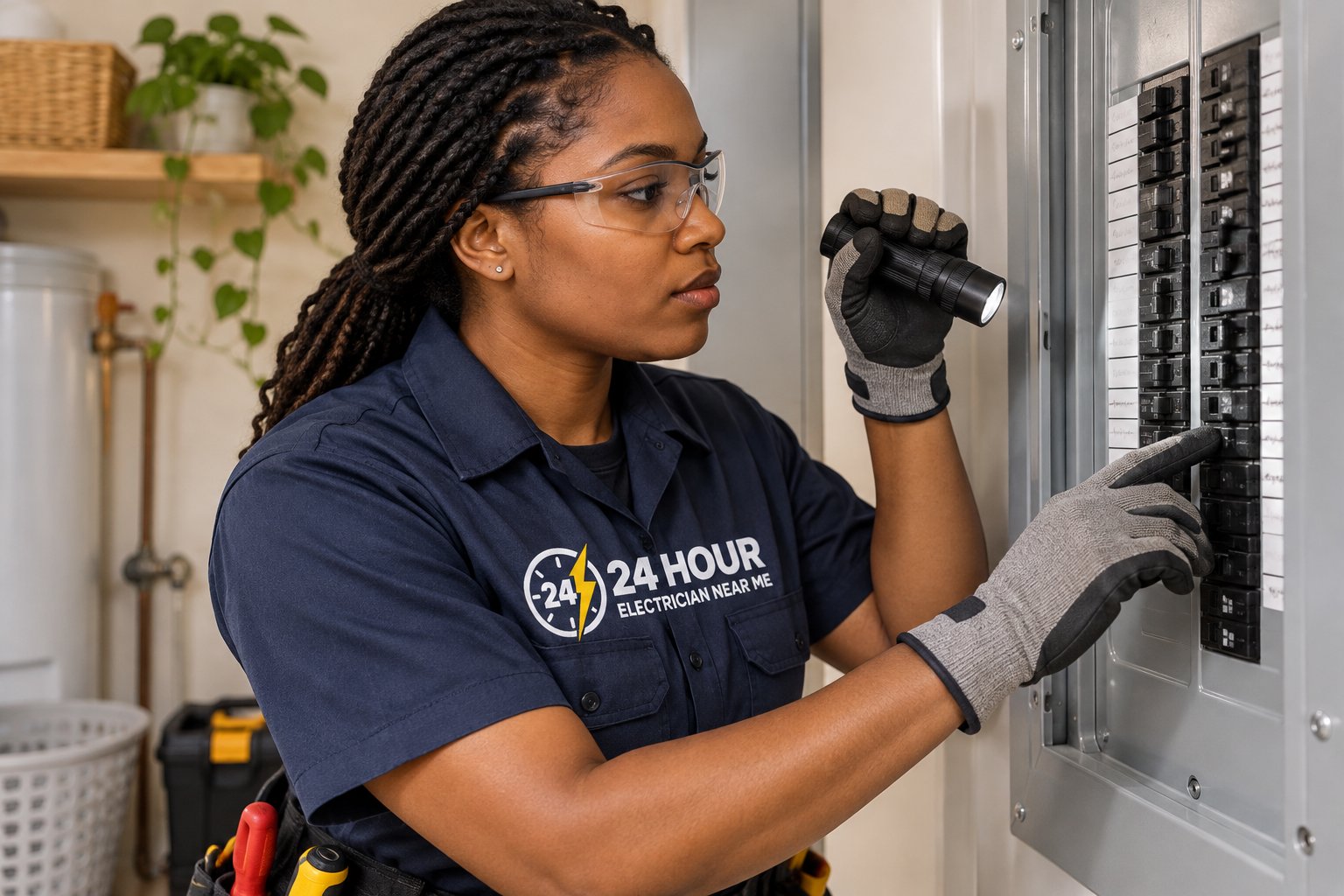
What a Federal Pacific panel is
Federal Pacific Electric was a manufacturer of electrical distribution equipment, and its residential panels were widely installed in homes built from the middle of the twentieth century into the early 1980s. The most common product line used a breaker design called Stab-Lok, named for the way each breaker stabs onto the bus bar inside the panel. Many homeowners know them simply as a Federal Pacific panel or an FPE panel.
Because these panels were common during a long building boom, they appear in many older single-family homes, townhouses and condominium units across the country. South Florida's building history, with large waves of construction in earlier decades, means a good number of older properties may still have one, though many have been replaced during renovations, sales or insurance-driven upgrades.
A panel is the point where the power from the utility is divided into circuits, each protected by a breaker. The breaker is the safety device that is supposed to cut power when the current becomes dangerous. When people say they have concerns about a particular panel brand, the concern is almost always about whether the breakers can be relied on to do that job.

Why owners hear concerns about these panels
Over the years, investigators, inspectors, engineers and consumer groups have raised concerns that some Stab-Lok breakers may not trip as intended when overloaded or in a short circuit. A breaker that fails to trip leaves the wiring exposed to excessive current, which can cause overheating. Inspectors have also reported issues with how some breakers make contact with the bus, which can lead to heating at the connection.
There is a history of testing and public discussion about these panels, and different parties have drawn different conclusions. Some testing found a higher rate of failure to trip than for other brands, and other analysis did not. We are not going to quote statistics on this page, because the details depend on which study and which breakers are meant. What is widely true is that many inspectors, insurers and electricians treat these panels with caution and recommend that owners have them evaluated.
The practical point for an owner is simple. A panel is a safety device, and the question is whether you can rely on it. When there is reasonable doubt about the breakers, many professionals recommend a replacement rather than waiting for a failure that may not announce itself.
How to recognize a Federal Pacific panel
You can often identify the brand from the outside without opening anything. Look for the manufacturer's name on the panel door or on a label on the cover. Common markings include Federal Pacific Electric, FPE, and the name Stab-Lok. The panel directory, which is the list of circuits, may be inside the door.
Do not remove the cover to look. The cover of a panel is held on by screws and exposes live parts inside. Taking it off is work for a qualified person. If the label is not visible from the outside, a technician can identify the brand safely during a visit.
If your home was built in the decades when these panels were common, and your panel is a gray metal box with a row of breakers and a main breaker at the top, it may be worth asking someone to read the label. The same question applies in a condominium unit, where the unit's panel may be inside a closet or hallway utility space. Do not assume a panel is a different brand because it looks similar to others.
- Look for the name Federal Pacific, FPE or Stab-Lok on the panel door or label
- Check the panel directory for dates that suggest the age of the installation
- Take a photo of the closed panel and the label, without opening the cover
- Ask a technician to confirm the brand during a safe visit
- Note whether any breakers show signs of heat, discoloration or odor
Signs of trouble owners can notice without opening anything
Some issues show up as symptoms in the home. Breakers that trip often, breakers that will not reset, lights that dim or flicker, a buzzing sound or a warm feel at the panel door, a faint burning smell near the panel, and discoloration on the panel cover are all reasons to have a technician look. These symptoms do not prove the panel is a particular brand, and they can occur in any panel, but they matter more in an older one.
A more worrying situation is a breaker that does not trip when something clearly overloads a circuit. That is hard for an owner to observe safely, and the sign may be a wire or device that gets hot, a plug that melts, or a cord that is too warm to touch. If you notice heat in a cord, an outlet or a switch plate, unplug what you can safely unplug and call for help.
Our pages on a buzzing sound from the panel, a breaker that will not reset and a warm outlet or switch plate explain what each symptom means and when to call. If you see smoke or flames, leave and call 911.
What an inspection of an older panel involves
A qualified technician can inspect a panel safely, using proper protective equipment and procedures. The inspection typically includes identifying the brand and model, checking the main breaker rating, looking at the condition of the bus bars, the breakers and the wiring connections, checking for signs of heat damage, corrosion or moisture, and comparing the number of circuits to the panel's capacity.
In humid South Florida, panels are also checked for rust and moisture intrusion, especially in garages and exterior locations. Salt air accelerates corrosion on terminals and bus parts. Water getting into a panel through the service mast, the meter or a wall penetration is a hazard on its own. Our page on water in the electrical panel explains why that should never be ignored.
A technician can recommend whether the panel should be kept under observation, repaired, or replaced. We do not promise a particular outcome in advance, because it depends on what is found. The visit may also include a review of whether the home has proper grounding and whether the circuits are appropriate for the loads.
Insurance, buyers and home inspectors
Even if a panel appears to work, it can create practical issues. Some insurers ask about the brand of the panel and may require an electrician's evaluation, or may decline to cover a home with certain older equipment until it is replaced. This varies by company and changes over time, so the best approach is to ask your insurer directly what they require and to keep the documents.
Home inspectors typically note the brand of the panel in their reports, and buyers may ask for a replacement or a credit as part of a purchase negotiation. Sellers who replace a panel before listing may find the process smoother. Our page on buying a home and the electrical inspection and our page on insurance inspection electrical findings explain how these discussions usually go.
A related issue is the age of the entire electrical system. A panel from that era often comes with wiring, devices and grounding methods from the same era. A replacement of the panel is a chance to review the rest of the system, such as whether circuits are grounded, whether aluminum branch wiring is present, and whether ground-fault and arc-fault protection are in place where they are expected.
Replacement options and what they involve
Replacing a panel means installing a new panel and breakers, reconnecting each circuit, updating the grounding and bonding as required, labeling every circuit, and having the work inspected. The size of the new panel and the main breaker is chosen based on a load calculation, and some owners take the opportunity to increase capacity for air conditioning, an EV charger or other additions.
Replacement is a permitted job that requires coordination with the utility, because power must be disconnected at the meter during the change and reconnected afterward. The details vary by municipality, and a qualified contractor should explain the process and handle the permit. Our pages on electrical panel repair and main service upgrade cover how this work is typically done.
Replacement is not the only possible step. Sometimes the right first move is an evaluation and a plan. A technician may find that the panel is in better or worse condition than expected, and may suggest a timeline. That said, we do not recommend leaving a panel with known concerns for years without a plan, particularly if you notice warning signs.
| Step | What happens | What the owner should expect |
|---|---|---|
| Identify | Technician reads the label and model | A clear statement of the panel brand and age |
| Inspect | Connections, bus, breakers and moisture are checked | Photos or notes of any findings |
| Plan | Options discussed, including load calculation | A written scope when work is proposed |
| Permit | Contractor files for the electrical permit | Municipal inspection scheduled |
| Replace | New panel and breakers installed and labeled | Planned power shutoff window |
| Close out | Inspection approval and documents provided | Keep records for insurance and sale |
Can individual breakers just be swapped out
Owners sometimes ask whether they can simply replace the breakers in an older panel with new ones. In general, a breaker is designed and listed for use only with specific panels, and mixing brands is not allowed. Replacement breakers for older, discontinued panels may not be available as listed new products, and unlisted substitutes create their own hazards.
Using the wrong breaker can cause poor contact with the bus, which creates heat, and it may not trip properly. This is a known problem in all panel brands, not just this one, and it is why using the exact breaker the panel is listed for matters. A technician can tell you what is appropriate for your equipment.
If a breaker needs replacement in a panel with concerns, that is often the moment when replacing the whole panel makes more sense than continuing to put money into equipment that may not be reliable. The decision belongs to the owner, informed by an inspection.
Condominiums, townhouses and shared buildings
In a condominium, the panel inside your unit is usually the owner's responsibility, while the building's main distribution equipment belongs to the association. Replacing a unit panel may require association approval, a permitted contractor, coordination with building management for a power shutoff, and in high-rise buildings, sometimes elevator or freight use scheduling for materials. Our guide to condo association electrical approvals describes the typical process.
Older condominium buildings in South Florida may have many units with the same original equipment, and some associations have run replacement programs. If a neighbor has had a panel replaced, ask them what their experience was with approvals, since each association's rules are different.
Always check your governing documents and contact management before scheduling work. Our page on condo electrical responsibility explains how the responsibility is usually divided between owner and association.
What you can safely do while you decide
If you have identified a Federal Pacific panel, there are sensible things you can do without opening anything. Keep the area around the panel clear, so a technician and an emergency responder can reach it. Do not overload circuits with power strips and heavy appliances on a single outlet. Keep flammable items away from the panel. Avoid repeatedly resetting a breaker that keeps tripping.
Make sure smoke alarms and carbon monoxide alarms work. They provide a layer of warning that does not depend on the panel. Our page on smoke and carbon monoxide alarm types explains the options.
Consider adding surge protection, which is a separate matter but part of a thoughtful plan. See whole-home versus point-of-use surge protection. Surge protection does not make an older panel safe, but it does protect electronics. Above all, do not remove the cover or try to test breakers yourself.
Reading information with care
You will find strong opinions online about these panels, some saying they should be replaced immediately and others saying the concern is overblown. Neither extreme helps an owner. The responsible position is that there is documented concern, that professionals often recommend replacement, and that your own panel's condition, age and symptoms matter.
Do not rely on a forum post or a video to decide. An inspection of your specific panel by a qualified person provides far better information than generalities. If you have an inspection report that flags the panel, ask the inspector or an electrician to explain what they saw and why they recommend what they do.
Our own role on this page is to explain, not to scare. We do not claim that every panel of this brand will fail, and we do not make guarantees about any replacement. What we can say is that an old panel is worth looking at, and that a calm evaluation is better than waiting for an emergency.
How to move forward
If you suspect you have this kind of panel, call and tell us what the label says, the age of the home, any symptoms such as tripping or warmth, and whether you have an inspection report or an insurance requirement. A photo of the outside of the closed panel helps. We will explain the process, including permits and the shutoff.
Quotes are given only by phone. A panel evaluation or replacement is not a job to price blindly, so an on-site visit is part of the process, and there is a service call charge, explained on the phone before any technician is dispatched. We do not publish prices on this website.
When you are ready, call. We will help you understand what you have and what your options are, in plain terms and without pressure.
Questions people ask
How do I know if I have a Federal Pacific panel?
Look at the label on the panel door or cover for Federal Pacific Electric, FPE or Stab-Lok, without opening it. A photo of the closed panel can help a technician confirm. Do not remove the cover yourself, since the inside has live parts. A qualified person can identify the brand and model safely during a visit.
Is a Federal Pacific panel an emergency?
Not by itself. But concerns about whether the breakers trip reliably mean many professionals recommend evaluation and often replacement. If you notice warning signs such as heat, burning smell, buzzing, discoloration or breakers that will not reset, treat that as more urgent and call for help. For smoke or flames, call 911.
Can I just replace the breakers instead of the whole panel?
Usually that is not a good path. Breakers must be listed for the specific panel, and substitutes can make poor contact or fail to trip. Replacement parts for older discontinued panels may be hard to source. A technician can look at your equipment and explain whether any part replacement is appropriate or whether the whole panel should be replaced.
Will my insurance company care about the panel brand?
Some insurers ask about older panel brands and may request an electrician's evaluation or replacement, depending on the company and the policy. Rules differ and change over time, so ask your insurer directly what they require. Keep any inspection reports and permit records from work done, since they help document the condition of the system.
Does replacing a panel require a permit?
Yes, panel replacement is permitted work in Florida municipalities, with an inspection and coordination with the electric utility for the power disconnect. Requirements vary by city and county, and condominiums may require association approval. A qualified contractor should explain the process for your address and handle the permit.
How do I get a quote for panel evaluation or replacement?
Quotes are given only by phone. Because panel work depends on the condition of the equipment and the home, an on-site visit is part of the process, and there is a service call charge that is explained on the phone before dispatch. We do not publish prices on this website.
If "Federal Pacific Panels: What Owners Should Know" sounds like your problem, call and describe what you see, hear or smell at the panel, the outlet or the fixture. We explain what the work involves, and some jobs need a visit before a quote.
Related pages
- Panel Repair: Guide to electrical panel repair, replacement and capacity upgrades in South Florida: what an evaluation covers, permits and what to prepare before a visit.
- Older Panel Brands: How to identify Zinsco, Sylvania and other legacy electrical panels by their labels and what each type of known concern means for owners.
- Service Upgrade: When a home outgrows its electrical capacity: replacing the service entrance, meter base and main disconnect, how the utility fits in, and what to expect.
- Buying a Home: What home buyers should ask about panels, wiring age and past permits, and how an electrical review fits into a South Florida home purchase.
- Panel Buzzing: Is your electrical panel humming or buzzing? Learn the difference between a normal hum and a warning sign, and what a technician listens for.
- GFCI Breaker vs Outlet: Compare GFCI breakers and GFCI outlets: where each protects best, how they are tested and reset, and the trade-offs for kitchens, baths, garages and pools.