
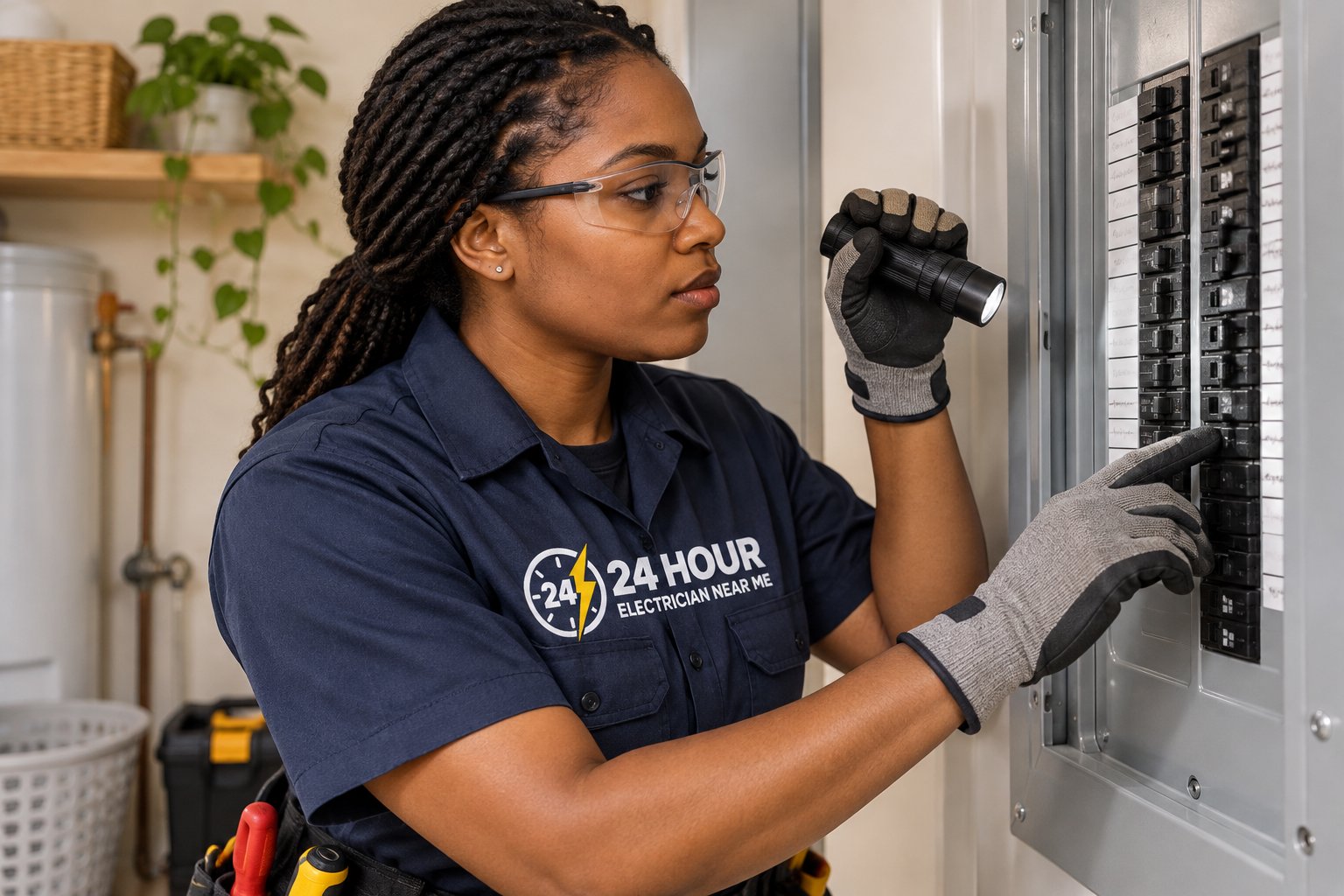
Panels, switchboards and switchgear: what is the difference
In casual speech, anything gray with breakers is a panel, but larger commercial buildings use several kinds of distribution equipment. A panelboard is the familiar cabinet with breakers that feed individual circuits. A switchboard is larger and sits near the service, distributing power to several panelboards and large loads. Switchgear is the heaviest category, built with draw-out breakers in compartments and designed for high capacity and for maintenance without taking everything offline.
These pieces form a chain. Utility power arrives at the service equipment, passes through a main device and a metering arrangement, and is divided by a switchboard into feeders. Each feeder reaches a panelboard or a piece of heavy equipment such as a chiller or an elevator controller. Smaller panels then divide it again for lighting, outlets and small equipment.
Knowing where a problem sits in the chain tells you how big its effect is. A tripped branch breaker affects one circuit. A tripped feeder breaker affects a panel or a floor. A tripped main affects the whole property. Faults higher in the chain are more serious, and the repair requires more planning.

Common problems in larger electrical rooms
The problems found in commercial distribution equipment are often slow-developing. Connections loosen from heating and cooling cycles, and a loose connection creates heat that loosens it further. Dust and humidity gather on insulation, corrosion attacks lugs and bus bars, and breakers that are rarely exercised can stick. By the time the equipment fails, there have usually been months of warning signs.
Typical symptoms include a breaker that trips without an obvious reason, a breaker that will not stay on, a panel cover that feels warm, a buzzing or humming sound, a faint smell of overheated insulation, discoloration around lugs and bus bars and lights that dim when large equipment starts. Voltage that is low, high or unbalanced across phases is another clue, and the page on three-phase power troubleshooting explains what that looks like in practice.
Water is a particular enemy. A roof leak, a pipe above the electrical room or flooding at ground level can reach live equipment. If water is present, keep people away, do not touch the equipment and do not reset breakers. The problem page on water in electrical panel explains why.
Breakers: nuisance trips, failures and replacements
Breakers protect wiring and equipment from overload and short circuits. Their job is to trip when current is too high, and a breaker that trips is often doing exactly its job. The question is why. A breaker that trips because of a real overload needs the load addressed. One that trips because it is worn, damaged or has a weak connection needs replacement or repair.
Commercial breakers come in many types and ratings, and they are not interchangeable. A replacement must match the panel's manufacturer, frame, rating and interrupting capacity, and must be listed for use in that equipment. Installing the wrong breaker can create a hazard that does not show up until a fault occurs. Older equipment sometimes uses breakers that are no longer made, in which case the options are retrofit parts or replacement of the section.
A repeated trip is also a sign to check the connected load. Equipment that has been added over the years, such as extra air conditioning, new kitchen equipment or more computers, can push a circuit past its limit. The page on circuit breaker repair explains what a technician tests before deciding whether the breaker or the circuit is the problem.
Bus bars, lugs, connections and heat
Inside distribution equipment, power travels along bus bars, which are solid metal strips, and connects to breakers and cables at lugs. These are the points where heat builds if a connection is loose, corroded or poorly made. A hot connection may discolor, pit or melt, and it can damage the bus, the breaker and the insulation around it.
Technicians look for signs of heat during inspection, including discoloration, melted insulation, burn marks and a smell of overheated material. Thermal imaging, which shows temperature differences without contact, is a common tool for finding hot connections in energized equipment, and tightening and cleaning are standard corrective steps. Work inside energized equipment is hazardous, and in most cases the equipment is de-energized and tested before anything is touched.
If a bus bar is damaged, the repair may involve replacing a section, a breaker position or a whole unit. That is a job that needs planning, parts and sometimes a manufacturer's information. Never attempt to tighten, clean or open equipment yourself, and never ignore a hot or buzzing panel. If you smell burning or see smoke, leave the area and call 911.
Planning outages and shutdowns safely
Most repairs to main distribution equipment need part or all of the building to lose power. That cannot happen casually. Businesses have refrigeration, servers, security systems, elevators, medical equipment and fire alarm panels, and an unplanned shutdown can cause real damage. A good plan identifies what is affected, who needs to be told, what can be moved to backup power and when the least harm will occur.
In many buildings, work is scheduled at night or on a weekend. Tenants receive written notice, critical loads are identified, and a generator may be connected to keep essential systems running. The technician confirms that the equipment is de-energized and locks it out so that no one can switch it back on during the work. Lockout and tagging are standard practice, not optional.
The utility may also be involved when work reaches the service equipment, since its disconnect and reconnect are done by the utility. Coordination with the utility can take time, and you should allow for it. The page on commercial generator hookup describes how temporary or permanent backup power can be integrated.
Capacity, load growth and aging equipment
A building's electrical room was designed for a particular load at a particular time. Over the years, tenants change, equipment is added and air conditioning grows. Capacity that was ample decades ago may now be strained, and a panel that is full of breakers has no room to add a circuit without work.
Capacity issues show up as warm equipment, nuisance trips on heavily loaded feeders, low voltage under load and no spare breaker spaces. A technician will compare the connected load to the equipment ratings, measure actual draw during peak periods and judge whether adding capacity, rebalancing load or replacing equipment makes sense.
Aging equipment adds to the picture. Breakers wear, insulation dries out and manufacturers stop making parts. Replacement planning is better done on your schedule than on the day a failure forces it. The pages on main service upgrade, subpanel installation and smart panels and load management describe the usual options.
Inspection, maintenance and record keeping
Preventive maintenance of distribution equipment is far less disruptive than emergency repair. A routine visit may include visual inspection, cleaning, checking and tightening connections, exercising breakers, checking labels and measuring loads. It can also include thermal imaging during peak operating hours, when problems show most clearly.
Record keeping pays off. A one-line diagram that shows how power flows from the service to each panel, accurate panel schedules that show what each breaker feeds and a log of past repairs allow a technician to find a problem quickly. In many older buildings these documents are missing or wrong, and the first task on a call is to create them.
The page on panel labeling and circuit mapping describes the labeling side. The page on preventive electrical maintenance programs explains how to set up a recurring routine so problems are found by inspection and not by outages.
Storms, flooding and salt air in the electrical room
South Florida conditions are tough on distribution equipment. Humidity condenses on cold surfaces, salt air corrodes enclosures and lugs, and flooding can reach ground-level rooms. Electrical rooms in basements, parking structures and low-lying coastal areas deserve particular attention, along with rooms that share walls with plumbing or mechanical spaces.
After a storm or flood, treat any equipment that has been wet as unsafe. Do not switch it on, do not reset breakers and keep people away until it has been inspected and tested. Wet insulation and corroded connections can fail later, even after the equipment seems to dry out. The pages on flood zone electrical planning and salt air corrosion explain how location affects risk.
Good housekeeping helps. Keep electrical rooms clear of storage, keep doors closed and the room ventilated, keep the space around equipment open and keep water sources away. A room used as storage hides problems and blocks the safe working space that a technician needs.
Permits, inspections and who may do the work
Replacing a main breaker, a switchboard section, a panelboard or a feeder is work that generally needs a permit and an inspection. Larger projects also need drawings and sometimes a coordination or short-circuit study to confirm that equipment ratings suit the available fault current. The building department sets what is required, and the permit process protects you as the owner.
Work on distribution equipment should be done by qualified people who understand the hazards, use proper protective equipment and follow lockout procedures. Ask any contractor about their process for de-energizing, testing and restoring equipment, and expect a clear answer. The guide on what to ask before hiring an electrician lists useful questions.
Keep the permit documents, the inspection sign-off and any updated drawings with your building records. They are valuable when you sell, refinance or file an insurance claim. When you are ready to discuss a panel or switchgear problem, call, describe the equipment and the symptoms and the next steps will be explained plainly.
Working clearances, access and labeling
Distribution equipment needs space around it, both for safety and for service. Rules call for clear working room in front of panels and switchboards, headroom, a clear path to an exit and doors that open the right way. When shelves, pallets, water heaters or stored supplies crowd the room, a technician has no safe place to stand and the repair slows down or cannot proceed.
Labels are the other half of access. Each panel, disconnect and feeder should say what it serves and where it is fed from. In an emergency, a clearly labeled main disconnect lets someone shut off power in seconds, while an unlabeled room costs minutes that may matter. Warning labels about available fault current and arc hazards are also part of the equipment and should be left in place.
A quick walk through the electrical room each month, looking for clutter, leaks, open knockouts, missing covers and anything that looks different from last time, is a simple habit that finds trouble early. Missing blanks in a panel leave live parts reachable, and a technician should fit proper covers instead of tape or cardboard.
What to have ready and how pricing works
Before calling, gather the building address, the location of the electrical room, whatever you know about the equipment manufacturer and age, and a description of what you have seen: trips, heat, sounds, smells or outages. Note what is affected and what changed beforehand, such as new equipment, a storm or maintenance. Photographs of nameplates and labels taken from a safe distance help identify the equipment.
Have a contact who can arrange access to the electrical room, tell tenants about any shutdown and speak with the utility if needed. If there is a one-line diagram or panel schedule, have it ready. If an inspector or insurer has identified a deficiency, have that report on hand.
Quotes are given only by phone. Simple repairs may be quoted from a description, and complicated work on larger equipment needs an on-site visit so the quote reflects what is actually installed. A service call charge applies to visits and is explained on the phone before anyone is dispatched. Call and describe what is happening.
Questions people ask
What is the difference between a panelboard and switchgear?
A panelboard is the cabinet of breakers that feeds individual circuits. A switchboard is larger and divides power to several panelboards and big loads. Switchgear is the heaviest category, built with draw-out breakers in separate compartments and designed for high capacity and maintenance without losing everything. Which one you have affects how repairs are planned.
Why does a commercial breaker keep tripping?
It may be doing its job because the load is too high, the breaker may be worn or damaged, a connection may be loose and heating the breaker, or a fault in the circuit may exist. Resetting it repeatedly is not a fix and can be hazardous. A technician will measure the load and inspect the connections before deciding.
Is it safe to keep using a panel that feels warm or hums?
A warm cover, a hum or a smell of hot insulation is a warning that a connection or component may be overheating. Reduce the load if you can safely do so, keep people away from the equipment and call promptly. If you see smoke, smell burning strongly or notice flames, leave the area and call 911 first.
Will repairs mean shutting off power to the whole building?
Possibly, depending on where the work is. Repairs on a branch panel may affect only a part of the building, while work on a main or switchboard affects everything fed from it. Careful planning limits the impact, schedules work at a sensible time, notifies tenants and arranges backup power for critical systems where possible.
Can I replace a breaker with any breaker that fits?
No. A breaker must match the panel's manufacturer, frame, rating and interrupting capacity and be listed for that equipment. A wrong breaker may seem to work until a fault occurs, when it may fail to protect. A technician will identify the correct part, and if it is no longer made, will discuss retrofit or replacement options.
How do I get a price for switchgear or panel work?
Quotes are given only by phone. A straightforward repair may be priced from a description, while work on larger distribution equipment needs an on-site visit so the quote reflects what is actually installed. The service call charge is explained on the phone before anyone is dispatched. Call and describe the equipment and symptoms.
If "Service for Commercial Panels and Switchgear" sounds like your problem, call and describe what you see, hear or smell at the panel, the outlet or the fixture. We explain what the work involves, and some jobs need a visit before a quote.
Related pages
- Circuit Breaker Troubleshooting: A safety-first South Florida guide to recurring breaker trips, circuit problems, breaker evaluation and documented electrical repair.
- Service Upgrade: When a home outgrows its electrical capacity: replacing the service entrance, meter base and main disconnect, how the utility fits in, and what to expect.
- Three-Phase Power: Troubleshooting three-phase power in South Florida commercial and light industrial buildings: lost phases, imbalance, motor symptoms and safe next steps.
- Preventive Maintenance: What a preventive electrical maintenance program covers for commercial properties: inspections, thermal checks, records and how managers plan visits.
- Commercial Electrical Troubleshooting: Operations-first commercial electrical troubleshooting guidance for managed properties in Broward County and the cities from Boca Raton to North Miami.
- Server Room Power: How small business server rooms and data closets get dedicated circuits, surge protection and cooling support, and what an electrician checks first.