
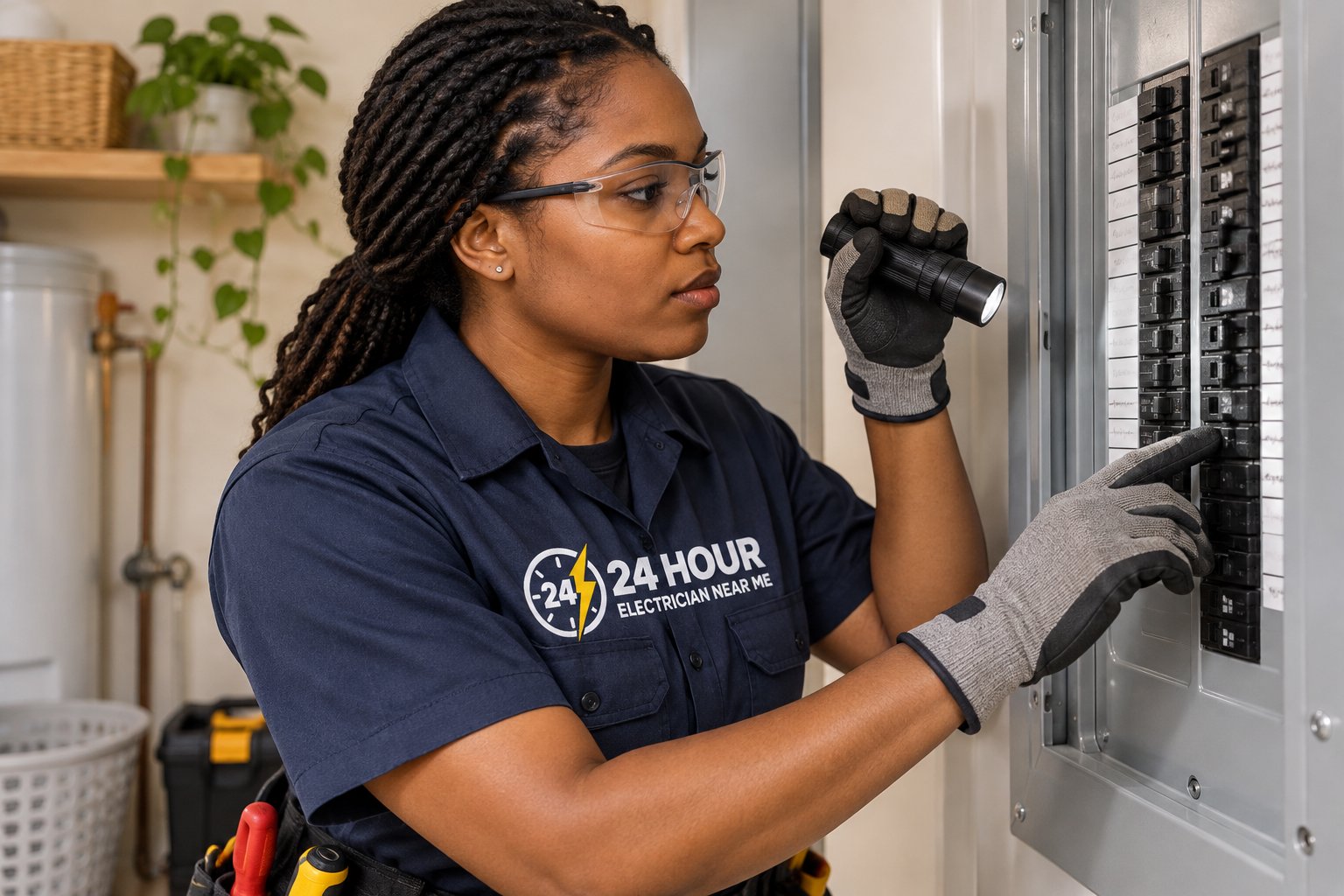
Why a panel directory matters more than people think
The paper card inside your panel door is easy to ignore until the day you need it. A breaker trips at night, a burning smell comes from a wall, a toaster oven sparks, and you stand in front of a panel with twenty switches and labels that say things like "misc", "front" and "?". In a calm moment this is an annoyance. In a stressful one, it can cost time you do not want to lose.
A correct directory does several jobs. It lets you shut off one circuit to handle a problem without darkening the whole house. It lets a technician start work faster, because the first questions are already answered. It helps contractors who come later for a renovation, an appliance installation or an inspection. And it protects you from a quiet hazard: assuming a circuit is off because the label said so, when the label was wrong.
That last point is the reason electricians test before touching anything and never trust a label alone. Mapping does not replace testing. It makes the whole house easier to understand, and it replaces guesses with a record.

How labels go wrong in the first place
Panel labels degrade for ordinary reasons. The original builder wrote a quick list before the drywall was finished, and rooms were renamed, walls were moved or additions were wired in afterward. A previous owner added a circuit and never updated the card. A renovator moved an outlet and spliced it to a different breaker. A well-meaning homeowner used a pencil that faded in the humidity.
South Florida homes have their own versions of this story. Homes built in different decades have different panel styles and different wiring habits, and many have had several rounds of work. A house that started life with a small panel may have gained a subpanel in the garage, a separate breaker for a pool pump, a circuit for a lanai ceiling fan and a dedicated line for a window or mini-split air conditioner, each added by a different person with a different labeling style.
Common patterns show up again and again:
- Labels by room, when a room is fed from two or three different breakers.
- Labels by old room names, such as "den" or "sewing room", that mean nothing to the current household.
- Several breakers labeled the same word, so the label is useless for choosing between them.
- Breakers with no label at all because the circuit was added later.
- Labels that describe what was true once, before a remodel moved things around.
- Two outlets in one room on separate breakers, so half the wall is live when the label says it is off.
What circuit mapping actually involves
Mapping is a methodical process. A technician works through each breaker, turns it off, and then walks the house with a tester to see what lost power. Receptacles, switches, light fixtures, fans, smoke alarms, appliances, garage and exterior outlets, and any equipment on a dedicated circuit are all checked. Each result is noted, and the notes become the new directory.
Good mapping is more than a list of rooms. It records what is on each circuit in words you can use: for example, which outlets on a living room wall, which ceiling lights, and which wall switch controls them. It also notes oddities, such as an outlet that is fed from a different panel, a light that shares a circuit with a bathroom, or a circuit that feeds something in an unexpected place. These oddities are worth knowing about, because they affect how you can safely work on the home.
Where wiring is hidden behind finished walls, tracing tools can help identify conductors without opening anything. They help, but they do not replace the on/off test. The technician is looking for confirmation from more than one method, in particular for circuits that look suspicious.
What mapping can reveal along the way
Mapping often surfaces issues that nobody was looking for. That is part of the value. When every circuit is traced, a few things stand out that would otherwise stay hidden.
One is overloaded circuits. If one breaker feeds an entire side of the house, including the kitchen counter, the dining room and the garage, it is no mystery why it trips when the microwave and the coffee maker run together. Another is shared neutrals or tied-together circuits that cause confusing behavior, such as two breakers where one trip kills both. A third is an outlet that is live from a different source than its neighbors. A fourth is a breaker that feeds nothing, which is harmless but worth recording.
The technician may also find unsafe conditions, such as double-tapped breakers where two conductors are under one terminal not rated for it, burned or loose connections, or aluminum branch wiring in an older home. You can read more about that last case in aluminum wiring remediation. If something is hazardous, the technician will say so plainly and explain the options. Mapping is a good moment for a conversation about repairs, but you are not obliged to schedule anything immediately.
Labeling that actually helps in an emergency
A well-labeled panel reads clearly to someone who has never seen your house. Imagine a guest, a neighbor or a babysitter needing to shut something off. The label should make sense to them.
Good labels share a few traits. They are specific: "Kitchen counter outlets, left of the stove" beats "kitchen". They are consistent: the same wording style across the whole panel. They are readable: printed or written in permanent ink on a durable card, not penciled onto paper that curls in humidity. And they include the important single-purpose circuits, like the water heater, the dryer, the range, the air handler, the outdoor condenser, the pool equipment, the garage door opener and any generator inlet.
- Mark the main breaker clearly so anyone can find the master shutoff.
- Label every circuit with the room and the function, not only the room.
- Mark critical circuits, such as the refrigerator, the sump or well pump if you have one, and medical equipment, so they are easy to restore after an outage.
- Mark any breakers that feed a subpanel, and label the subpanel's own directory.
- Add a note about the panel's location and how to reach it, in particular in condos or garages where the panel may be in a closet.
- Date the directory so the next person knows how current it is.
Subpanels, outbuildings and the circuits people forget
Many South Florida properties have more than one panel. Garages, pool equipment areas, detached guest suites, boat docks and large lanais often have their own subpanels. Mapping the main panel without tracing the subpanels leaves a gap, because the breaker labeled "garage" may feed twenty other circuits.
Good mapping traces each subpanel and records which breaker in the main panel feeds it. It also makes sure each subpanel has its own clear directory. If you are planning a project that touches this, the page on subpanel installation explains how those panels fit into the system, and ADU and guest suite electrical describes how separate living spaces are usually fed.
Other circuits that tend to be forgotten include exterior lighting on timers or photocells, landscape lighting transformers, irrigation controllers, gate openers, doorbell transformers, attic fans, and the ones that hide behind appliances. A thorough mapping visit asks you about these, because they are easy to miss during the walk-through.
Mapping before a renovation, a sale or an inspection
There are moments when mapping pays for itself in saved headaches. Before a kitchen or bathroom remodel, knowing exactly what circuits serve the area lets the contractor plan around them and avoid cutting power to the refrigerator for a week. Before listing a home, a clean, accurate panel directory makes a good impression on inspectors and buyers, and removes questions that could slow a sale.
Before an insurance or buyer's inspection, a mapped panel shows that the home has been looked after. The pages on electrical inspections when buying a home and insurance inspection electrical findings describe what inspectors typically notice. An illegible panel is not a failure by itself, but it can lead to more questions and more time.
Mapping is also a smart step after buying a house. You are inheriting decades of someone else's choices. Knowing which breaker feeds what, before the first emergency, is a quiet kind of peace of mind. If you are renovating, the page on remodeling electrical planning goes further into coordinating the work.
Can you map the panel yourself?
Homeowners often ask whether this is a do-it-yourself job. The honest answer is that part of it can be, and part of it should not be.
Flipping breakers off and on, one at a time, and noting which lights and outlets go dark is something many homeowners do. If you do it, do it carefully. Go slowly, do not remove the panel cover, and do not touch anything inside the panel. Keep the panel door as your only point of contact: the labeled switches. Have a helper who can call out what stopped working, or use a lamp or a small radio as a check. Be aware that computers, medical devices and refrigerators will lose power during the process, so plan around them.
What should be left to a qualified electrician is anything involving the inside of the panel: removing the dead-front cover, tracing conductors, checking for double taps or burned connections, and testing receptacles for correct wiring. A DIY map made only by flipping breakers can also miss shared circuits and hidden junctions. A homeowner's list is a good starting point for the conversation, but it is not a substitute for a trained check.
How a mapping visit goes
When you call, describe the house, the approximate age, and why you want the panel mapped. Mention any particular worries, such as a breaker that trips often or an outlet that never seems to work. The technician can tell you how the visit works and what, if anything, can be quoted over the phone. Quotes are given only by phone, and jobs with unusual complexity may need an on-site visit first. There is a service call charge, and it is explained on the phone before dispatch.
On arrival, the technician will usually look at the panel and its condition, ask about known problem areas, and then begin working through circuits. You may be asked to stay out of certain rooms or to move items away from outlets. Expect some short power interruptions in specific areas. If you have equipment that must stay on, tell them at the start so they can plan the order of the work.
At the end, you should receive a clear directory that matches the house, along with a plain explanation of anything unusual found. If the panel itself is crowded, outdated or worn, you may hear about options. The page on electrical panel repair and the page on circuit breaker repair explain what those might involve.
What to have ready before you call
A few things make the visit faster and the map more useful.
Clear access to the panel is the first. In many homes the panel is behind stored boxes, a coat rack or a shelf. Clear a path and leave room to stand in front of it. If your panel is outdoors or in a locked space, arrange access for the day. If you have subpanels in a garage or a pool equipment room, make sure those are reachable as well.
- A list of rooms and the equipment in each, including anything unusual such as a workshop, a spare freezer or a home office.
- Notes on any outlets or lights that have never worked, or work only sometimes.
- Any past electrical work you know about, including remodels, additions and appliance installations.
- A list of devices that cannot lose power for long, such as medical equipment or a home server.
- Pets secured, because technicians will be moving between rooms and opening doors.
Keeping the directory accurate afterward
A panel directory is only as good as its last update. Make it a habit that any electrical work in the house ends with an updated label. If a new circuit is added for an appliance, an EV charger or a generator inlet, the person doing the work should add it to the card, and you should check that they did.
Take a photo of the finished directory and keep it with your home records. If the original is damaged or the panel is replaced, you have a copy to start from. Put a copy in a note on your phone too, so you can read it even when the power is out and the panel room is dark.
Once the panel is mapped, you are better prepared for hurricane season, for outages and for any renovation plans. If you have questions about the process or want to schedule a visit, call and a technician will walk you through the next step.
Questions people ask
Is circuit mapping the same as an electrical inspection?
No. Mapping identifies which breaker feeds which outlet, light and appliance and records it in a clear directory. An inspection looks at the condition and safety of the system as a whole. They overlap, because mapping often reveals problems, but each has its own purpose. If you want both, say so when you call and the technician can explain how the visit would work.
Can I trust the labels my home inspector or previous owner left?
Treat them as hints, not facts. Labels are often written quickly, change with remodels and may never have been correct. Even with a good label, a technician tests that a circuit is actually off before working on it. A verified map gives you something far more dependable for emergencies and for future work.
Will mapping the panel shut off power to my whole home?
Usually not for the whole home. The technician switches individual breakers off and on, so only the area on that circuit loses power for a short time. Devices that must stay running, such as medical equipment or computers, should be mentioned in advance so the order of work can be planned and sensitive items protected.
What if a breaker feeds nothing at all?
That does happen, often after a remodel removed a fixture or an appliance. A breaker that feeds nothing is generally harmless, but a technician will confirm that the wiring is not simply disconnected somewhere it should not be. It will be recorded on the directory so nobody wastes time later wondering what it controls.
How should the panel be labeled in a condo?
The same principles apply: specific, consistent, readable. In a condo, the unit panel is often in a closet or hallway, and the association may have rules about what is yours to work on and what is common property. Your electrician can label what belongs to the unit and note anything that appears to be common-element wiring.
How do I get a quote for panel mapping?
Quotes are given by phone only. Describe the house size, the number of panels and any problem areas, and the technician can tell you whether a phone quote is possible or an on-site visit is needed first. There is a service call charge for dispatch, which is explained on the phone before anyone is sent.
If "Mapping and Labeling Your Breaker Panel" sounds like your problem, call and describe what you see, hear or smell at the panel, the outlet or the fixture. We explain what the work involves, and some jobs need a visit before a quote.
Related pages
- Panel Repair: Guide to electrical panel repair, replacement and capacity upgrades in South Florida: what an evaluation covers, permits and what to prepare before a visit.
- Circuit Breaker Troubleshooting: A safety-first South Florida guide to recurring breaker trips, circuit problems, breaker evaluation and documented electrical repair.
- Subpanel Installation: Adding a second electrical panel for a garage, addition or pool equipment without replacing the main panel: sizing, feeder wiring, grounding and permits.
- Emergency or Not: A triage list for electrical symptoms: which need immediate action and a call right now, and which can safely be scheduled for a later visit.
- Pool and Spa Wiring: Electrical work for Florida pools and spas: bonding, GFCI protection, pump and heater circuits, underwater light safety and what to check before swimming.
- Generator Inlet: How an exterior generator inlet and panel interlock let you power chosen circuits safely during an outage without backfeeding the utility grid.