

Why pool wiring is held to a higher standard
Ordinary household electrical protection assumes that people are mostly dry and standing on insulating floors. A pool breaks both assumptions. Swimmers are wet, barefoot and in contact with water that conducts electricity far better than the human body does, and the ground around the pool is often wet concrete or pavers connected to the earth. A small leak of current that would be harmless in a dry room can be dangerous or fatal here.
Because of this, pool and spa wiring follows stricter rules than most other residential work. Equipment must be of the right type, wiring must be installed in approved ways, metal parts must be bonded together, and protective devices must be in place. These rules were written after real injuries, and the goal is simple: keep stray electricity out of the water and out of the people in it.
South Florida has one of the highest concentrations of residential pools in the country, and many are older than the rules now in place. A pool built decades ago may have equipment that was acceptable then and would not be installed today. Owners buying a home with an older pool, or opening one that has been idle for years, benefit from an electrical check before anyone swims. If you are unsure, treat the pool as unsafe until it has been looked at.
Bonding: tying metal parts together
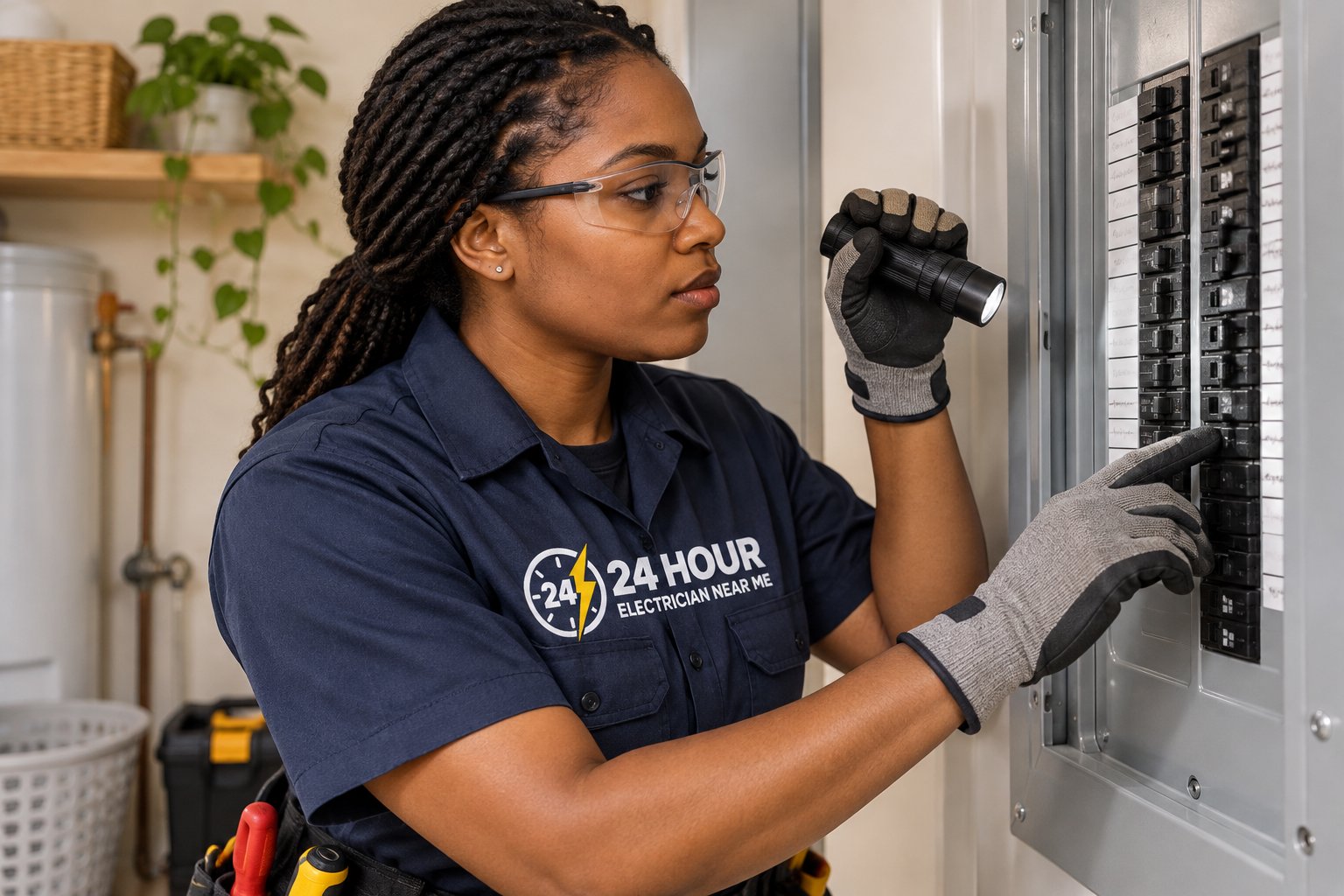
Bonding is the least visible and most important part of pool electrical safety. It connects the metal parts around the pool, such as the pump motor, ladders, handrails, light niches, metal fittings, reinforcing steel in the deck and the pool shell, so that they all sit at the same electrical potential. If a fault energizes one part, bonding reduces the chance that a voltage difference develops between parts a swimmer could touch at the same time.
Bonding is different from grounding, although they work together. Grounding provides a path for fault current back to the panel so that breakers trip. Bonding keeps conductive parts equal in potential. A pool needs both. The bonding conductor is usually a bare copper wire connected to the listed parts, and it is installed during construction, because much of it is buried in the deck and shell.
On an older pool, bonding may be incomplete, corroded or broken, and owners cannot see it. A technician can test continuity between bonded parts and the bonding grid, and can add connections at accessible equipment. Our page on grounding and bonding explained covers the difference in plain terms. If a tingle is felt when touching a ladder or rail, stay out of the water and call for an inspection immediately.
- Pump and heater motors bonded to the pool bonding grid
- Metal ladders, handrails and fittings connected where required
- Light niches and metal conduit connected to the bonding system
- Bonding connections protected from corrosion by proper materials
- Any tingling sensation treated as an emergency, not an annoyance
Ground-fault protection around water
Ground-fault circuit protection is the most important protective device at a pool. It senses current leaking out of the circuit, for example through water or a person, and cuts power within a fraction of a second. Pool equipment circuits, receptacles near the pool and, in many cases, the pool light circuit are required to have it. Without it, a damaged cable or leaking light could remain energized while someone swims.
Protection can be provided by a ground-fault breaker in the panel or by a ground-fault receptacle at the point of use. In pool equipment areas, owners often see a ground-fault outlet near the pump. Test buttons on these devices are not decorative. They should be pressed periodically, according to the manufacturer's instructions, to confirm that the device still trips. A device that no longer trips gives a false sense of safety.
If a ground-fault device trips repeatedly, resist the urge to keep resetting it until it holds. Repeated tripping means current is leaking somewhere, and the pool is where you least want that to continue. Our page on pool equipment tripping a breaker describes the common causes and what a technician checks. Our guide on GFCI and AFCI protection explains the two types of protection.
Pump circuits and equipment pad wiring
The pump is typically the biggest electrical load at the pool. Many residential pumps run at 240 volts on a dedicated circuit, and newer variable-speed pumps include electronics that change how the pump draws power. The circuit needs the right wire size, breaker, disconnecting means and protection, and all of it needs to be installed so that water, sun and insects do not damage it.
The equipment pad is also where heaters, salt systems, automation controllers and lighting transformers connect. Each piece has its own power requirements and rules for distance, enclosure and disconnect. A tidy equipment pad is more than appearance. Wires run in proper conduit, enclosures are weatherproof, and every device has a labeled way to shut it off, which matters when something goes wrong.
Salt air and chemicals attack the pad equipment. Chlorine and salt systems release corrosive vapor, and Florida humidity and rain make it worse. Corroded lugs, rusting enclosures and brittle conduit fittings are common findings on older pads. A technician replaces corroded parts, tightens connections and checks that the grounding and bonding connections on each piece are clean. Do not open equipment enclosures yourself, because pool equipment is often powered at 240 volts.
| Equipment | What the electrical side usually involves |
|---|---|
| Pump | Dedicated circuit, disconnect, protection, bonding connection |
| Heater or heat pump | Larger circuit sized to the unit, weatherproof wiring, bonding |
| Salt chlorine system | Power from the pump circuit or its own, corrosion-resistant connections |
| Automation controller | Low-voltage control wiring plus a protected power feed |
| Light transformer | Protected supply and a secure, dry enclosure |
Underwater lights
Underwater lights are among the highest-risk electrical items in a pool, and the rules reflect it. Older pools often have 120-volt lights sitting in a niche in the wall. If the seal fails, water can enter the fixture, and a ground fault can place current into the pool. Many modern installations use low-voltage lights fed by a transformer, which reduces the hazard, and LED fixtures have made replacement easier.
Never replace a pool light by treating it as a household lamp. The fixture, the cord, the junction box and the bonding connection all have to be correct. The cord on a wet-niche light is sized to allow the fixture to be pulled out onto the deck for service, and the junction box that feeds it must be located and installed according to rules about distance from the pool and height above the water.
If a light has flickered, tripped protection, filled with water or developed a crack, shut off the circuit and keep swimmers out of the pool until it is repaired. Do not enter the water to inspect an energized fixture. A technician will test the circuit, check the transformer and ground-fault protection, and replace the damaged parts. Some pools have lighting that was never connected to modern protection, and bringing it up to date is worth doing.
- Switch off the light circuit if the fixture flickers or shows water inside
- Keep swimmers out until the light is repaired and tested
- Do not pull energized fixtures out of the niche
- Ask about converting an older line-voltage light to a low-voltage LED system
Receptacles, lighting and wiring near the pool
The area around a pool has its own wiring rules. Outdoor outlets near the pool must be set at a safe distance, protected by ground-fault devices and covered when not in use. Lights, fans and speakers near the water must be installed at rated heights and distances, and overhead wiring cannot pass above the pool or its deck at certain heights.
Extension cords are a frequent hazard. Running a cord from a house outlet to a pool-side radio, vacuum, or pump is common and risky. Cords wear in the sun, get wet, and can end up in the pool. If you routinely need power at the pool, the better approach is to install a properly protected, weatherproof outlet in an approved location. See our page on outdoor outlet installation for what that involves.
Screen enclosures, known locally as pool cages, add another consideration. Metal frames can become energized if a nearby light or wire contacts them, so cage frames are bonded in many installations. Fans and lights mounted on the cage have to be rated for the location. If you are adding lights or ceiling fans on a pool cage, have the wiring and bonding reviewed before the circuit is used.
Spas, hot tubs and swim spas
Spas add complexity because they combine heat, jets, pumps, lighting and often electronic controls in a compact package. Many portable hot tubs are cord-and-plug, but a large spa usually needs a dedicated 240-volt circuit with a disconnect within sight of the unit and ground-fault protection sized to the equipment. The manufacturer's installation instructions specify the circuit, and the electrician follows those along with the local rules.
Placement matters. A spa on a concrete pad near the house must keep the right distances from overhead wires and from receptacles. Decks and gazebos over the spa raise their own questions. The wiring path from the panel to the spa should be planned before the spa is delivered, so the pad, conduit and disconnect are ready on installation day.
Spas that are part of a pool, sharing equipment with it, need coordination between the two systems. Valves, heaters and pumps may serve both, and each circuit must be protected and bonded. A technician looks at the whole system, not just the spa, to avoid creating a safe-looking spa on an unsafe pool pad. Do not use a spa if its protective devices trip repeatedly, or if you feel any tingle.
Signs your pool wiring needs attention
Some warning signs are subtle. A breaker that trips whenever the pump starts, a light that flickers or dims, a pump that hums without starting, corroded connections at the pad, or a ground-fault device that no longer trips when tested all point to trouble. So does any tingle from metal parts or from the water.
Older pools often show a pattern. Corroded bonding connections, a missing disconnect, an outdoor outlet without protection, a light fixture with brittle cord, and wiring run in damaged conduit are typical findings. None of these can be judged from a distance, and none should be ignored just because the pool seems to work.
If you feel a tingle in the water, get everyone out calmly and keep them away from metal parts. Do not touch anyone who is in contact with an energized object, and call 911 if anyone is hurt or unresponsive. Then switch off the pool breakers if you can do so without stepping into water, and call an electrician. Do not use the pool until a qualified technician has inspected and corrected the fault.
- Tingling in the water or from ladders and rails
- A breaker or ground-fault device that trips repeatedly
- Underwater light that flickers, floods or looks cracked
- Corrosion and rust at the equipment pad
- Extension cords used to power pool equipment
Storms, power loss and restarting pool equipment
Hurricane season affects pools in ways that go beyond debris. Heavy rain, storm surge and flooding can soak equipment pads, and a pad that sat in water should not be re-energized until it has been inspected. Water inside a motor, a controller or a junction box can cause a fault the moment power returns, and that fault may be in contact with the pool water.
Outages bring their own risks. When power returns after an outage, surges can damage controllers and variable-speed pumps. Whole-home surge protection at the panel and, where appropriate, point-of-use protection at the pad reduce that risk. Our page on surge protection explains the options. If you use a generator, never connect it to the pool circuits by improvised means; use properly installed equipment.
After a storm, look at the pad before switching anything on. Check for standing water, displaced covers, torn conduit, corrosion and any equipment that appears to have been submerged. Leave it off if you see any of these, and keep the pool closed until it has been examined. Our guide on flooded home electrical safety explains why water-damaged equipment should be treated as unsafe until tested.
Permits, inspections and getting help
New pool wiring, replacement of pumps, heaters and lights, and changes to circuits are generally permitted work in South Florida, and the building department often inspects bonding before the deck is poured and the equipment at the end. Your technician should explain what is required in your city. Pool contractors often handle the pool permit while the electrician handles the electrical permit, so confirm who is doing what.
If you are buying a home with a pool, include the electrical equipment in your inspection. A pool inspector looks at the pool structure and equipment, but a qualified electrical technician looks at the circuits, bonding, light and protection in a way that a general inspection may not. See our guide to electrical inspections when buying a home for what to ask.
When you call, describe the pool and what you have noticed: tripping, tingling, a failing light, or an equipment upgrade you are planning. Quotes are given only by phone, and pool and spa work usually starts with an on-site visit so the technician can see the pad, the panel and the route between them. There is a service call charge for that visit, explained on the phone before dispatch. Call to describe your pool and arrange a visit.
Questions people ask
Is it safe to swim if a pool breaker keeps tripping?
No. A repeatedly tripping breaker or ground-fault device means current is leaking somewhere, and the pool is the worst place for that to continue. Keep everyone out of the water, leave the equipment off, and have a technician find and fix the cause before the pool is used again.
What is the difference between bonding and grounding?
Grounding gives fault current a path back to the panel so a breaker trips. Bonding connects all metal parts around the pool so they stay at the same electrical potential. A pool needs both. Bonding is mostly buried during construction, so a technician tests it rather than guessing from the surface.
Can I replace my own pool light?
It is not a household lamp swap. The fixture, cord, junction box, bonding and protection all have rules, and a mistake can put current into the water. Switch off the circuit, keep swimmers out, and have a qualified electrician handle the replacement and test the protection afterward.
Why does my pump trip the breaker when it starts?
Possible causes include a failing motor, a ground fault from moisture in the motor or wiring, a loose or corroded connection, or an undersized circuit. Because the equipment sits outdoors in humid air, moisture is common. A technician measures the circuit and the motor to find the cause instead of resetting repeatedly.
Does a hot tub need its own circuit?
Large spas generally need a dedicated circuit with a nearby disconnect and ground-fault protection, as specified by the manufacturer and local rules. Smaller plug-in units have their own requirements. Plan the circuit before the spa arrives so the pad and conduit are ready.
How do I get a quote for pool electrical work?
Quotes are given only by phone, after the technician understands the equipment and the problem. Pool work often needs an on-site visit to see the pad, panel and routing. There is a service call charge for that visit, and it is explained on the phone before dispatch, so you know it in advance.
If "Electrical Work for Pools and Spas" sounds like your problem, call and describe what you see, hear or smell at the panel, the outlet or the fixture. We explain what the work involves, and some jobs need a visit before a quote.
Related pages
- Pool Breaker Trips: When a pool pump, light or heater trips the breaker, the cause may be a motor, light or bonding fault. Learn the safety margins around water and what to check.
- Outdoor Outlets: Adding outdoor outlets safely: weatherproof in-use covers, GFCI protection, and mounting on stucco and block exteriors in South Florida.
- Grounding and Bonding: What grounding electrodes, bonding jumpers and equipment grounds each do, why many older Florida homes lack them, and how a technician checks yours.
- Outlet & GFCI: A safety-first South Florida guide for dead, loose, warm, damaged and GFCI-protected outlets in homes and commercial properties.
- GFCI Breaker vs Outlet: Compare GFCI breakers and GFCI outlets: where each protects best, how they are tested and reset, and the trade-offs for kitchens, baths, garages and pools.
- Power Loss Troubleshooting: Private South Florida guide for routing complete outages, partial power loss, flickers and property-side electrical problems.