
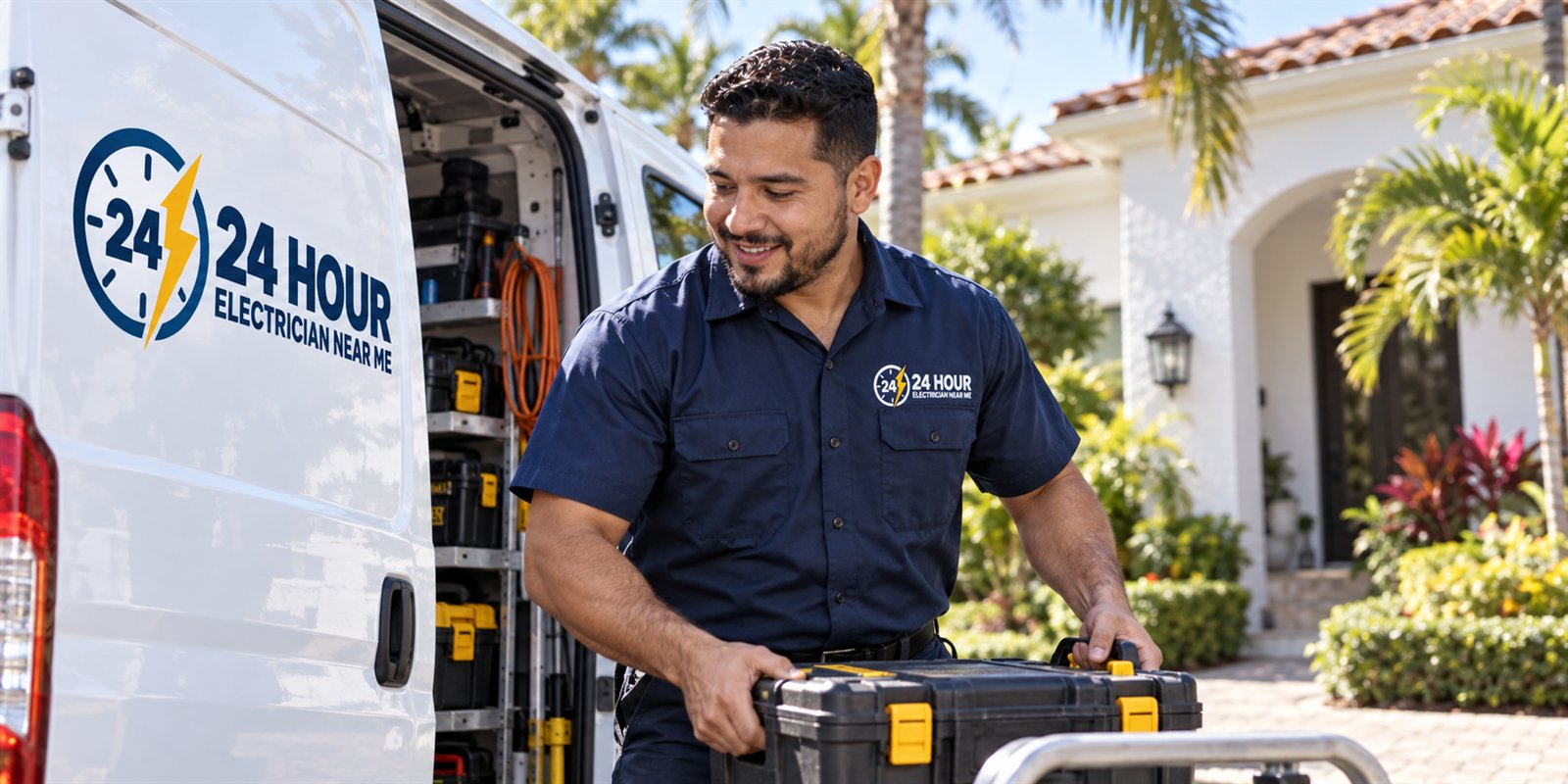
Who this service is for
24 Hour Electrician Near Me exists for people in South Florida who have an electrical question that cannot wait, or a project they want handled by someone who works with permits, inspectors and building rules every day. That includes single-family homeowners, condo owners, renters who need to reach a landlord with the right words, property managers, restaurant owners, office tenants, and association boards responsible for common areas. The work ranges from a dead outlet in a bedroom to a service upgrade on an older house, and from a flickering sign on a storefront to a tripping feeder in a warehouse.
The name carries the idea of round-the-clock help, but it is a service concept, not a promise that a technician is standing by at every hour in every neighborhood. What the site does promise is plain information. Each page explains what is likely happening, what is safe for you to do, what belongs with a professional, what a technician will check when they arrive, and what to have ready when you phone. If you are worried, start with our emergency or can it wait guide and then read the page that matches your situation.
Many callers are not sure whether their problem is electrical at all. A room with no power might be a tripped breaker, a failed outlet, a loose connection, or a utility issue outside the property. The pages on utility outages versus problems inside your property and a home that is dark while the neighbors have power help you sort that out before you pick up the phone, so the conversation starts with useful facts.
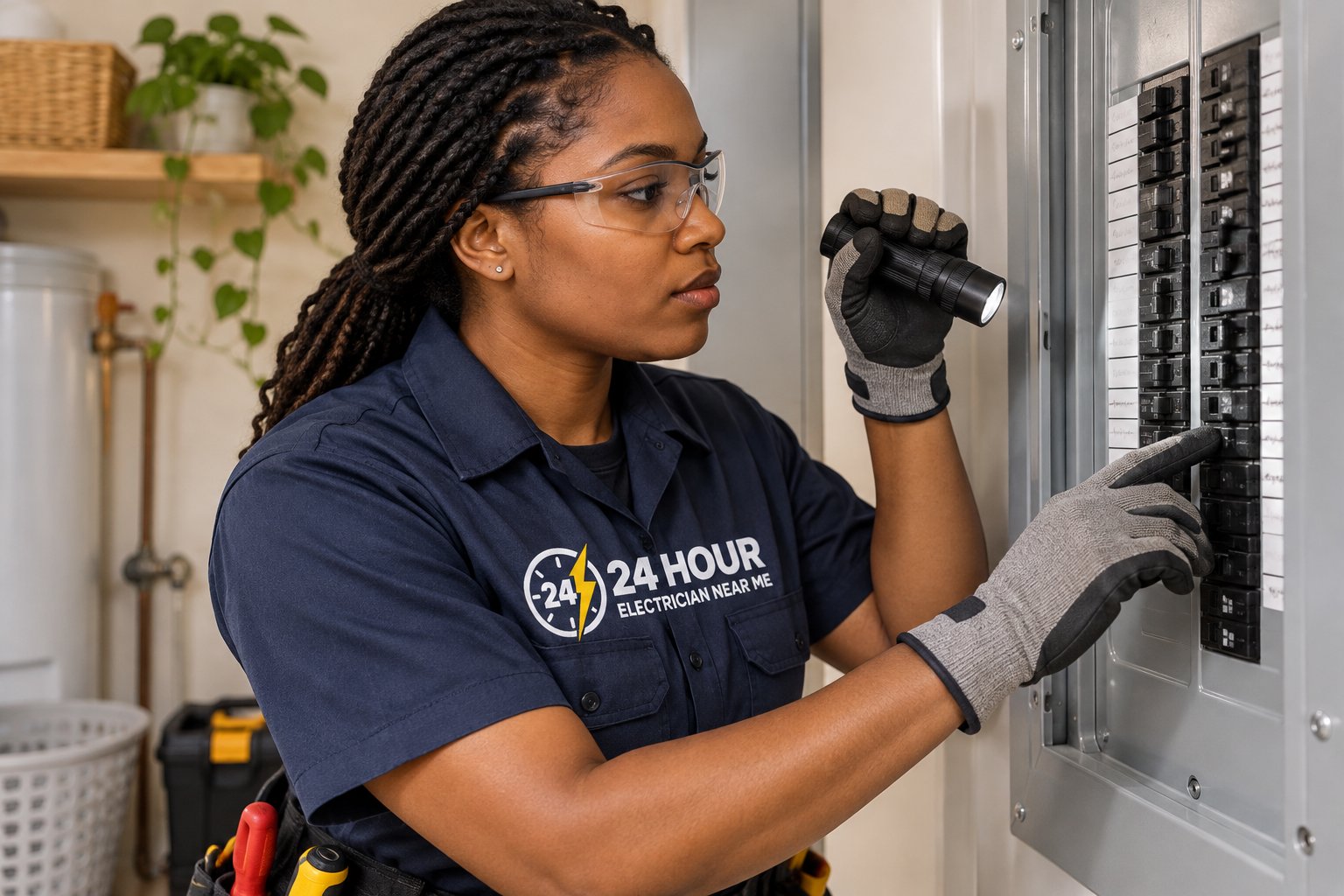
What electrical work is covered
The services section is organized the way people actually describe their needs. Protection and distribution work includes electrical panel repair, circuit breaker troubleshooting, subpanel installation and main service upgrades. Outlets, switches and lighting are covered under outlet and GFCI service, switch repair and replacement and lighting installation and repair.
Larger home projects have their own pages, including whole-house rewiring, wiring for additions, remodeling electrical planning and kitchen electrical upgrades. If you are adding a new load, such as an appliance, a charger or a pool pump, the page on dedicated circuit installation explains why many devices need their own protected line rather than a shared one.
Equipment tied to modern living is covered as well: EV charger installation, generator and transfer equipment, surge protection and solar and battery electrical connections. Each page keeps to the same structure: what the work involves, what affects the scope, what a visit looks like, and the questions worth asking.
Compliance work sits alongside repairs. Correcting items found in an inspection and an electrical safety assessment are common requests from buyers, sellers, insurers and landlords who want a clear picture of what is installed and what needs attention.
How calling works
Quotes are given by phone only. That is a deliberate choice: electrical work depends on details a website cannot see, such as the age of the panel, the length of a wire run, the condition of what is hidden in the wall, and what the local building department will require. A person who listens to your description and asks follow-up questions can give you a far more honest answer than a number on a page, so this site never lists prices.
When you call, expect questions. What did you notice, and when did it start? Is anything hot, buzzing, smelling or sparking? Which rooms or devices are affected? How old is the home or building? Is it a house, a condo unit or a commercial space? You do not need technical vocabulary. Plain description works, and the page on how to describe an electrical problem offers a short list of details that help the most.
For simple, well-defined jobs, the phone conversation may be enough to talk through the work. For anything complicated, a technician needs to see the installation in person. In that case an on-site visit is arranged, and there is a service call charge for that visit. The charge is explained on the phone before anyone is dispatched, so you know the terms before you agree to a visit. You can read the whole sequence step by step in how electrical service works.
Before you call, it helps to have the address, the nature of the problem, any breaker that has tripped, and any photos of labels on panels or equipment. If you are a tenant, know whether your landlord or property manager must approve work. If you are in a condo, the page on condo electrical responsibility explains which parts typically belong to the unit owner and which to the association.
The on-site visit and the service call charge
A complicated job cannot be priced responsibly from a distance. Think of a panel that runs hot, a branch circuit that trips with no obvious cause, a house with mixed old and new wiring, or a building where nobody has a current drawing. In those cases the first step is a visit where a technician looks, measures, tests and asks questions. The service call charge covers that visit, and it is explained on the phone before dispatch rather than appearing later as a surprise.
During the visit, the technician will typically look at the service equipment, open the panel cover when it is safe to do so, check for signs of heat, corrosion or loose terminations, test the affected circuits, and trace the problem to a source. They will explain what they found in ordinary words, show you what they can, and outline the options. Only after that do you receive a quote for the work, so the decision is made with real information in hand.
Some situations resolve during the visit itself. A failed device, a loose connection or a tripped protective device with an identifiable cause can sometimes be corrected on the spot. Others call for a scheduled return, parts, or a permit before work can start. Your technician will tell you which category you are in. The pages on comparing electrical quotes and what to ask before hiring an electrician give you a short list of questions you can use with any contractor, including us.
You can always ask what is included in a visit and what is not. Clear terms up front protect both sides, and a contractor who is reluctant to explain them is a contractor to think twice about.
Safety first: what to do and what to leave alone
Electricity does not forgive guesswork. Some problems call for emergency services before anything else. If you see flames, smell smoke that is getting stronger, see a person who cannot let go of an energized object, or find a downed power line near your property, call 911 first and keep everyone back. The page on a downed power line at your property explains why you stay far away and report it to the utility and emergency services.
Other situations are urgent but not yet a fire: a burning smell from an outlet, sparks at a receptacle, a warm outlet or switch plate, or water in an electrical panel. In those cases, the safest general approach is to stop using the affected area, keep people and pets away, switch off what you can reach safely without touching anything wet or damaged, and call. Do not open an electrical panel to investigate, and do not poke at damaged devices.
This site does not teach live-work procedures, and that is on purpose. Replacing breakers, splicing conductors or working inside a panel exposes untrained people to serious injury. What the pages do offer is safe observation: where to look, what to write down, what to photograph from a distance, and what to tell the technician. Electrical safety for children and pets covers the simple household habits that reduce risk without touching a single wire.
If you are unsure whether something is an emergency, the page on whether it is an emergency or can wait gives a plain checklist. When in doubt, treat heat, smell, sparks, water and shocks as reasons to call promptly.
One stretch of coast, one approach
Service focuses on the stretch of South Florida from Boca Raton in the north to North Miami in the south. The cities along it share a climate and a lot of building history but differ in their housing stock, permitting offices and typical calls. The service areas section has an overview page for Broward County, along with pages for individual cities. Broward County is a mix of postwar suburbs, newer planned communities, canal-side homes and dense condo corridors. Boca Raton, at the northern end, adds gated communities and oceanfront condominiums, and the cities from Aventura to North Miami at the southern end bring high-rise towers along the Intracoastal Waterway and older mid-century neighborhoods near Biscayne Bay.
Each city has its own jurisdiction, and each may have its own building department practices. That matters because permits, inspections and sometimes plan review depend on where the property sits. You can read about common paperwork in electrical permits in South Florida and about when a permit applies in permit or no permit electrical work. The short version: many installations and replacements need one, and a qualified contractor should explain the process rather than skip it.
The city pages avoid templated text. Reading about Fort Lauderdale, Hollywood, Boca Raton or North Miami, you will find different housing types, different weather exposures and different typical problems, because those places really are different. If your city is in the service area but not listed, call and describe where you are; the pages are a guide to local conditions.
South Florida conditions that shape electrical problems
Electrical equipment in South Florida works harder than in most of the country. Long cooling seasons keep air conditioners running for months. Humidity creeps into outdoor boxes and garages. Salt air accelerates corrosion near the coast, and heavy afternoon storms bring lightning and power surges. These conditions do not cause every fault, but they explain why the same failures show up again and again in this region.
Read how humidity affects electrical systems and the salt air corrosion guide if you live near the water or in a building with exposed equipment. The summer peak load guide explains why lights may dim when a large motor starts, and the dimming lights page walks through what is normal and what deserves attention.
Hurricane season adds its own list of concerns. Preparing before a storm, handling equipment safely afterward, and knowing what to do about flooding are covered in the hurricane season electrical checklist, after the hurricane and flooded home electrical safety. Water and energized equipment are a dangerous combination, and these pages stress the same point: do not enter or operate anything in standing water, and let a professional evaluate wet equipment before it is re-energized.
Older properties carry another layer of history. The older Florida home wiring guide describes what is often found in houses built decades ago, and the pages on Federal Pacific panels and older panel brands explain why certain legacy equipment gets extra scrutiny.
Symptoms and problems explained
Many visitors arrive with a symptom rather than a service name, so the problems section is built around what you see, hear and smell. If your lights are unsteady, start with flickering lights. If a protective device keeps shutting off, read a breaker that keeps tripping and a breaker that will not reset. If a device is simply dead, there are pages for an outlet that is not working, a GFCI that will not reset and power out in one room only.
Larger-scale symptoms get their own coverage too. Half the house without power often points to something at the service or main level, and a buzzing sound from the panel is a reason to stop and call rather than investigate. After weather events, lightning damage and flickering after a storm can hide problems that appear days later.
Each problem page follows the same pattern: what it usually means, what you can safely observe, what to avoid, what a technician checks, and which details speed up the phone call. They are written to help you decide how urgent the situation is, not to talk you into repairing anything yourself.
A few symptoms deserve special mention because people tend to ignore them. A mild tingle from an appliance, a slow rise in the monthly bill without a change in habits, or a smoke alarm that chirps without apparent cause can each be early signs. See mild shocks from appliances and an unexplained rise in the electric bill for what they might indicate.
Businesses, associations and property managers
Commercial properties have different stakes. A dead circuit may stop a kitchen, freeze a stock room, darken a sales floor or take a clinic offline. The commercial section covers service for restaurants, retail stores, offices, medical and dental offices, hotels and warehouses, each with its own typical loads and concerns.
Multi-unit buildings have a further layer of responsibility. Property managers, HOA and condo boards and owners of apartment buildings deal with common areas, shared equipment and tenant calls at the same time. Related reading includes condo association approvals, landlord and tenant electrical repairs and high-rise electrical emergencies.
For ongoing reliability, a preventive electrical maintenance program can catch loose connections and heat damage before they cause an outage, and the page on switchgear service explains what routine attention to larger equipment involves. As with residential work, quotes come by phone, and complex commercial jobs begin with an on-site visit and an explained service call charge.
Guides, equipment pages and planning ahead
Not every visit to this site starts with an emergency. The guides section is for people planning a purchase, a renovation or a sale. Buying a home, insurance inspection findings and the renovation electrical timeline are practical starting points. The comparison guides, such as choosing an EV charger level, choosing a generator and whole-home versus point-of-use surge protection, help you decide what you actually need before you ask for a quote.
The equipment section explains the parts in plain language. Learn how GFCI breakers differ from GFCI outlets, what AFCI breakers do, why grounding and bonding matter, and how transfer switches compare with interlocks. These pages are written for owners who like to understand what is being installed in their building.
Planning ahead also saves stress. A power outage plan written before storm season, a labeled panel (see panel labeling and circuit mapping), and a basic understanding of who is responsible for the meter and service equipment all make the next emergency less confusing.
How to choose who you hire, and when to call
Hiring an electrician is a trust decision, so verify rather than assume. Ask the contractor for their credentials and confirm them with the appropriate state or local authority. Ask who will pull the permit, who will be present for inspection, what is included in the work, and what the terms are for any service call charge. The page on which electrician or handyman fits which job explains why some tasks belong with a qualified electrical contractor and others do not.
Be cautious about anyone who gives a firm figure without asking questions, pressures you to decide on the spot, or suggests skipping a permit to save time. A good contractor explains the reasoning behind a recommendation, shows you the evidence, and is comfortable with you asking others for opinions. Keep a written record of what was agreed.
As for timing: call promptly for heat, burning smells, sparks, water in or near electrical equipment, repeated tripping without explanation, or any shock. Call soon for outlets that are loose, dead or discolored. Schedule when you can for upgrades, additions and planning questions. If something is life-threatening, contact 911 first and phone us afterward for the electrical side.
Whatever brought you here, take a moment to read the page that best matches your situation, then call to talk it through. Describe what you see, ask about the on-site visit and the service call charge, and get your questions answered before anyone is dispatched. A short, clear conversation is the best first step toward getting your power and peace of mind back. Call when you are ready.
Questions people ask
How do I get a quote?
Quotes are given by phone only. Call, describe the problem or project, and answer a few questions about the property and equipment. For simple work the conversation may be enough. For complicated jobs a technician needs to see the installation first, so an on-site visit is arranged and priced out afterward with real information in hand.
Is there a charge for the on-site visit?
Yes. A complicated job needs a technician to look at the equipment in person, and there is a service call charge for that visit. It is explained on the phone before anyone is dispatched, so you know the terms in advance and can decide whether you want to go ahead with the visit.
Which areas are covered?
The site focuses on Broward County and the cities from Boca Raton to North Miami. The service areas section has a Broward County overview and pages for individual cities. If your city is in the service area but not listed, call and describe your location. The pages are meant as a guide to local conditions in the service area.
What should I do in an electrical emergency?
If there is fire, strong smoke, a person in contact with live electricity, or a downed power line, call 911 first and keep everyone away. For other urgent signs such as burning smells, sparks, warm outlets or water near equipment, stop using the area, keep people back, avoid touching anything damaged, and call promptly.
Do I need a permit for electrical work?
Many installations, replacements and upgrades need a permit, and rules vary by city and county. A qualified contractor should explain which permits apply and handle the process. Minor like-for-like repairs may be treated differently, so ask when you call. The permits and permit versus no permit guides explain the general picture.
Can I fix electrical problems myself?
Observation is safe: note what you see, hear and smell, photograph labels from a distance, and write down when it started. Opening panels, replacing breakers or splicing wires exposes you to serious injury. Leave live work to a qualified electrical professional, and use the guides here to prepare for the call.
Dealing with "Electrical Repair and Installation Across South Florida"? Tell us where in the building it happens and what changed before it started. We will say what the electrician would check and how the visit charge is explained.
Related pages
- How Electrical Service: A transparent guide to requesting, authorizing, scheduling and documenting residential or commercial electrical service in South Florida.
- Emergency or Not: A triage list for electrical symptoms: which need immediate action and a call right now, and which can safely be scheduled for a later visit.
- Panel Repair: Guide to electrical panel repair, replacement and capacity upgrades in South Florida: what an evaluation covers, permits and what to prepare before a visit.
- Broward County: Electrician guide for Broward County homes, condos and businesses: utility outage versus property problem, permits by city, and how to prepare for a visit.
- Guest Suite Power: Electrical planning for a converted garage, in-law suite or detached unit: feeder size, subpanel choices, load calculations, metering and inspection steps.