

The right project is the one that supports the driver's week.
EV charging is an electrical and property-planning project. The connector must reach the parked vehicle, the circuit must be suitable for the proposed equipment, the property owner must authorize the work, and the arrangement must remain practical after another vehicle or tenant enters the picture. A fast-looking product does not solve a poor parking location, a restricted condominium garage or an electrical service that has not been evaluated.
Begin with miles driven on a typical day, time parked at home or work, vehicle charging specifications, other places the driver can charge and whether one or several vehicles will share the equipment. A driver who parks for a long period each night may have a different answer than a fleet vehicle with a short turnaround. The U.S. Department of Energy's Alternative Fuels Data Center explains that Level 1 can satisfy some overnight charging needs, while Level 2 provides faster charging through a higher-voltage circuit. The correct choice depends on the use case and verified property conditions.
The goal is not to sell the largest circuit automatically. It is to identify a safe, code-compliant and usable arrangement that the property can support. When information is missing, the honest next step is assessment, not a guaranteed price over the phone.
Charging labels describe power delivery, not project simplicity.
The vehicle and charging equipment set limits, but the building also sets limits. Installing equipment capable of a high output does not mean the vehicle will accept that output or the property can supply it. Conversely, a lower configured output may satisfy a driver whose vehicle remains parked for many hours. A planning conversation should compare the desired energy recovery with realistic parking time before selecting circuit size.
Portable charging equipment and wall-mounted charging equipment have different manufacturer instructions and listing requirements. A receptacle installation and a hardwired installation also create different maintenance, location and connection considerations. The electrician should review the specific model documentation rather than treating every charger as interchangeable.
Provide the manufacturer and model when equipment has been selected. If it has not, define the vehicle, desired charging routine, mounting area, cable reach and connectivity needs before comparing products.
| Planning point | Level 1 | Level 2 |
|---|---|---|
| Typical supply | A suitable 120-volt outlet or dedicated circuit, subject to equipment and property requirements. | A 240-volt residential or commonly 208-volt commercial supply, with a dedicated installation designed for the equipment. |
| Best question | Can available overnight time replace the energy used during the normal day? | What charging rate does the driver need, and what can the site support? |
| Site work | An existing outlet is not automatically suitable; condition, circuit use, location and equipment instructions matter. | Often involves a circuit, overcurrent protection, wiring method, charger location and permitting review. |
| Common fit | Lower daily mileage, long dwell time or an interim arrangement after evaluation. | Higher daily use, multiple drivers, shorter dwell time or managed commercial charging. |
A spare-looking breaker space is not a load calculation.
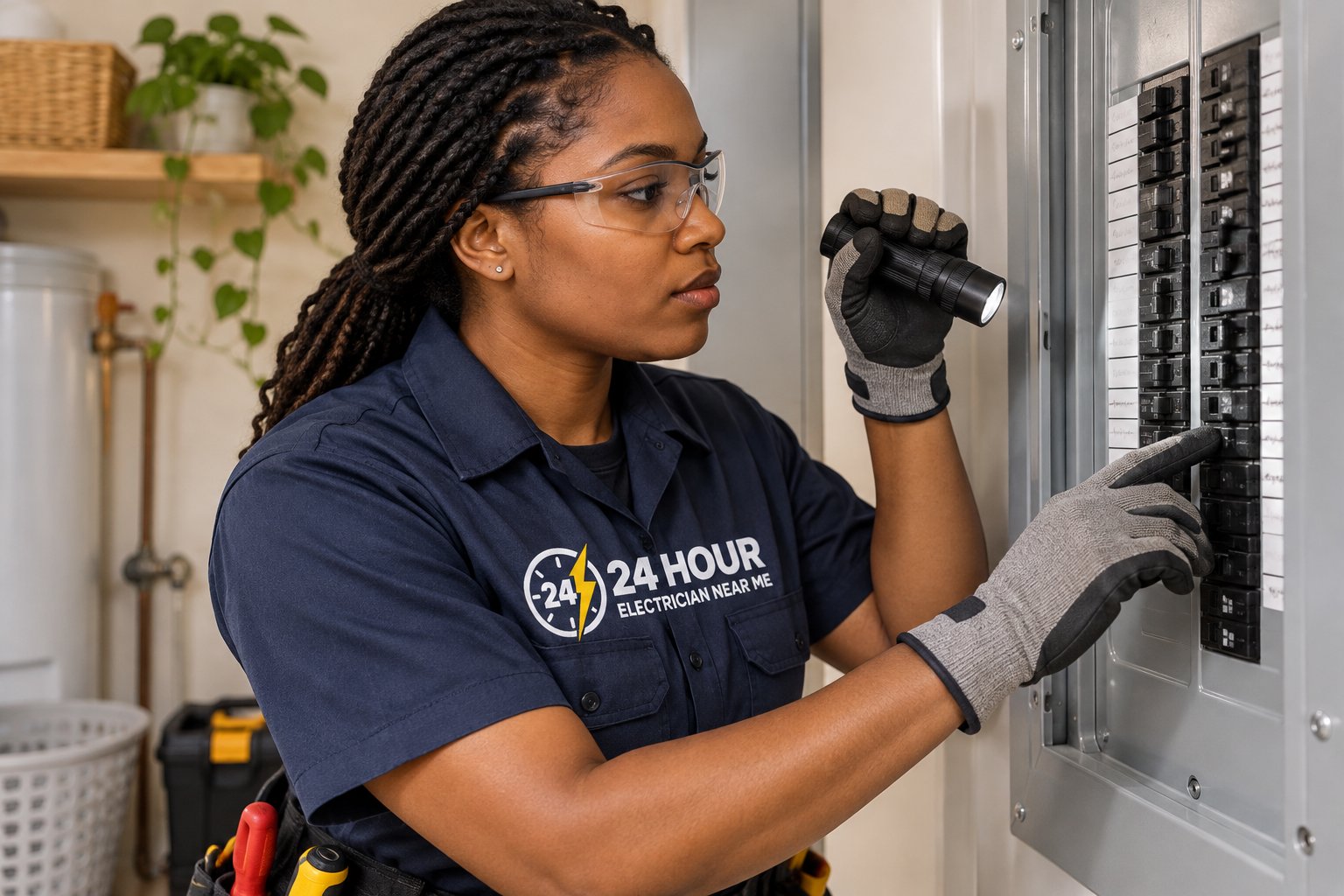
Panel photographs can help prepare an appointment, but they do not prove available electrical capacity. The evaluation may consider service rating, calculated load, existing large appliances, panel and disconnect condition, conductor path, grounding and bonding context, equipment specifications and future plans. Labels must be verified, and inaccessible or altered equipment may require additional work before a final scope is possible.
A property may have physical space in the panel but insufficient capacity for the proposed continuous charging load. Another property may support charging through a different configuration or an energy-management approach. Load management can coordinate charging with other loads, but it is not a universal shortcut. The selected system must be compatible, listed for its intended use and designed around the actual installation.
When a panel change may enter the conversation
A panel or service change should not be presented as automatic with every EV charger. It may be considered when equipment condition, capacity, available positions, listing limitations, service configuration or project goals require broader work. The electrician should explain the reason, alternatives and dependencies. Utility coordination, permits and inspections may extend the project sequence.
Dedicated circuits and continuous use
EV charging can operate for extended periods. Circuit design and equipment settings must follow applicable code, manufacturer instructions and local requirements. Customers should not select a breaker or conductor size from an online rule of thumb. The final configuration belongs in the permitted electrical scope when a permit is required.
Detached garages and long routes
A detached structure, distant parking space or finished interior can make routing more significant than the charger itself. The assessment should identify underground, attic, exterior, surface-mounted and concealed-path possibilities without promising that every route is feasible. Trenching, restoration, fire-rated assemblies, structural penetrations and separate-building electrical rules may affect the plan.
Ownership and parking rights change the project.
Choose the path before choosing the hardware.
Owner authorization, service and panel assessment, parking location, circuit route, weather exposure and future vehicles.
Association approval, assigned space, common-area routing, metering, insurance and controlled electrical-room access.
Landlord authorization, tenant billing, shared infrastructure, accessibility, demand management and expansion strategy.
Utilization, dwell time, ports, networking, payment policy, ADA considerations, maintenance and electrical phasing.
Single-family homes
Home projects usually begin with the panel and the normal parking position. Measure cable reach based on how the vehicle is actually parked, not a perfect diagram. Avoid placing equipment where the cord creates a trip path or encourages the connector to rest on the ground. Exterior locations require equipment suited to the environment. If the garage is used for storage, consider how doors, shelving and a second vehicle will affect access.
Future planning can be worthwhile, but it should be specific. A second EV, heat-pump conversion, electric water heating or other large load could influence today's route and capacity decision. "Future ready" should name what is being prepared, such as conduit pathway, panel space or a managed charging strategy, rather than imply unlimited capacity.
Condominiums
A condominium resident may own the unit but not the garage structure, electrical room or route to the assigned space. Association approval can be as important as electrical design. Request the current alteration process, insurance requirements, parking documents, approved working hours and building contact. Determine who pays for energy, who maintains the charger and what happens when the unit or parking right transfers.
The nearest electrical panel may serve common property and may not be available to one resident. Long runs, fire-rated penetrations, garage ventilation, shared metering and network coverage can change the plan. A proposal should identify assumptions and excluded association work. The electrician should not claim approval before the association and authority having jurisdiction review the required documents.
Rental and multifamily properties
Renters need written owner authorization. Owners should consider whether charging will be an individual amenity, a shared amenity or part of a larger property plan. Installing one isolated charger without considering future demand can create an expensive pattern. A staged plan can identify near-term ports, future pathways, load management, energy allocation, signage and maintenance responsibility.
Shared equipment needs a clear user policy. Who can activate it? Is parking time limited? How are idle vehicles handled? Who responds when a connector is damaged? Electrical installation alone does not answer these operational questions.
Commercial properties and fleets
Commercial charging starts with the business case and vehicle schedule. Employee charging, customer charging and fleet charging have different dwell times and utilization. A fleet may need vehicles ready at a fixed time, while a workplace may distribute charging through the day. The design team may need electrical engineering, civil work, networking, utility input and accessibility review depending on scope.
Networked chargers can support access, monitoring and payment, but subscriptions, communications and vendor support become ongoing responsibilities. The buyer should understand who owns the account and data, how stations operate during a network interruption and whether fees apply. These are procurement questions as well as electrical questions.
The driver should not fight the installation every night.
Confirm the charge-port position on the current vehicle and consider likely future vehicles. The cable should reach without being stretched, driven over or routed across a routine walkway. Wall, pedestal and overhead arrangements each have property-specific implications. Bollards or wheel stops may be appropriate where vehicles could strike equipment, but placement must preserve usable parking and accessible routes.
Outdoor installations require equipment and components suitable for the location. South Florida brings heat, intense rain, wind-driven moisture, salt exposure in coastal areas and storm-related debris. "Weather resistant" is not permission to ignore mounting instructions, drainage, enclosure ratings or flood context. The installer should follow the equipment listing and local requirements.
Garages and parking structures may have fire-rated walls, post-tensioned slabs or association rules that restrict drilling. Contractors must obtain building information before penetrating structural or rated assemblies. A convenient-looking straight line on a photograph may not be an approved route.
Compare the details that affect daily use and long-term ownership.
Do not select equipment solely because a rebate page, marketplace listing or vehicle forum recommends it. Confirm current program terms directly with the utility or program administrator before purchase. Incentives can change, have eligibility rules or require particular equipment and documentation. The contractor should distinguish confirmed program requirements from general possibilities.
For a simple home charger, advanced networking may add complexity without meaningful benefit. For shared commercial equipment, basic unmanaged hardware may not provide the access and reporting the property needs. The best feature set follows the operating plan.
- Vehicle compatibility: connector type, adapter strategy and the vehicle's onboard charging capability.
- Output: the site-supported and configured charging rate, not only the product maximum.
- Cable: reach, storage, flexibility and replacement availability.
- Location rating: suitability for indoor, outdoor, wet or other applicable conditions.
- Connection: hardwired or receptacle-based installation according to the approved design and instructions.
- Controls: scheduling, access, load management and integration needs.
- Connectivity: Wi-Fi, cellular or other network requirements and service costs.
- Support: warranty process, software support, replacement parts and manufacturer contact.
- Listing and instructions: documentation appropriate for the installation and authority review.
Move from request to a documented handoff.
1. Discovery
Record property type, address, vehicle, charging routine, parking arrangement, equipment status, ownership and target timing.
2. Site assessment
Review accessible electrical equipment, proposed route, mounting area, cable reach, environmental conditions and authorization constraints.
3. Design and scope
Define charging configuration, circuit, wiring route, equipment, restoration boundaries, exclusions and any broader capacity work.
4. Approval and permitting
Coordinate owner or association approval and applicable permit documents. No page should guarantee municipal approval.
5. Scheduling and installation
Confirm equipment availability, access, shutdown needs, work area, inspection sequence and the authorized decision-maker.
6. Inspection and commissioning
Complete required inspection steps, configure equipment within the approved design and verify normal operation with the customer.
7. Handoff
Provide equipment information, settings, warranty path, permit or inspection records, maintenance guidance and unresolved next steps.
Not every project follows the same duration. A straightforward residential route and a condominium garage project have different dependencies. Product availability, utility work, association review, permits, inspection and corrective work can affect timing. A scheduling window should be offered only after these dependencies are known.
Use the authority for the property address.
Electrical permitting is local. Broward County and the cities from Boca Raton to North Miami include many municipalities, and a county address does not always mean the county building department is the permitting authority. The project record should confirm the jurisdiction tied to the exact address. The contractor should use current official instructions rather than copying a generic permit statement across city pages.
Permit scope can depend on the installation and related work. Condominium and commercial submissions may require additional owner, design or product documentation. Inspections must match the approved work, and corrections should be documented. A website can explain the process, but it cannot pre-approve a project or replace the authority having jurisdiction.
Price follows verified conditions.
Major variables include equipment, charging output, panel location, route length, conductor and raceway method, finished-surface access, trenching, detached structures, weather exposure, panel or service work, load-management equipment, permits, engineering, association documentation, networking, protection from vehicle impact and restoration. A low remote number that excludes these items is not a useful comparison.
Ask each proposal to identify included equipment and labor, permit responsibility, inspection handling, surface repair, utility or association work, warranty, payment milestones and exclusions. If one proposal includes a panel change and another does not, determine whether they are solving the same verified condition. An estimate can change when concealed or inaccurate site information is discovered, but the change process should be explained before work begins.
No deposit, price or financing claim should appear on this website until the actual business policies are supplied and reviewed. Likewise, this page does not promise rebates or tax treatment. Customers should confirm current financial programs with the responsible program administrator and their own qualified adviser.
Charging problems are not do-it-yourself diagnostic exercises.
Stop using equipment that is damaged, unusually hot, producing odor, showing discoloration, repeatedly losing power or exposed to water. Follow manufacturer shutdown guidance when it can be done safely. Do not open the charger, panel, receptacle or disconnect. Do not use extension cords or improvised adapters unless the vehicle and charging-equipment manufacturers expressly permit the exact arrangement; a website should not improvise that approval.
After flooding, storm damage or vehicle impact, keep people away and request appropriate evaluation. Call 911 for fire, smoke, active arcing or immediate danger. A web form is not emergency dispatch. Utility damage, building damage and electrical equipment may require different responders.
When a breaker operates, do not repeatedly reset it to continue charging. Record when the problem occurred, the vehicle's charging setting and any safe observations. Recurring interruption can reflect several conditions and needs proper assessment.
Bring information, not assumptions.
Never remove a panel cover or enter a restricted electrical room for photographs. Condominium residents should ask management to arrange access. Measurements and images help discovery, but they do not replace an on-site evaluation when one is needed.
- Full property address, municipality and unit or suite.
- Property type and whether the requester owns, rents or manages it.
- Parking-space location, assignment and normal vehicle orientation.
- Vehicle year, make and model plus typical daily distance.
- Hours normally available for charging.
- Selected charger manufacturer and model, if already purchased.
- Safe photographs of the panel exterior, labels, proposed route and parking area.
- Association or landlord alteration requirements and contact.
- Known large electrical loads and planned electrification projects.
- Indoor or outdoor location, flooding history and coastal exposure.
- Internet or cellular availability if networked features are desired.
- Target outcome, timing constraints and future vehicle plans.
Clear answers before equipment is ordered.
Do I automatically need a panel upgrade?
No. Capacity and equipment condition must be evaluated. A panel or service change should be recommended only when the verified design and property conditions support it.
Is Level 2 always the best choice?
No. Compare daily driving, dwell time, vehicle capability and site capacity. Level 1 may satisfy some drivers; Level 2 supports faster charging when the property and use case call for it.
Can you quote from a panel photograph?
Photographs help prepare the assessment but do not prove load capacity, circuit path, equipment condition or permit scope.
Can a condo owner install a charger in an assigned space?
The project depends on ownership, association rules, parking rights, route, metering and local requirements. Obtain the current association process before scheduling work.
Should I buy the charger first?
It is often better to confirm compatibility, location, output, connection method and program requirements first. If already purchased, provide the exact model documentation.
Can the charger be installed outdoors?
Outdoor work requires equipment and components suitable for the location, installed according to instructions and local requirements.
How long does installation take?
Timing depends on assessment, equipment, approvals, permits, route, utility or association coordination and inspection. No duration should be promised before those dependencies are known.
Does the form book an appointment?
Official references
If "Plan the place, power and parking." sounds like your problem, call and describe what you see, hear or smell at the panel, the outlet or the fixture. We explain what the work involves, and some jobs need a visit before a quote.
Related pages
- Guest Suite Power: Electrical planning for a converted garage, in-law suite or detached unit: feeder size, subpanel choices, load calculations, metering and inspection steps.
- Aluminum Wiring: Aluminum branch wiring from the 1960s and 1970s: why it needs attention, repair options from connectors to partial replacement, and how a technician decides.
- Arc-Fault Breakers: Where arc-fault breakers apply, why they trip on certain loads, and how a technician adds arc-fault protection to existing circuits in older homes.
- Bathroom Fans: Wiring and replacing bathroom exhaust fans, fan and light combinations, humidity-sensing controls and the electrical details around venting.
- Ceiling Fan Installation: Residential and commercial ceiling-fan installation, replacement and troubleshooting planning for properties in Broward County and the cities from Boca Raton to North Miami.
- Circuit Breaker Troubleshooting: A safety-first South Florida guide to recurring breaker trips, circuit problems, breaker evaluation and documented electrical repair.