

The first minute: what to do right now
If you smell burning and you can see smoke, flames, melted plastic or sparks, get everyone out of the building and call 911 from outside. Do not stop to collect belongings. Do not try to fight an electrical fire with water. Close doors behind you if you can do so without delay, because closed doors slow the spread of fire and smoke.
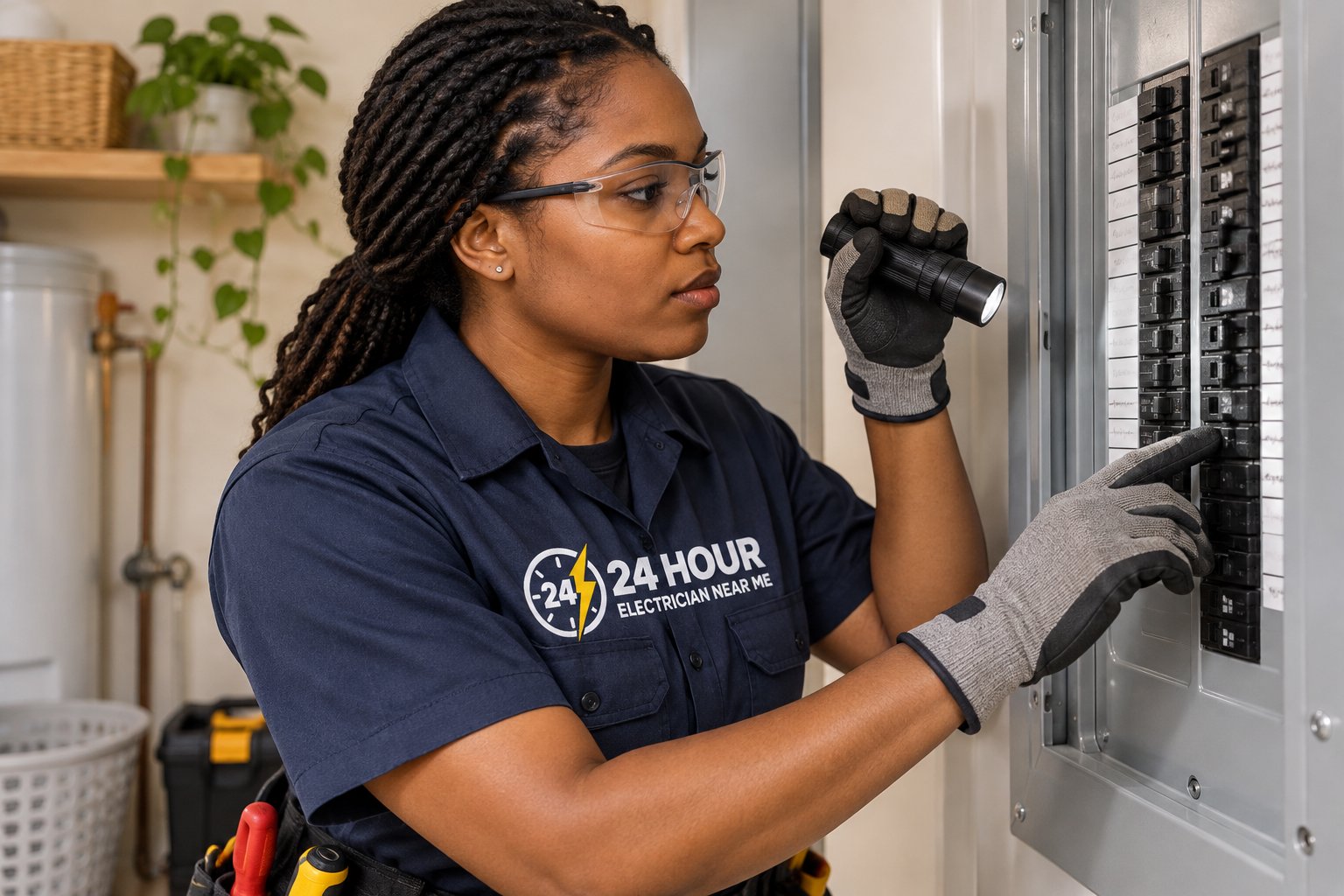
If there is no visible smoke or flame, but a distinct burning or hot-plastic smell near an outlet, switch, panel or appliance cord, act quickly but calmly. If you can safely reach the panel and the breaker for that area is clear to you, turn it off. If you are not sure which breaker it is, and the panel is dry and accessible, turning off the main breaker removes power to the whole house. Only do this if you can reach the panel without passing through smoke and without touching anything wet.
Unplug anything plugged into the affected outlet only if the plug is cool and there is no sign of melting. If the plug or outlet is hot, discolored or crackling, do not touch it. Turn off power at the breaker first.
Move people and pets away from the area, and keep watching it. Smoldering inside a wall can continue after a breaker is off, because of heat already built up. If the smell persists or smoke appears, leave and call 911.
- If you see smoke or flames, leave and call 911 from outside.
- If it is only a smell, turn off the breaker for that area if you can reach it safely.
- If you cannot identify the breaker and the panel is dry and reachable, use the main breaker.
- Do not touch hot, discolored or crackling outlets and plugs.
- Keep everyone away from the area and watch for smoke or heat.
- Call for a technician, and do not restore power until it has been inspected.
What the smell usually indicates
A burning smell from an electrical source almost always means that something is hotter than it should be. In normal operation, electrical components stay cool or warm, never hot enough to smell. When they do smell, insulation, plastic or dust is heating or burning.
Common causes include a loose connection at an outlet, switch or breaker, where resistance creates heat. An overloaded circuit, where wiring is carrying more current than it can handle. A failing device, such as a worn outlet that arcs internally. A damaged cord or plug. An appliance with an overheating motor or element plugged into the outlet. Dust on a heating element or a new device burning off manufacturing residue is a lesser cause, but you should not assume that is what you are smelling.
The smell itself can give hints. A sharp, fishy or acrid smell is often hot electrical insulation or burning plastic and is a strong warning. A smell like burning dust may be a heater or a hot component. A smell that is strongest at a specific outlet or panel points to that location. A smell with no obvious source can be inside a wall or ceiling and is harder to find.
Whatever the cause, a burning smell should not be ignored, even if it fades. Heat damage can continue unseen, and a smell that comes and goes often means a problem that comes and goes.
Outlets and switches: what is happening inside
Inside a receptacle, wires attach to terminals, and metal contacts grip plug prongs. If a terminal is loose, current passes through a poor connection, creating heat. Heat softens plastic, discolors the face and can melt the device. The heat can travel along the wire and damage insulation inside the box.
Arcing is another cause. When a connection is loose enough to spark, the arc can reach very high temperatures in a small space. It can burn the receptacle, the box or surrounding materials. Arc-fault breakers are designed to detect certain arcing, but not all arcing is caught. See sparks from an outlet for related signs.
Switches behave the same way. A switch that controls a heavy load, such as a large light or a fan, can loosen and overheat. A switch that is warm to the touch, buzzes or crackles needs attention. See warm outlets or switch plates and scorch marks on an outlet.
A burned outlet is not safe to reuse, even if it seems to work. The plastic is weakened, the contacts are damaged and the wiring behind it may be affected. Replacement is the correct response, and the cause of the heat must be found as well.
Panels and breakers: a smell near the panel is more serious
A burning smell near the electrical panel deserves even more caution. The panel is the heart of the system, and it holds large conductors carrying a lot of current. A loose connection at a breaker or a bus bar, a failing breaker or an overheated main lug can produce serious heat.
Signs that may accompany a smell at the panel include a warm panel cover, discoloration or brown marks around a breaker, a buzzing or crackling sound, a breaker that trips repeatedly and lights that dim or flicker. Do not open the panel. The inside carries live parts even with breakers off.
If you smell burning near the panel, turn off sensitive equipment, keep clear of the panel and call right away. If you see smoke or sparks from the panel, leave and call 911. See buzzing sound from your electrical panel and electrical panel repair for the related service.
Older panels, or panels with known issues, may be more prone to problems. The pages on Federal Pacific panels and Zinsco and older panel brands explain why a technician may recommend replacement in certain cases.
Cords, plugs and appliances: the other common sources
The smell may not come from the outlet at all. It may come from a plug, cord or appliance. Overheated cords, especially those running under rugs, bundled tightly or used with extension cords too thin for the load, can smell. Space heaters, hair dryers, irons and other heat-producing appliances stress cords and plugs.
Plugs that are too loose in worn outlets also heat up. A plug that is warm to the touch is a warning. A plug that is hot or has a melted prong should not be used again.
Appliances can smell due to failing motors, burnt dust or damaged wiring inside. Unplug the appliance and let it cool. If the smell stops, the appliance is likely the cause and should be repaired or replaced. If the outlet itself is discolored or the smell persists, the outlet is also involved.
Space heaters and other high-power devices should be plugged directly into a wall outlet, never into a power strip or a light-duty extension cord. If you have found yourself relying on extension cords because there are too few outlets, that is a sign that additional circuits would help. See dedicated circuit installation.
Smells that are not from the outlet but are electrical
Not every electrical burning smell is at an outlet. Recessed lights and fixtures can overheat when bulbs exceed the rated wattage or when insulation covers the housing. A ceiling fan motor can overheat. A bathroom exhaust fan can burn out. A transformer or doorbell can overheat. An air conditioner or its disconnect can emit a burning smell from electrical components.
Smells that come from a wall or ceiling with no visible source are the hardest. They may indicate a hot connection in a junction box, damaged cable or an overloaded circuit behind finished surfaces. Hot spots inside walls can be dangerous because the material around them is combustible, and you cannot see them. Turn off the circuit you suspect, or the main breaker if needed, and call.
Fresh equipment can smell briefly when first used, as coatings burn off. A new heater or a new bulb may give a short, mild smell. If the smell stops within a few minutes, and you can see the source, it may be normal. If it continues or you cannot find the source, treat it as a problem.
Cooking smells, burned toast and candles can also mimic electrical smells. If you are unsure, check the area with your eyes and hands, from a safe distance, and turn off the power if there is any doubt.
After the smell: why you should not simply restore power
Once the immediate danger has passed, the temptation is to turn the breaker back on and see if the smell returns. Do not do this. A burnt connection can restart arcing and fire, and a second event could be worse than the first. The component that smelled must be inspected and replaced or repaired.
Leave the affected circuit off until a technician inspects it. If the main breaker is off, consider which items need power, such as refrigerators, and whether it is safe to restore other circuits. A technician can advise on which circuits can be restored while the affected one stays off.
If a smoke alarm sounded, or if you saw smoke or flames, even briefly, call the fire department to check for hidden fire inside walls even if you think the situation is resolved. Fire inside a wall can continue unseen. See steps after an electrical fire for what to do afterward.
Take photographs of the affected outlet, panel or cord from a safe distance. They help the technician and may help with an insurance claim. Do not clean or remove burnt parts before they are inspected.
What a technician checks and does
A technician starts by confirming that the circuit is off and the area is safe. The affected device is inspected visually: discoloration, melting, soot and carbon tracking are noted. The device is removed, and the box, the wires and the connections are inspected for heat damage.
Wiring with damaged insulation is cut back to good material or replaced. Damaged devices and boxes are replaced. The circuit is tested for load, connections and insulation condition. The panel and the breaker are checked as well, since a heat problem at one point may have effects at others.
The technician also looks for the underlying cause. Was the connection loose? Was the circuit overloaded? Was the wrong device used? Was the wiring damaged by an earlier repair? Addressing the cause keeps the problem from returning. A technician may recommend additional protection, such as arc-fault breakers, or a dedicated circuit for a heavy load.
If hidden damage is suspected inside a wall, the technician explains what further inspection or repair would involve. Complicated jobs need an on-site visit. Quotes are given only by phone, and a service call charge applies and is explained on the phone before dispatch.
Preventing the next one
Most burning smells are preventable. Loose connections and overloaded circuits are the usual causes, and both can be found before they reach the smell stage. Warm outlets, flickering lights, buzzing sounds and breakers that trip are earlier signs. Responding to those signs avoids the emergency later. See emergency or can it wait for a way to decide how quickly to act.
Replace worn outlets, especially those that do not hold plugs firmly. Do not overload circuits or use extension cords as permanent wiring. Keep heat-producing appliances plugged directly into appropriate outlets and attended. Test smoke alarms regularly, and make sure they are the right type and in the right locations. See smoke and CO detector wiring.
An electrical safety inspection can find developing problems before they cause a smell. See electrical safety inspection for what it covers. Older homes, in particular, benefit from periodic review.
When to call and what to have ready
Call 911 first for smoke, flames or sparks. Call for a technician right away for any burning smell from an outlet, switch, panel or cord, even if it has faded. Keep the affected circuit off until it has been inspected.
Have ready: where the smell was, when you first noticed it, what was plugged in or running, whether any breaker tripped, whether you saw discoloration or smoke, and what you did. Photographs, taken from a safe distance, are helpful.
Call and describe what happened. The person on the phone will ask a few questions, explain how quotes and the service call charge work, and tell you what to expect from the visit. A burning smell is a warning worth answering promptly.
Questions people ask
What should I do first if I smell burning from an outlet?
If there is smoke, flames or sparks, leave and call 911 from outside. If it is only a smell, turn off the breaker for that area if you can reach it safely, keep people away, do not touch hot or discolored parts and call a technician. Do not turn the power back on until it has been inspected.
Is a faint burning smell from an outlet still serious?
Yes. Even a faint smell can mean a hot connection or failing device. A fading smell does not mean the problem has resolved, because heat damage can continue and the issue may return under load. Turn off the circuit and have it checked.
Can I just replace the outlet that smells?
Replacing the device alone may not address the cause, such as an overloaded circuit or damaged wiring behind it. It also involves working near household wiring. A technician replaces the device, inspects the box and wiring and finds the underlying cause so the problem does not return.
Should I call the fire department even if I do not see smoke?
Call 911 if there is smoke, flames or an alarm sounding. If there is only a smell and no visible sign, turn off the circuit and call a technician. If you are worried that something may be smoldering inside a wall, calling the fire department for a check is reasonable.
Why does the smell come and go?
Loose connections and arcing produce heat only when current flows, such as when an appliance is running. A smell that comes and goes often points to a connection that heats under load. It is still a warning and should be inspected before it worsens.
How are quotes provided for burning smell repairs?
Quotes are given only by phone. Simple repairs may be quoted after a few questions, while complicated or larger jobs need an on-site visit. A service call charge applies and is explained on the phone before dispatch.
If "A Burning Smell From an Outlet or Panel" sounds like your problem, call and describe what you see, hear or smell at the panel, the outlet or the fixture. We explain what the work involves, and some jobs need a visit before a quote.
Related pages
- Scorched Outlet: Brown or black marks around an outlet or on a plug mean heat has already done damage. Learn what causes them, what is safe to do and what a technician checks.
- Outlet Sparks: A small flash when you plug in can be harmless, but continuous sparking is not. Learn how to tell them apart, what to do right away, and what to avoid.
- Warm Outlet: A warm outlet or switch plate can be normal under load or a sign of a loose connection. See the difference, what to unplug, and when to call right away.
- After an Electrical Fire: After an electrical fire, power stays off until the fire department clears the scene and an electrician assesses the system. Here is the sequence to follow.
- Safety Assessment: Guide to a limited electrical safety assessment in South Florida: what is checked, warning signs, how findings are recorded and next steps.
- Bulbs Burning Out: Bulbs that keep burning out usually point to heat, voltage, loose sockets or a mismatched dimmer. Learn the causes and what to check before replacing again.