
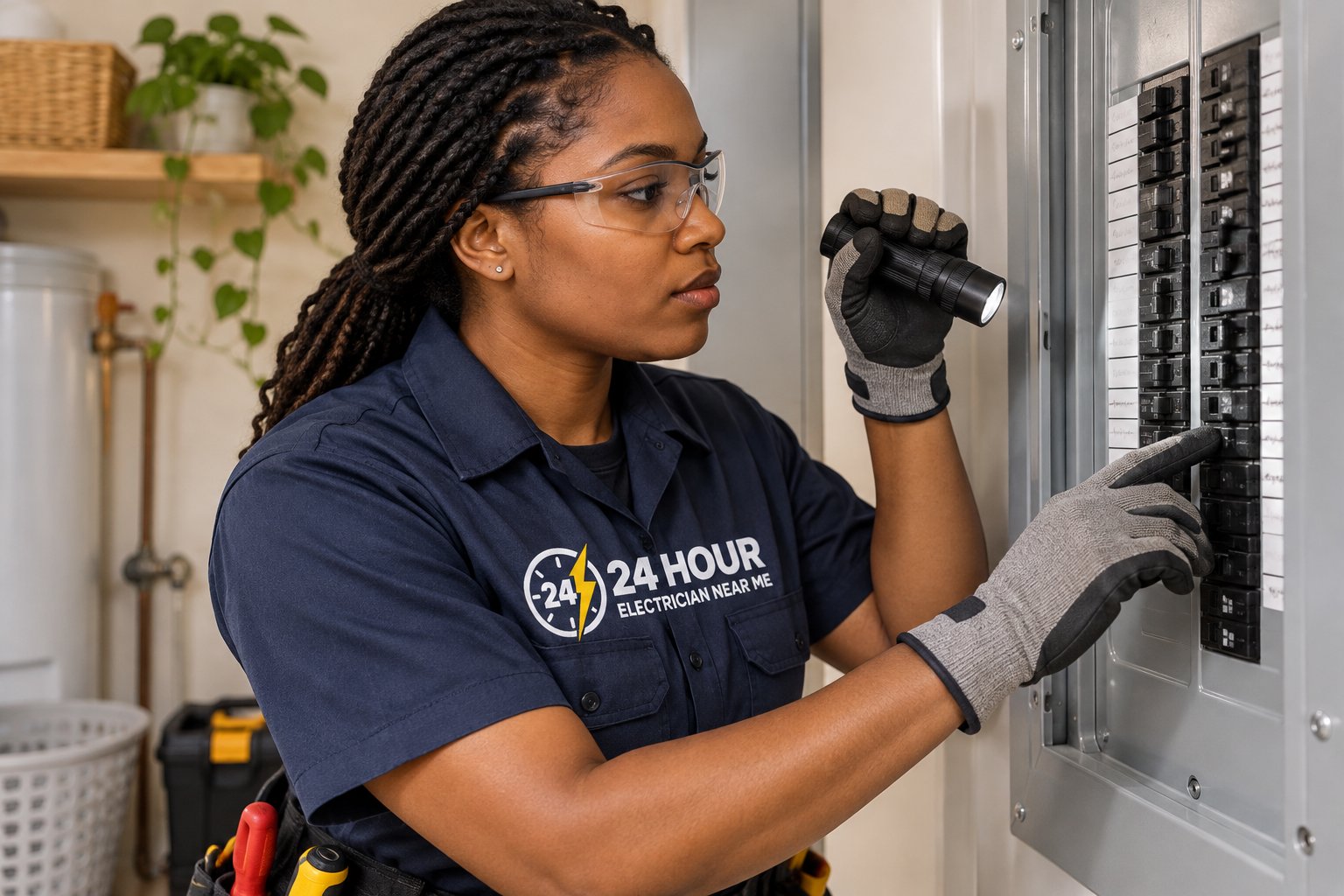
Why older panel brands get attention
An electrical panel is expected to last a long time, and many do. Over a span of decades, though, manufacturers merge, change names and discontinue product lines. When a panel brand disappears, owners face practical problems: replacement breakers may be hard to find, listed new parts may not exist, and technicians may have limited information about the equipment. In some cases, safety concerns have also been raised about a particular design.
Insurers, home inspectors and electricians pay attention to panel brands for these reasons. Some brands are flagged because of documented concerns about how breakers connect to the bus bar or how they trip. Others are flagged mainly because they are obsolete. Each category calls for a different level of caution, and it is useful to understand which one applies to your equipment.
This page discusses Zinsco and related panels, then touches on other legacy types an owner might find. It does not provide statistics, because exact figures vary depending on the source and we cannot confirm them. It focuses on how to identify equipment and what is reasonable to do about it.

What Zinsco panels are
Zinsco was an electrical equipment manufacturer whose panels were installed in homes over several decades of the twentieth century. The brand later passed through ownership changes, and panels may carry the names Zinsco, Sylvania, GTE-Sylvania or Magnetek on labels, depending on the production period. You may see more than one name on equipment that is part of the same family.
These panels are recognizable by a distinctive design. Breakers clip onto the bus bar in a way that depends on spring clips making good contact with the bus. The bus bar material and the clip design are central to the concerns that have been raised.
The concerns reported by electricians and inspectors include breakers that fail to trip under overload, and connections that overheat, because the breaker's contact with the bus can degrade over time. In some documented cases, the breaker and bus can become welded together by heat, which can prevent the breaker from being removed or from operating as intended. Given these concerns, many professionals recommend that a Zinsco panel be evaluated and, in many cases, replaced.
How to identify a Zinsco or similar panel
Identification starts with the label. Look at the panel door and the inside of the door, if it is accessible without removing any cover, for a nameplate or printed directory. Names to look for include Zinsco, Sylvania, GTE-Sylvania and Magnetek. A technician can also identify the panel by the shape of the breakers and the layout of the bus inside.
Do not remove the panel cover. The cover is held on by screws and the interior has live parts. If the door label is not clear, take a photo of the closed panel and any visible labels and share it with a technician. A technician can safely open the panel with proper tools and equipment and read the identification inside.
If your home was built or renovated in the era when these panels were used, and the panel has a distinctive pattern of breakers set in two columns, it may be worth having someone look. Do not assume the label is accurate. Panels have been modified, patched or fitted with breakers from other brands over the years, and mixed parts create their own problems.
- Names on labels: Zinsco, Sylvania, GTE-Sylvania, Magnetek
- Look at the door and the directory, never inside with the cover removed
- Take photos of the closed panel for a technician to review
- Ask a technician to confirm the brand and model during a safe visit
- Note any breakers that look different from their neighbors, which may indicate mixed brands
Signs that an older panel is struggling
As with any panel, there are symptoms that suggest a problem. A breaker that will not reset, or one that trips repeatedly for no clear reason, lights that flicker or dim, a warm panel door, a buzzing or crackling sound from the panel, a discolored cover and a burning smell are all signals to act. A breaker that seems stuck in place, or that does not click properly when switched, also deserves attention.
A harder sign to see is the one where a breaker should have tripped but did not. Evidence of that is a warm or melted cord, a hot outlet or switch plate, a scorched device, or insulation damaged by heat. If you see any of these, stop using the affected circuit if you can do so safely, and call for help. If there is smoke, a burning smell that is strong, or flames, leave and call 911.
Pages in our problem library explain related symptoms in more detail, including scorch marks on an outlet, a breaker that will not reset and half the house with no power, which can sometimes involve a failed panel part.
Other legacy panel types you might find
Zinsco is one of several older systems that technicians encounter. Fuse boxes with screw-in fuses are still found in some very old homes, and they present their own issues: fuses can be replaced with larger ones than the circuit can handle, there is limited capacity, and modern ground-fault and arc-fault protection is not available in the same way. Fuse boxes are often a candidate for replacement as part of an update.
Some panels use push-button style breakers or other unusual designs from manufacturers that no longer support them. Their problem is less a documented hazard than a practical one: parts can be difficult to find, and technicians may have less experience with them. Other panels are from brands that remain in business but have discontinued old product lines, so replacement breakers may be available only as modified or unlisted substitutes.
Each of these situations calls for an inspection of the actual equipment instead of a general rule. Our page on Federal Pacific panels covers another widely discussed older brand. A technician can read the label on yours and tell you what is known about it.
Why mixed and mismatched breakers are a problem
In older panels, it is common to find breakers that are not the brand of the panel. Over decades, owners and handymen replaced failed breakers with whatever fit. Some of these substitutes physically fit but are not listed for the panel, and they may make poor contact with the bus or have different trip characteristics.
A breaker is part of a tested system with its panel. When a breaker is not the one the panel was tested with, the system is no longer the one that was approved. The connection to the bus is the critical point, and a poor connection generates heat. That heat can melt the breaker, damage the bus and start a fire, sometimes without any prior warning.
If your panel has breakers of different brands or styles, mention that to the technician. It is a finding in its own right. Do not try to correct it yourself. Our page on circuit breaker repair explains what proper breaker replacement involves.
What an evaluation looks like
A technician evaluating an older panel will identify the brand and model, check the main breaker rating, and look at the physical condition of the panel and the breakers. They will inspect the bus bar and the breaker connections for signs of heat, corrosion or pitting, check the wiring entering the panel for damage, and compare the panel's capacity with the home's needs.
In South Florida, extra attention goes to moisture and corrosion. Panels in garages, in exterior enclosures or near a leaky wall can show rust, a white or green crust on terminals and water stains. Our page on the salt air corrosion guide explains how the environment affects electrical equipment.
The technician may also test for proper grounding and bonding, check for signs of earlier amateur modifications, and note whether circuits are protected as expected. The result is a clear explanation of what is present and a recommendation. We cannot predict the outcome without seeing the equipment.
Replacement, permits and the shutoff
If replacement is recommended, the work involves removing the old panel and installing a new one, with new breakers sized for each circuit, updated grounding and bonding where needed, labeling and an inspection. The size of the new service equipment is chosen by a load calculation, and it may be a good time to consider future needs such as air conditioning, EV charging, pool equipment or a generator connection.
Panel replacement is permitted work, requires an inspection and involves coordination with the electric utility for the power disconnection. Requirements vary by city and county, and condominiums require association approval. See our page on main service upgrade and our guide to electrical permits in South Florida.
Plan for a period without power on the day of the change. The contractor should explain the timing, protect your property and coordinate with the utility. We do not promise specific durations or windows, because they depend on the job and the utility.
Insurance, sale and renovation considerations
Insurers may ask about the panel brand, and some require evaluation or replacement of certain older panels. Policies and underwriting change, so ask your own insurer what applies to you. Keep inspection reports, permit records and invoices, which help show that the equipment has been reviewed or updated.
If you are buying a home, a home inspector who finds an older panel will usually flag it, and a buyer may request an electrician's evaluation. If you are selling, a recent evaluation or replacement can make the process smoother. Our page on buying a home and the electrical inspection explains how these findings usually unfold.
If you are planning a renovation, an older panel is often a reason to plan upgrades together. Adding circuits to a panel that is already near its capacity, or that has concerns, is not a good plan. Our page on remodeling electrical planning can help you coordinate.
What owners can do right now
Take a photo of the closed panel and any label you can read from outside. Find the home's age and any renovation records. Note symptoms such as tripping, buzzing, warm surfaces or flickering lights. Keep the area clear and avoid overloading circuits. Do not remove the cover, do not try to test breakers, and do not repeatedly reset a breaker that keeps tripping.
Check smoke alarms and carbon monoxide alarms, since they work independently of the panel. See smoke and carbon monoxide alarm types. If your panel is in a place where water can reach it, such as an exterior wall or a garage with leaks, mention that to the technician.
When you are ready, call and give us what you have. We will explain the process, and we do not use scare tactics. An older panel is a reason to look, not a reason to panic.
Talking to a technician about your panel
When you call, tell us what the label says, the approximate age of the home, whether any breakers have been replaced, any symptoms, and whether an insurer or inspector has raised the panel. Photos of the closed panel help.
Quotes are given only by phone. Panel work is complicated, so an on-site visit is part of the process, and there is a service call charge that is explained on the phone before any technician is dispatched. We do not publish prices on this website, and we will not pressure you.
Call whenever you are ready, and we will help you understand what you have and what the sensible next steps are.
Questions people ask
How can I tell if I have a Zinsco panel?
Check the label on the panel door for Zinsco, Sylvania, GTE-Sylvania or Magnetek, without removing the cover. A photo of the closed panel can help a technician identify it. The inside has live parts, so a qualified person should open it. Mixed or replaced breakers can also make identification harder.
Why are Zinsco panels considered a concern?
Electricians and inspectors have reported that the way the breakers connect to the bus can degrade, causing overheating and sometimes breakers that fail to trip or become stuck to the bus. Because a breaker is the device that protects the wiring, many professionals recommend evaluating and often replacing these panels.
Are all older panels dangerous?
No. Age alone does not make a panel unsafe, and some older panels have worked for decades. The concern is with particular designs, with poor condition, with mismatched breakers and with equipment that is obsolete. An inspection of your actual panel is the right way to know where yours stands.
Can I replace a Zinsco breaker with a modern one?
Generally not safely. Breakers must be listed for the specific panel, and substitutes can make poor contact or trip incorrectly. Parts for discontinued panels may be unavailable as listed new products. A technician can review your equipment and explain whether any repair is appropriate or whether replacing the panel is the better path.
Will replacing the panel require a permit and a shutoff?
Yes. Panel replacement is permitted work with an inspection, and the electric utility must disconnect and reconnect power during the change. Requirements vary by city and county, and condominiums may need association approval. A qualified contractor should explain the process and plan the shutoff with you.
How do I get a quote for an evaluation or replacement?
Quotes are given only by phone. Because panel work depends on the condition of the equipment, an on-site visit is part of the process, and there is a service call charge that is explained on the phone before any technician is dispatched. We do not publish prices on this website.
Dealing with "Zinsco and Other Older Panel Brands"? Tell us where in the building it happens and what changed before it started. We will say what the electrician would check and how the visit charge is explained.
Related pages
- Federal Pacific Panels: History and concerns about Federal Pacific Stab-Lok panels in older South Florida homes, how to recognize one and what owners can do next.
- Panel Repair: Guide to electrical panel repair, replacement and capacity upgrades in South Florida: what an evaluation covers, permits and what to prepare before a visit.
- Circuit Breaker Troubleshooting: A safety-first South Florida guide to recurring breaker trips, circuit problems, breaker evaluation and documented electrical repair.
- Service Upgrade: When a home outgrows its electrical capacity: replacing the service entrance, meter base and main disconnect, how the utility fits in, and what to expect.
- Insurance Findings: Common wiring and panel notes in insurance inspection reports, what they usually mean, and how owners respond so coverage can be bound or renewed.
- AFCI Breakers: How arc-fault circuit interrupter breakers detect dangerous arcing, why they sometimes trip for no obvious reason, and what a technician checks when they do.
Planning a panel project when the old equipment is hard to replace
Older panels bring a practical problem that has nothing to do with electricity: parts and compatible breakers can be hard to find. Owners sometimes discover this when a breaker fails and a hunt for a matching one turns up nothing reliable. That scarcity is one reason technicians talk about replacing the panel itself rather than patching it. Planning the project early lets you choose a calm time for it instead of making a rushed decision after a breaker has stopped working during a storm or a heat wave. Where several people share responsibility, agreeing on one point of contact keeps messages from getting scrambled between them.
A replacement project follows a sequence worth understanding. The technician maps every circuit, labels what each one serves, and notes any shared neutrals, doubled-up conductors, or splices crowded into the old enclosure. The service is then shut off, usually with utility coordination, the old panel is removed, and the new one is mounted and terminated. Circuits that were never correctly identified in the old panel can surprise everyone at this stage, which is why mapping beforehand saves time and avoids confusion about what is working afterward. Good communication between the household and the technician is often the single biggest factor in how smoothly a visit goes.
Owners can make the project smoother with a few preparations. Clear the area around the panel so a person can stand squarely in front of it. Move stored items away from the wall and secure pets. Plan for a period without power and ask in advance how long the office expects the shutoff to last, understanding that no timing can be promised. Keep any inspection notes or insurance letters handy so they can be discussed. Call us to talk through your panel and confirm availability. Think of the conversation as a chance to learn how your own building works, which makes future decisions easier.