

Why preparation matters for electrical systems
Hurricane season in South Florida runs for months, and its effects on a home's electrical system are broader than many people expect. Wind can take down service lines and masts. Rain can drive water into outdoor equipment, meter boxes and weatherheads. Flooding can reach panels and outlets in low spaces. Power outages can last long enough to spoil food, shut down cooling and stress medical needs. Restoration of power can bring surges that damage electronics.
Most of the preparation that matters is not dramatic. It is a matter of knowing where the main breaker is, having a plan for outages, checking that outdoor equipment is sound and making sure that a generator, if you have one, is connected safely. Electricians and the utility are extremely busy before and after a storm, so waiting until a storm is named can mean long waits or no availability.
This checklist is meant to be used early in the season, with time to think. It covers what you can do yourself safely, such as visual checks, and what is best left to a professional, such as panel work and generator connections. If you see something that concerns you, note it and call. Do not try to fix electrical problems yourself, and do not open the panel cover.
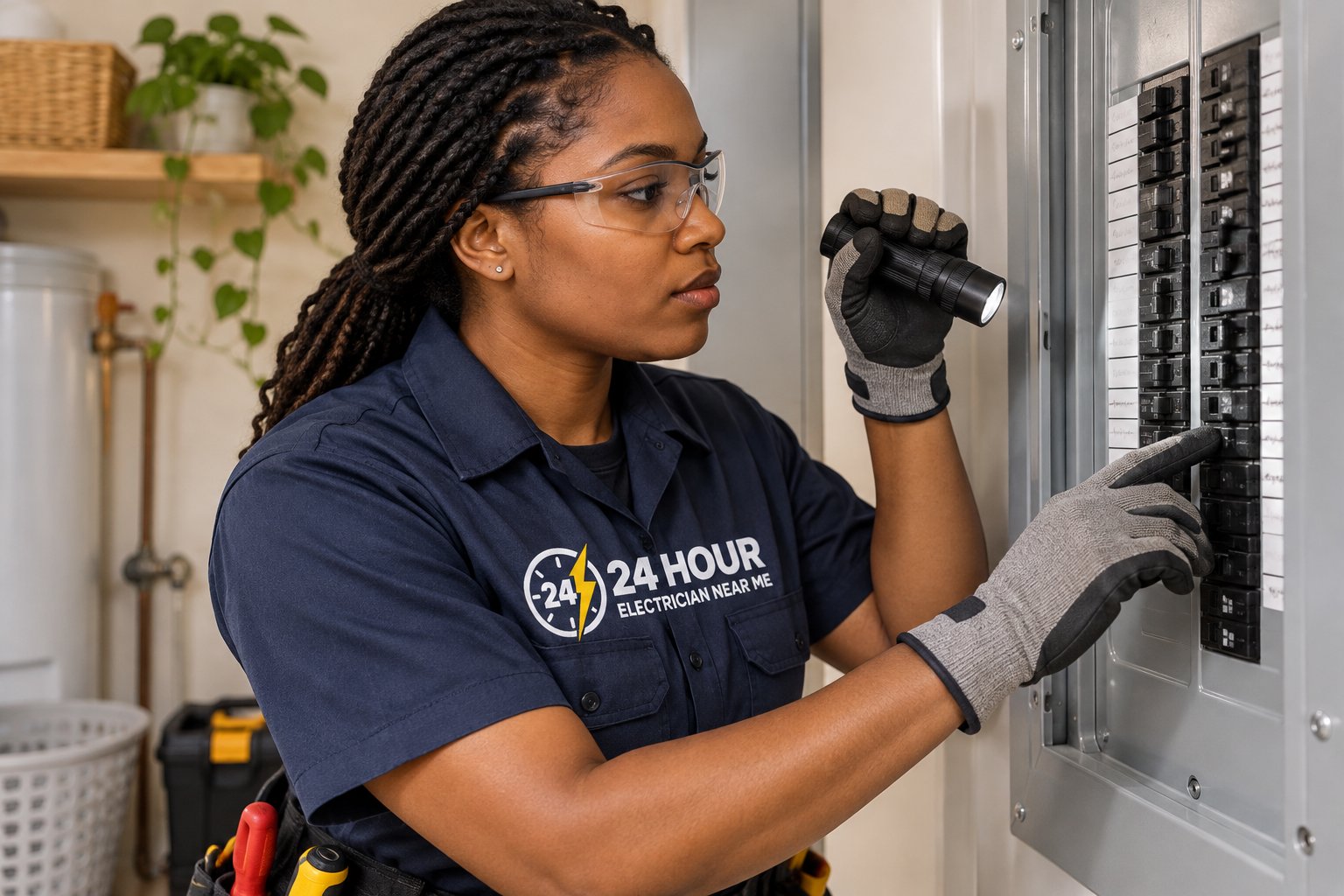
Start with the panel and the main breaker
Know where your main breaker is, and make sure everyone in the household who is old enough can find it. In a storm, you may need to shut off power quickly, for example if water enters the home or if a line comes down on the property. Make sure the panel is accessible, with nothing stored in front of it, and with a flashlight nearby.
Check that the panel directory is readable and accurate. If you have to turn off a circuit in the dark, labels matter. If the labels are missing or wrong, an electrician can map and label the circuits. Our page on panel labeling and circuit mapping explains how this is done.
From the outside, look at the panel cover and the surrounding wall for signs of rust, water stains, scorch marks or a buzzing sound. Do not open the cover. Rust at the bottom of an outdoor panel, a stained wall below a meter or a panel that feels warm are all reasons to call for an inspection before the season. Our pages on water in an electrical panel and buzzing from a panel describe what those signs can mean.
The service entrance: meter, mast and weatherhead
The service entrance is the part of the system most exposed to wind. From the ground, look at the mast, the pipe that carries the service wires up to the weatherhead, and check that it is straight and firmly attached. Look at the weatherhead for cracks or gaps. Check the meter box for rust, a loose cover or signs of damage. Look at the wires from the pole to the house for sagging or contact with branches.
Do not touch any of it, and do not use a ladder near the service line. If something looks loose, damaged or heavily corroded, call a qualified electrician. Mast and weatherhead repairs involve utility coordination and a permit, which takes time. Doing it before storm season is easier than doing it afterward, when demand is high. Our pages on service mast and weatherhead repair and a damaged or hanging meter box explain the work.
Trees are a hazard as well. Overhanging branches near the service line can bring it down. Do not trim near the line yourself. Ask the utility about vegetation near its conductors, and use a tree service with experience around power lines for your own property.
Outdoor equipment and outlets
Outdoor equipment is exposed to rain, salt, wind and debris. Go around the property and look at the air conditioner condenser, pool equipment, outdoor receptacles, lighting and any sheds or outbuildings that have power. Look for cracked covers, missing gaskets, corroded fittings and loose conduit. Check that outdoor receptacle covers close properly, because in-use covers that do not seal can let water into the box.
Check that outdoor outlets have ground-fault protection and that the protection trips and resets when tested. If a weatherproof cover is damaged, replace it before the season. If a conduit or cable is loose or exposed, have it repaired. Our page on weatherproof boxes and outdoor covers describes what to look for, and outdoor outlet installation covers adding or replacing outlets.
Secure what the wind can move. Loose light fixtures, hanging cords and temporary extension cords can become hazards. Before a storm, unplug and bring in portable outdoor electrical equipment, and do not leave cords lying in places where water will collect.
- Test outdoor GFCI outlets and replace cracked or missing covers
- Check the condenser disconnect and weatherproof whip for cracks or loose fittings
- Look at pool and spa equipment for corrosion, loose covers and tripping history
- Inspect outdoor light fixtures and conduit for loose or damaged parts
- Bring portable outdoor electrical items inside before a storm
- Have anything that smells burnt, trips or looks corroded repaired before the season
Surge protection
Storms bring surges from lightning, utility switching and power restoration. A whole-home surge protective device at the panel is a first line of defense, with point-of-use protectors for sensitive equipment as a second. No product can promise protection from a direct strike, but protection reduces the stress on wiring and electronics from the far more common smaller surges.
If you already have a whole-home device, check the indicator, if it has one. A dark light or a fault indication means the protection has been used up, and the unit should be replaced. If you do not have one, consider adding it before the season. Our pages on surge protection, whole-home surge protector types and whole-home versus point-of-use protection go into the choices.
Plug sensitive electronics into quality surge protectors, and unplug them when a storm approaches if you can do so safely and before the storm arrives. Do not plug anything in during a storm if you are standing in water or near a window.
Generators: plan the connection before you need it
Generator use after storms causes injuries every year. Carbon monoxide poisoning from generators run in garages or near windows is the most common, followed by electrocution from improper connections and back-feeding the utility lines. If you own a generator or plan to buy one, decide before the season how it will be connected and where it will run.
The safe way to power a house circuit from a portable generator is through a properly installed inlet and a transfer switch or interlock, installed by a qualified electrician with a permit. The unsafe way is to plug the generator into a wall outlet using a cable with two male ends, which energizes the house wiring and can back-feed the utility lines. Never do this.
Our pages on choosing a generator for your home, transfer switches versus interlocks and portable generator inlet installation explain your options. If you have a standby generator, ask for it to be serviced before the season, and make sure the automatic transfer switch has been tested.
Outage plan: lights, food, cooling and medical needs
Think through what you need if power is out for days. Cooling is a major concern in South Florida, because heat indoors can become dangerous, particularly for older adults, children and people with medical conditions. Have a plan for where you would go if the home becomes unsafe. Store enough drinking water, and keep a supply of batteries and flashlights. Avoid candles when you can, because of the fire risk.
If anyone in the household depends on powered medical equipment, such as oxygen, a breathing device or refrigerated medication, make specific plans, including backup power, battery capacity and who to call. Ask your utility about registries for medical needs, and discuss plans with the medical provider. Our guide on a power outage preparedness plan goes further.
Keep important documents, such as your insurance details, the utility account number and the names of your electrician and permit records, in a waterproof bag. After a storm, these will be useful if you need to report damage or request a repair.
Flood-prone properties and low-lying equipment
If your property is in a flood zone, or if your panel, outlets or equipment are low to the ground, plan for what to do if water rises. Know how to shut off power safely at the main breaker if you can reach it without standing in water. If water is already near the panel or you would have to wade to reach it, do not go. Call the utility to disconnect power at the meter, or call 911 if the situation is dangerous.
Over the long term, ask an electrician about raising equipment, relocating panels and using outdoor equipment rated for wet conditions where possible. Our guide on flood zone electrical planning describes the options.
After a flood, do not turn power on until equipment has been inspected. Our guides on electrical safety in a flooded home and staying safe after a hurricane explain why.
Condos, townhomes and shared systems
If you live in a condominium or a townhome, some of the equipment that matters most in a storm, such as the meter bank, the main service, common-area lighting, elevators and fire alarms, belongs to the association. Ask your property manager about the building's storm plan, generator capacity and procedures for shutting off and restoring power. Our guides on condo electrical responsibility and high-rise electrical emergencies explain the division.
Inside your unit, you are typically responsible for your panel, your circuits and your appliances. Do the same checks, such as the panel directory, outlet protection and surge protection. If your unit has a balcony outlet or outdoor lighting, check the covers and the condition.
Avoid using generators on balconies or near windows in multi-family buildings. Carbon monoxide can travel into other units. If the association offers shared power, follow its rules.
When to call, and how we work with you
Call before the season if your checks reveal something that worries you, such as a rusted panel, a damaged mast, outdoor outlets that do not trip, a surge protector that has failed, or a generator that has never been connected properly. Early scheduling gives you better choices than the days before a storm.
Quotes are given only by phone. Simple items, such as replacing an outdoor cover, may be quoted from your description. More complicated jobs, such as a panel replacement, a generator inlet or a service repair, need an on-site visit, with a service call charge that is explained on the phone before dispatch. Permits are part of most such work.
We cannot promise availability in the days before or after a storm, because demand surges. We can help you plan now. When you are ready, call and tell us what you saw on your walk-through, and we will explain what is worth doing before the season and what can wait.
Questions people ask
What is the most important electrical step before hurricane season?
Knowing how to shut off power safely and making sure the panel is accessible and labeled, then checking the service entrance and outdoor equipment for damage or corrosion. If you plan to use a generator, decide on a safe connection through a properly installed inlet and transfer switch or interlock before you need it.
Can I plug a generator into a wall outlet during an outage?
No. Using a cable with two male ends back-feeds the house wiring and can energize utility lines, endangering line workers and your household. Use a properly installed inlet with a transfer switch or interlock, installed by a qualified electrician under a permit, or run outdoor-rated cords to individual appliances.
Should I turn off my main breaker before a storm?
Not as a routine step, but know where it is and how to use it. Turn it off if water enters the home, if there is damage, or if the utility or emergency officials advise it. Never go to the panel if you would have to stand in water. If water is near the panel, call the utility or 911.
Is a whole-home surge protector worth it?
It reduces stress from the many smaller surges storms and power restoration cause, though no device can promise protection from a direct strike. It works best with good grounding and with plug-in protectors for sensitive electronics. An electrician can explain the types and whether your panel suits one.
How much does pre-season electrical work cost?
Quotes are given only by phone. Simple items may be quoted from your description, while panel, generator or service work needs an on-site visit before the scope is confirmed. There is a service call charge for that visit, and it is explained on the phone before any technician is dispatched.
Can I count on an electrician right before or after a storm?
We cannot promise availability, because demand rises sharply and some jobs must wait for the utility and the building department. That is why scheduling inspections and repairs early in the season is wise. If you have an urgent safety concern, call 911 first when life or property is in immediate danger.
If "Your Electrical Checklist Before Hurricane Season" sounds like your problem, call and describe what you see, hear or smell at the panel, the outlet or the fixture. We explain what the work involves, and some jobs need a visit before a quote.
Related pages
- After the Hurricane: Post-storm electrical hazards: damaged service equipment, flooded panels, generator misuse, and how to know when it is safe to restore power to a home.
- Outage Plan: Build a household power outage plan for South Florida: medical needs, food, communication, safe generator use and when to involve an electrician.
- Whole-Home & Commercial: A practical guide to layered residential and commercial surge protection in Broward County and the cities from Boca Raton to North Miami.
- Generator Inlet: How an exterior generator inlet and panel interlock let you power chosen circuits safely during an outage without backfeeding the utility grid.
- Choosing a Generator: Compare portable, inverter and standby generators by use case, fuel handling, noise and safe connection for South Florida homes and storm season.
- Inspection Day: Get ready for rough and final electrical inspections: access, labeling, timing with open walls, and what inspectors typically look at on each visit.
Taking pictures and notes before the storm so decisions are easier later
Preparation includes information, not just equipment. Before the season gets busy, photograph your panel with the door open and closed, the meter and service mast, any outdoor outlets and fixtures, generator connections, and the area around them. Record the panel's circuit labels and note which breakers serve the refrigerator, the air conditioner, medical equipment, and the well pump if you have one. These images help you remember how things looked and give a technician helpful context after a storm. Remember that South Florida heat and moisture can make an ordinary problem show up faster than it would in a drier climate.
Gather practical paperwork in one waterproof place: copies of permits, equipment manuals, your utility account number, insurance information, and a list of contacts. Keep a written plan that says who will turn off the main breaker if flooding threatens, where flashlights and spare batteries are stored, and what each person should do if the building loses power. A plan that lives only in one person's head tends to fail when that person is away from home. Every property has its own history of repairs and additions, which is why general guidance can only take you so far.
Share the plan with everyone who lives in the home, including older relatives and teenagers. Make sure they know where the main breaker is, that they should never walk through standing water near electrical equipment, and that downed lines must be treated as energized. If you want a technician to look over the system before the season, call us. The office can talk through your concerns and confirm availability, although no timing can be promised during busy periods. Clear a safe, dry path to the area involved, and keep children and pets away while any work is under way.
Returning to a house after the storm has passed
Coming back after a hurricane calls for patience. Before entering, look at the outside from a distance for downed wires, a leaning service mast, a damaged meter, or water pooled around equipment. If you see any of these, stay away and contact the utility and emergency services. Do not touch anything that is wet and connected to the electrical system, and do not wade through standing water if outlets, extension cords, or appliances might be submerged. Ask about anything that affects neighbors, shared walls, or common equipment, since those areas often carry extra rules and notice requirements.
If the building is dry and the main breaker is off, leave it off until you are sure the equipment is safe. Look at the panel and outlets for signs of water, mud, or corrosion, and smell for burning. Equipment that has been soaked often needs replacement rather than drying, because moisture can hide inside and cause problems later. Do not use wet appliances, and do not run a generator indoors or in a garage, since exhaust gases are dangerous. Take your time with this part, because rushing is how loose ends and misunderstandings creep into otherwise straightforward electrical work.
A technician can inspect the service equipment and circuits, explain what has been damaged, and describe the scope before any work begins. In widespread events, demand is high, and availability can only be confirmed when you call. Keep photographs and notes for insurance purposes and keep receipts for any temporary measures you took. Call us to talk through your situation, and we will help you understand what needs attention first and what can wait. Be wary of quick fixes such as repeatedly resetting a breaker, since a device that keeps tripping is usually reporting a real condition.