

Why a written plan beats good intentions
Most households think about outages only when the lights go out, and by then the flashlight batteries are dead, the phone is at low charge and nobody remembers where the manual for the generator ended up. A plan written on one page and kept somewhere obvious replaces memory with a checklist. It also lets every adult and older child in the home act the same way without a long conversation in the dark.
South Florida outages come in two broad flavors. Short ones last minutes to a few hours and usually follow a lightning strike, a vehicle hitting a pole or a transformer failure. Long ones follow hurricanes, tropical storms and widespread flooding, and can stretch across days. Your plan should have a short-outage version that takes five minutes to run and a long-outage version that covers water, food, medication, cooling and safe backup power.
The plan should also record decisions made while calm. For example, who checks on a neighbor who lives alone, where the family meets if cell service is down, and which breakers and appliances get switched off before restoration to avoid a surge. Writing these choices down means nobody has to improvise when conditions are poor.
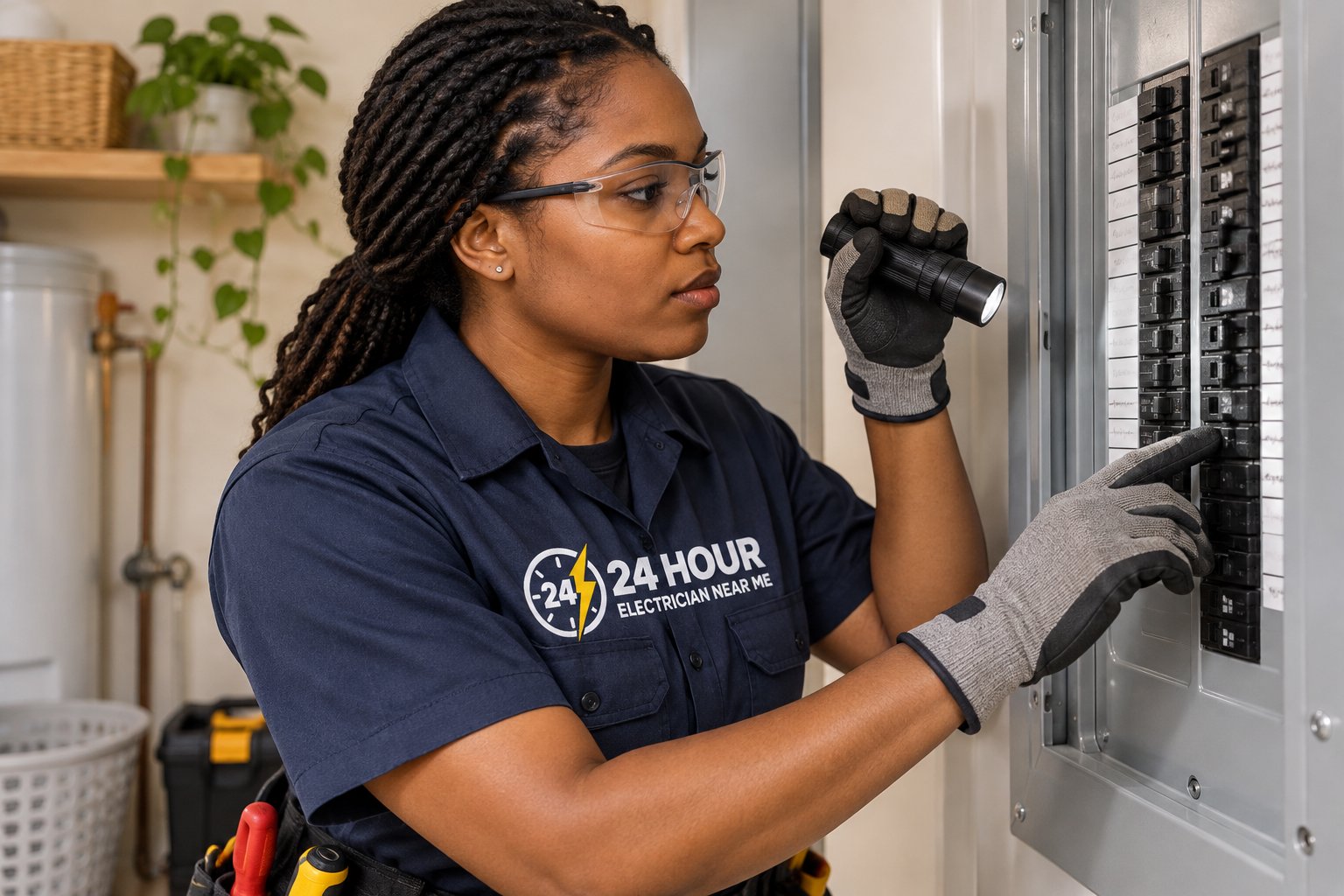
Start with the people who depend on power
The first section of any plan is about people, not appliances. List every household member who relies on electricity for health: oxygen concentrators, nebulizers, CPAP machines, powered mattresses, insulin refrigeration, home dialysis equipment, electric wheelchairs and scooters. For each device write down how long its battery lasts, who the supplier is and what the fallback is if power stays off longer than the battery.
Talk to the prescribing doctor or equipment supplier ahead of time about what to do in a long outage, and ask whether the household can register with the local utility as a customer who depends on medical equipment. Registration does not guarantee priority restoration, so the plan still needs its own backup, such as a location with power where the person can go. Keep the contact numbers on paper, not only in a phone that may be dead.
Older adults, infants and anyone with heat sensitivity are at risk when air conditioning stops. Heat illness develops quietly. The plan should name a cooler place to go, such as a family member's home outside the affected area or a public cooling site announced by local authorities, and a trigger point for leaving, for example indoor temperatures staying uncomfortable for a set period.
- List every powered medical device and its battery runtime
- Write supplier and doctor phone numbers on paper
- Choose a cooler place to go and agree on when to leave
- Name one person responsible for checking on each vulnerable neighbor
Light, communication and information
Plan for light that does not involve an open flame. Battery lanterns and headlamps are safer than candles, especially around children, pets and the fuel and cleaning products stored in many Florida garages. Store spare batteries in the same bag as the lights, in the right sizes, and check them at the start of hurricane season each year.
Communication is the second pillar. Keep a charged power bank for every phone, and a car charger as a backup. A battery or hand-crank radio carries emergency announcements when the cell network is congested. Write down the numbers for family, the utility's outage line, your building manager or association and your electrician, and agree on a text-first rule, since text messages often get through when calls do not.
Information matters as much as hardware. Know how to report an outage to the utility, and know how to tell whether the outage is only at your property or across the neighborhood. Our guide on telling a utility outage from your own electrical problem explains the quick checks that answer that question before anyone makes a call.
Food, water and the refrigerator
A refrigerator keeps food cold for only a limited time if the door stays closed, and a freezer holds longer when full. The plan should say plainly: keep doors shut, use a thermometer in both compartments, and group food so that perishable items are used first. A simple appliance thermometer costs very little and removes guesswork about whether food is still safe to eat.
Stock water for drinking and basic hygiene, and choose shelf-stable food the household will actually eat that needs no cooking. Keep a manual can opener with the supplies. If you rely on an electric stove, the plan should recognize that no cooking is available during an outage unless there is a safe outdoor option, and that grills and camp stoves belong outdoors only, never in a garage, on a balcony or near an open window.
Add a line about what to throw away. Following food safety guidance from public health agencies is more reliable than relying on smell or appearance. When in doubt, the plan should say to discard rather than risk illness, and to photograph spoiled food if an insurance claim might apply.
Backup power: what is safe and what is not
Backup power is where plans most often go wrong. A portable generator produces carbon monoxide and must run outdoors, well away from doors, windows and vents, never in a garage, a carport enclosure or a lanai. Fuel storage has its own hazards. The plan should include a firm rule that nobody runs a generator indoors, and that the unit sits on a dry surface protected from rain without being enclosed.
Plugging a generator into a wall outlet with a homemade cord, sometimes called backfeeding, can send power out onto utility lines and injure line workers or neighbors. Connecting a generator to a home's wiring should be done only through properly installed equipment, such as an inlet and an interlock or transfer switch. Our pages on transfer switches versus interlocks and choosing a generator for your home explain the options in plain language.
Whole-home batteries and small portable power stations are another route. The plan should record what each device can run, for how long and what it is wired to. If you are considering a permanent solution, a qualified electrician will need to look at your panel, your loads and local permit rules before anything is installed.
What to do at the panel and around the house when power fails
When the lights go out, resist the urge to flip every breaker. Start by checking whether neighbors have power, because that tells you whether the problem is at your property or beyond it. If only your home is out, look at the main breaker and any tripped branch breakers, and follow the guidance in our page on what to do when neighbors have power and you do not.
If the whole area is out, a useful habit is to turn off or unplug sensitive electronics and large appliances, leaving one light switched on so you notice when power returns. Restoration can bring a surge or a brief flicker, and compressors in air conditioners and refrigerators dislike being restarted instantly. Waiting a few minutes after power returns before turning on large loads is a sensible rule that costs nothing.
Stay away from downed lines and anything touching them, including puddles and fences near them. Treat every fallen line as live and report it to the utility and to 911 if there is any danger. Never try to move a line or a branch lying on one. If water has entered the home, do not touch electrical equipment while standing in water, and keep the main breaker off until a qualified person has checked the system.
Using the plan through a hurricane season
Hurricane season is the best calendar anchor for a household plan. Review the plan at the start of the season, replace stored batteries, test any generator under load and confirm that fuel is stored safely and within its shelf life. Check that the panel is accessible, that circuit labels are legible, and that nothing is stacked in front of the panel or meter.
Before a named storm, charge every device and power bank, run laundry and dishes if power is still stable, fill containers with water, and take photographs of the property, the panel and major appliances for insurance records. Move valuable electronics to higher ground. If you live in a flood-prone area, our guide on the hurricane season electrical checklist adds items specific to wiring and equipment.
After the storm passes, the plan should include a cautious re-entry routine: look before touching, avoid standing water near electrical equipment, and have any panel or outlet that got wet inspected before it is re-energized. Our page on electrical safety after a hurricane expands on those steps.
When an electrician belongs in the plan
An electrician has three natural places in an outage plan. The first is before the season, to install a proper generator inlet, a transfer switch or surge protection, and to inspect a panel that has shown warning signs. The second is during an outage, if a fault at your property rather than the utility is the cause. The third is afterward, to inspect anything that was flooded, struck by lightning or damaged by a surge.
Put the number of a qualified electrician in the plan before you need it, along with notes on your panel type, the age of the system and any known trouble spots. Dispatch for urgent faults depends on conditions, and storm periods bring heavy demand, so a plan that assumes an instant visit during a regional emergency is unrealistic. Quotes are provided by phone, and complicated jobs need an on-site visit.
A service call charge applies and is explained on the phone before anyone is dispatched. Knowing this in advance, along with what information to have ready, makes the call faster. Have the address, a short description of what happened, whether anyone has been hurt or any burning smell is present, and whether water is involved.
A one-page template you can copy
Put the plan on a single sheet and tape a copy inside a kitchen cabinet. The sheet should include these items in this order, so that the most urgent information is read first.
Update the sheet each year and after any change in the household, such as a new medical device, a new baby, a visiting relative or a move to another property. A plan that is current is far more useful than a perfect one that is two years old.
- Emergency numbers: 911, the utility outage line, a family contact, the building manager or association, your electrician
- People who need power for health, with device names, battery times and fallback locations
- Where the flashlights, radio, power banks and spare batteries are stored
- Where the main breaker, panel and water shut-off are, and who may operate them
- Rules for generators, grills and candles, written as firm do-not rules
- Food and water supply locations and how long they should last
- Neighbors to check on and neighbors who will check on you
- Where to go if the home becomes too hot or unsafe
Condos, rentals and shared buildings
Many South Florida households live in condominiums, townhomes or rentals, where the plan has extra moving parts. Elevators may stop, water pressure may drop in tall buildings because pumps need power, and the association may control generator use and balcony rules. Read the building's emergency procedures, ask what the generator in the building runs, and write down which services will and will not be available.
Renters should know who to call for an electrical fault inside the unit and who for the building's common systems. Our guide on landlord and tenant electrical repairs explains how responsibility usually divides, and the page on high-rise electrical emergencies covers the extra considerations in tall buildings.
Whatever the housing type, a good plan ends with a simple action. If something at your property looks wrong after an outage, such as a breaker that will not stay on, an outlet that smells hot or lights that flicker once power returns, stop and call. Our team can talk through what you are seeing and decide whether it needs a visit.
Questions people ask
How long should a household plan to be without power?
Short outages are common, but after a hurricane the gap can last days. A sensible plan covers a short version for a few hours and a long version for several days, including water, food that needs no cooking, medication, light, phone charging and a way to stay cool. Review it each year at the start of hurricane season.
Is it safe to run a portable generator in the garage if the door is open?
No. Carbon monoxide builds up quickly in garages, carports and enclosed lanais even with a door open, and it cannot be seen or smelled. A generator belongs outdoors, on a dry surface, well away from doors, windows and vents. If anyone feels dizzy, nauseated or has a headache near a running generator, get to fresh air and call 911.
Can I plug a generator into a wall outlet to power the house?
Do not do that. Feeding power back through a wall outlet can energize utility lines and endanger line workers and neighbors, and it can overload household wiring. The safe route is a properly installed inlet with an interlock or transfer switch, installed by a qualified electrician under local permit rules, or running individual appliances from the generator with suitable cords.
Should I turn off breakers during a long outage?
Switching off large loads such as the air conditioner, water heater and range, and unplugging sensitive electronics, reduces the shock of restoration. You do not need to switch off everything. Leave one light on so you know when power returns, and wait a few minutes before restarting large appliances so the system can settle.
What if the outage is only at my property?
Check whether neighbors have power, then look at the main breaker and branch breakers without forcing anything. If breakers will not reset, you smell burning, see scorch marks or the meter box looks damaged, stop and call. A fault at your property, as opposed to the utility, needs a qualified electrician to diagnose it safely.
When should I call an electrician about outage preparation?
Call before the season if you want a generator inlet, transfer switch or surge protection installed, or if your panel shows warning signs. Call afterward for any equipment that got wet, was struck by lightning or behaves strangely after restoration. Quotes are given by phone, and complicated work needs an on-site visit.
If "Building a Power Outage Plan for Your Home" sounds like your problem, call and describe what you see, hear or smell at the panel, the outlet or the fixture. We explain what the work involves, and some jobs need a visit before a quote.
Related pages
- Utility vs Home: How to tell a utility outage from a fault at your own property, with simple safe checks to run before anyone is called and what each result means.
- Hurricane Checklist: A pre-season electrical checklist for South Florida homes: panels, outdoor equipment, generators and surge protection to review before the first storm.
- After the Hurricane: Post-storm electrical hazards: damaged service equipment, flooded panels, generator misuse, and how to know when it is safe to restore power to a home.
- Choosing a Generator: Compare portable, inverter and standby generators by use case, fuel handling, noise and safe connection for South Florida homes and storm season.
- Transfer Switch vs Interlock: How transfer switches and panel interlock kits keep generator power off the utility lines, what each can power, and the trade-offs for a South Florida home.
- Inspection Day: Get ready for rough and final electrical inspections: access, labeling, timing with open walls, and what inspectors typically look at on each visit.