

The first rule: assume everything electrical is a hazard
After a hurricane, a property can hide electrical dangers in plain sight. A line lying in the grass, a wet outlet, a damaged meter, a generator running in a garage and a puddle near a panel can all injure or kill. Your best protection is a habit of caution: look before you step, do not touch what you cannot identify, and treat any wire, fixture or equipment that has been exposed to wind, water or debris as damaged until an electrician says otherwise.
Emergency officials in many storms see more electrical and carbon monoxide injuries in the days after landfall than during it. People are tired, anxious to restore normal life and tempted to improvise. Slowing down is the single most protective choice.
If anyone in the household is injured by electricity, call 911. Do not touch a person who is still in contact with a live source. If a person is in contact with a fallen line, a wire or an energized object, keep away, and let emergency crews or the utility de-energize it.
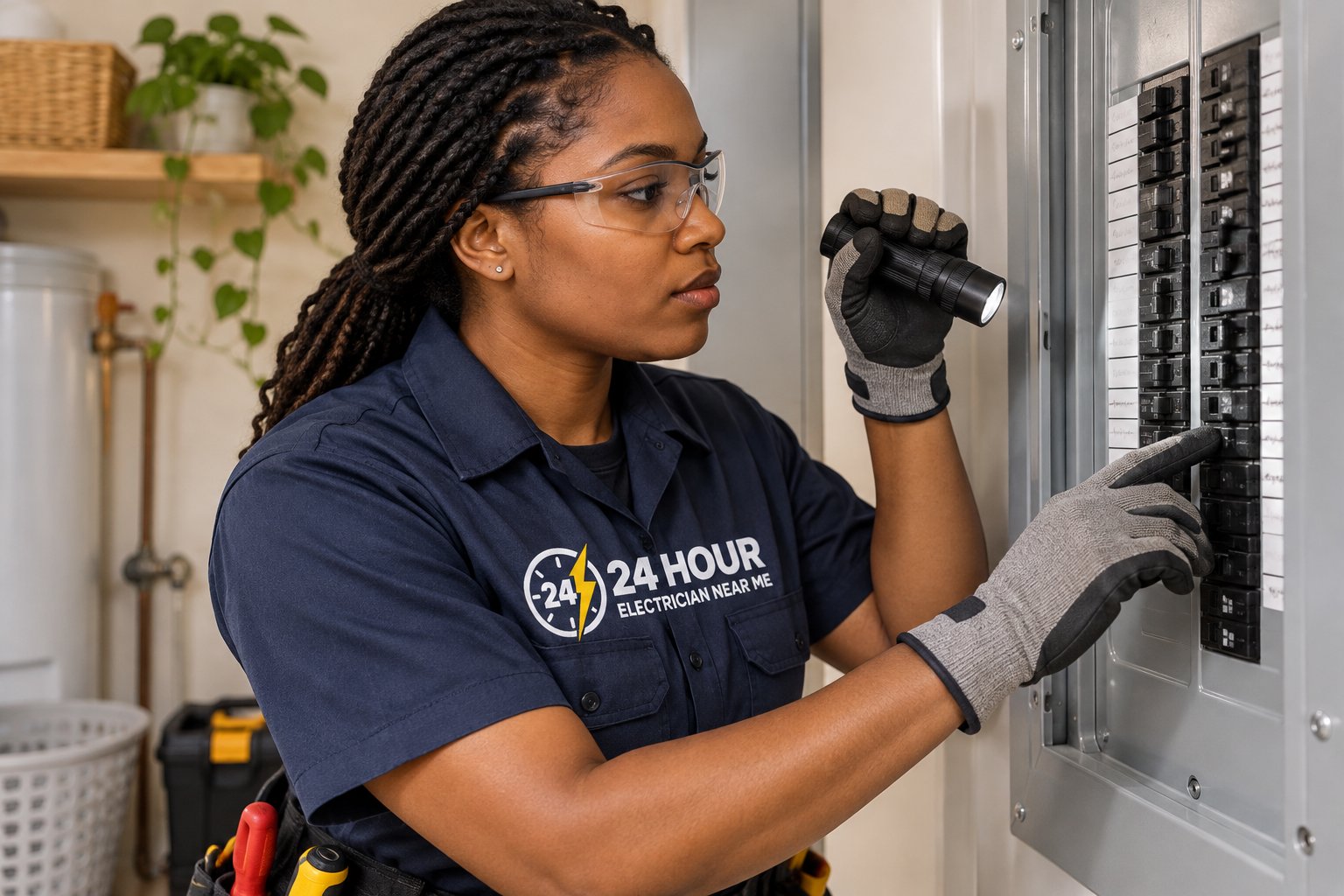
Downed lines and damaged service equipment
Stay far away from any downed line, and from anything touching it, such as a fence, a tree or a puddle. Report it to 911 and the utility. The details are covered in our page on a downed power line at your property. A line that appears dead may be energized, and automatic equipment can restore power to it without warning.
Look at the building's service equipment from a safe distance. Signs of trouble include a mast that is bent or leaning, a weatherhead pulled away from the wall, a meter box that is cracked or hanging, wires dangling or a line that sags toward the roof. Do not touch these, and do not attempt to move or secure them. See our page on a damaged or hanging meter box for what is safe to do and who handles the repair.
If the service is damaged, the utility may need to disconnect and later reconnect it, and a qualified electrician repairs the equipment on your side. Expect a permit and an inspection before the utility restores power. After a major storm, the process can take longer, because the utility and the building departments are dealing with high volumes.
Water and electricity
Storm surge, heavy rain and roof leaks bring water into places where electrical equipment lives. Water that has reached outlets, switches, panels, appliances or wiring can leave them unsafe even after it dries. Contaminants such as salt, mud and sewage cause corrosion and conductive paths that can fail later.
Do not enter standing water if there is any chance it is in contact with electrical equipment, and never wade through water to reach a panel. If the panel is dry and you can reach it safely without standing in water, turning off the main breaker is reasonable. If you cannot, call the utility to disconnect power at the meter. Do not touch electrical devices with wet hands or while standing on a wet floor.
Our guide on electrical safety in a flooded home describes in detail what flood-exposed panels, outlets and wiring require, and why the equipment cannot simply be dried out and put back to use. For roof leaks, water that runs down through ceilings can reach recessed lights, fans and junction boxes. If a ceiling is wet or sagging, turn off the circuits that serve it at the panel, and do not touch the fixtures.
Generators: the biggest preventable danger
Generators save lives during outages and also cause deaths every season. Carbon monoxide is odorless, and a generator running in a garage, carport, porch or near a window can fill a home with the gas in a short time. Always run a generator outdoors, far from doors, windows and vents, with the exhaust pointed away from the building. Install battery-powered carbon monoxide alarms and make sure they work.
Back-feeding is the other major hazard. Plugging a generator into a wall outlet using a homemade cable with two male plugs energizes the home's wiring and can send electricity out to the utility lines, endangering line crews working to restore power. It can also overload the generator or start a fire. Never do it.
The safe options are to run heavy-duty outdoor-rated extension cords directly from the generator to individual appliances, or to use a properly installed generator inlet with a transfer switch or interlock, installed by a qualified electrician with a permit. Our pages on portable generator inlet installation, transfer switches versus interlocks and choosing a generator for your home explain the options.
- Run generators outdoors only, well away from doors, windows and vents
- Use battery-powered carbon monoxide alarms inside the home
- Never plug a generator into a wall outlet or use a two-male cable
- Let the generator cool before refueling, and store fuel safely outside living areas
- Keep the generator dry, on a stable surface, with a protective canopy that allows airflow
- Use cords that are rated for outdoor use and sized for the load
Do not restore power until the system is checked
When utility power returns to the neighborhood, your building's own wiring may not be ready. Electrical equipment that took in water, was struck by debris or sat in salty air can fail when energized, sometimes violently. Water in a panel can cause arcing. Damaged insulation can short. Corroded contacts can overheat and start a fire.
If the service was disconnected or damaged, the utility will not reconnect it until required repairs are complete and, usually, an inspection has been approved. If your power has stayed connected through the storm, make a careful walk-through before turning on more equipment. Check for water, damaged cords, wet outlets and unusual smells. If anything seems wrong, leave the main off and call an electrician.
When power is restored, bring circuits back gradually. Turn on the main breaker, then individual breakers one at a time, and watch for odors, noises, warm covers or breakers that trip. Unplug sensitive electronics before power comes back, since the restoration can bring a surge. If anything behaves oddly, turn the circuit off and have it checked.
What an electrician checks after a storm
After a hurricane, an electrician's priorities are safety and orderly restoration. A technician walks through the property with you, asks what happened and what you observed, and examines the service equipment and panel first. They look at the places where wind and water do their damage, then test circuits and devices that were exposed.
The assessment is a combination of looking, measuring and testing. It typically identifies what can be restored, what needs to be repaired and what must be replaced. The work is sorted into immediate safety needs, work needed before power can be restored and lesser items that can wait.
- The service entrance: mast, weatherhead, conduit, meter socket and conductors.
- The panel: moisture, corrosion, heat marks, loose connections and breaker condition.
- Circuits that were wet, struck or damaged: outlets, switches, fixtures and fans.
- Outdoor equipment: air conditioner disconnects and supply, pool equipment, lighting and outdoor outlets.
- Grounding and bonding at the service and at metal systems.
- Surge damage: appliances, electronics and surge protective devices.
- Generator connections, if any, for improper wiring and safe operation.
Hidden damage that appears later
Some storm damage does not announce itself. Water that entered a wall cavity can corrode conductors and boxes over weeks. Surges that passed through the home can weaken electronic components so that they fail later. Salt carried inland by wind and spray can corrode outdoor equipment, meter sockets and connections. Roof or wall damage that lets in moisture can create problems that surface when the humidity is high.
Because of this, a post-storm electrical check is worth considering even if the home seems to have come through. Keep an eye out for flickering lights, outlets that stop working, breakers that trip, warm covers and unusual smells for weeks afterward. Our pages on power flickers after a storm and lights flickering in the house describe causes to consider.
Moisture in walls after a storm is also a mold and structural concern, and a restoration contractor may be involved. Coordination matters: electrical repairs should be done before walls are closed, and wet insulation and drywall should be removed according to the restoration contractor's plan. Ask the contractors to talk to each other.
Cleanup safety
Cleanup brings people into contact with electrical hazards. Power tools, extension cords, wet vacuums and pressure washers can all be dangerous when used on wet surfaces. Use ground-fault protected outlets or portable GFCI devices, keep cords out of standing water and do not use damaged cords. Be careful with ladders near service lines and lights, and never use a metal ladder near overhead wires.
When removing debris, watch for wires hidden in piles of branches or in fallen fences. Chainsaw work near trees that may be in contact with lines should be left to professionals. Do not move debris that might be touching or hiding a downed line.
If you hire help for cleanup or repairs, be cautious about door-to-door offers. After storms, unqualified individuals often appear offering quick electrical work. Ask for credentials and a permit, check with the building department, and see our guide on what to ask before hiring an electrician. Be wary of anyone who asks for full payment up front, refuses to pull a permit or pressures you to decide immediately.
Condos, high-rises and shared systems
In multi-family buildings, the electrical systems that matter most after a storm, such as the main service, the meter banks, the fire pumps, the elevators and the common-area lighting, belong to the association. Restoration is managed by the association's staff and contractors, and unit owners usually must wait for common systems to be restored before their own power can return. Our guides on high-rise electrical emergencies and condo electrical responsibility explain the division.
Inside the unit, you are responsible for your panel and your circuits. If your unit flooded or had a roof leak, treat the electrical equipment the same way as in a house: do not use it until it has been checked. Notify the association promptly of any damage, because a leak in one unit can affect others.
Do not use generators on balconies or near windows. Carbon monoxide can enter other units. If the building's rules permit shared emergency power, follow the instructions of the management.
Permits, insurance and records
Repairs after a hurricane typically require permits and inspections, and building departments often have procedures to handle the surge in demand. Some allow urgent repairs to begin under emergency provisions, with a permit applied for shortly afterward. These rules vary, and the electrician should confirm them with the local department. Our guide on how electrical permits work in South Florida describes the general process.
For insurance, photograph the damage before repairs, keep damaged components until the adjuster has seen them if possible, and keep a list of what stopped working. Ask the electrician for a written description of the damage found and the work performed. Report the loss promptly, since policies have notice requirements, and ask the carrier what documentation they need. I cannot say what any particular policy covers, and your carrier or agent is the right source.
Keep your permit documents, inspection approvals and invoices. They matter during the claim and again when the home is sold. Our guide on insurance inspection electrical findings describes why.
When to call and what to expect
Call 911 for fire, injury or any immediate danger. Call the utility for downed lines and outages. Call an electrician when there is damage to your own equipment, when you need to be sure the system is safe before power comes back or when something has begun to behave strangely.
After a major storm, expect delays. The volume of calls rises, materials may be hard to get, and permits and utility reconnections take time. We cannot promise arrival times or availability, and we do not claim to have a technician at every hour and place. We can listen to what you are seeing, tell you what is safe to do while you wait and explain what the repair is likely to involve.
Quotes are given only by phone. Complicated storm repairs need an on-site visit before the scope can be confirmed, with a service call charge that is explained on the phone before dispatch. When you are ready, call and describe what the storm did to your property, and we will help you work out the safest order of steps.
Questions people ask
Is it safe to turn the power back on after a hurricane?
Only if the building's wiring and equipment have not been damaged or exposed to water. If the service equipment is damaged, flooded or visibly harmed, leave the main off and have an electrician check it. If everything is dry and intact, restore power gradually, one breaker at a time, watching for odors, noises or tripping.
Can I use a generator inside my garage if the door is open?
No. Carbon monoxide can build up in a garage even with the door open and seep into the home. Run generators outdoors, far from doors, windows and vents, and use battery-powered carbon monoxide alarms inside. Never plug a generator into a wall outlet, because it can back-feed utility lines and endanger line workers.
What should I do if my panel got wet?
Do not touch it, and do not stand in water to reach it. If you can reach the main breaker while dry, turn it off, otherwise ask the utility to disconnect power at the meter. A wet panel generally needs inspection and often replacement before power is restored. Do not try to dry it out and use it.
Will a surge from restored power damage my appliances?
It can. Unplug sensitive electronics before power comes back, and plug them in gradually after things stabilize. A whole-home surge protective device at the panel reduces the risk but cannot promise complete protection. If appliances act oddly afterward, stop using them and have the circuit and the equipment checked.
How much will storm electrical repairs cost?
Quotes are given only by phone and depend on what the storm damaged. Complicated repairs need an on-site visit before the scope is confirmed, with a service call charge that is explained on the phone before any technician is dispatched. We cannot give prices from a description of unseen damage.
Do storm repairs still need permits?
Usually yes, particularly for service equipment, panels and rewiring. Building departments often have procedures for the high volume after a storm, and some allow urgent work to begin with the permit applied for soon afterward. Rules vary by jurisdiction, so your electrician should confirm them with the local department.
If "Staying Safe Around Electricity After a Hurricane" sounds like your problem, call and describe what you see, hear or smell at the panel, the outlet or the fixture. We explain what the work involves, and some jobs need a visit before a quote.
Related pages
- Flood Safety: What flood-exposed panels, outlets and wiring require before a home can be re-energized, and why drying equipment out is not the same as making it safe.
- Hurricane Checklist: A pre-season electrical checklist for South Florida homes: panels, outdoor equipment, generators and surge protection to review before the first storm.
- Downed Power Line: A downed power line is life-threatening. Learn how to stay clear, who to call first, and what electrician work follows on your side of the meter.
- Generator Inlet: How an exterior generator inlet and panel interlock let you power chosen circuits safely during an outage without backfeeding the utility grid.
- Outage Plan: Build a household power outage plan for South Florida: medical needs, food, communication, safe generator use and when to involve an electrician.
- Inspection Day: Get ready for rough and final electrical inspections: access, labeling, timing with open walls, and what inspectors typically look at on each visit.