

Why flood zones change electrical work
Water and electricity are a dangerous pairing, and in low-lying parts of Broward County and the cities from Boca Raton to North Miami the chance of water reaching equipment is real. A panel that sits low on a garage wall may be perfectly fine for decades, until a surge from a storm pushes water through the door. When that happens, the damage is rarely limited to the panel itself. Corroded bus bars, contaminated breakers and wiring that has been wet inside its jacket can stay hidden for months and fail later.
For that reason, local floodplain rules treat electrical equipment as one of the first things to protect. Many jurisdictions require that new or substantially improved buildings place service equipment at or above a stated elevation, often the base flood elevation plus an extra margin called freeboard. Which margin applies depends on your city or county and on your flood zone designation.
This page is a planning guide, not a rulebook. Elevation requirements change when maps are updated and when local ordinances are revised, so the numbers that matter for your lot should always come from your local permit office or floodplain administrator. What an electrician can do is explain what questions to ask, what the equipment choices are, and how the electrical side of the work fits around the elevation side.
Finding out which zone and rules apply to your lot
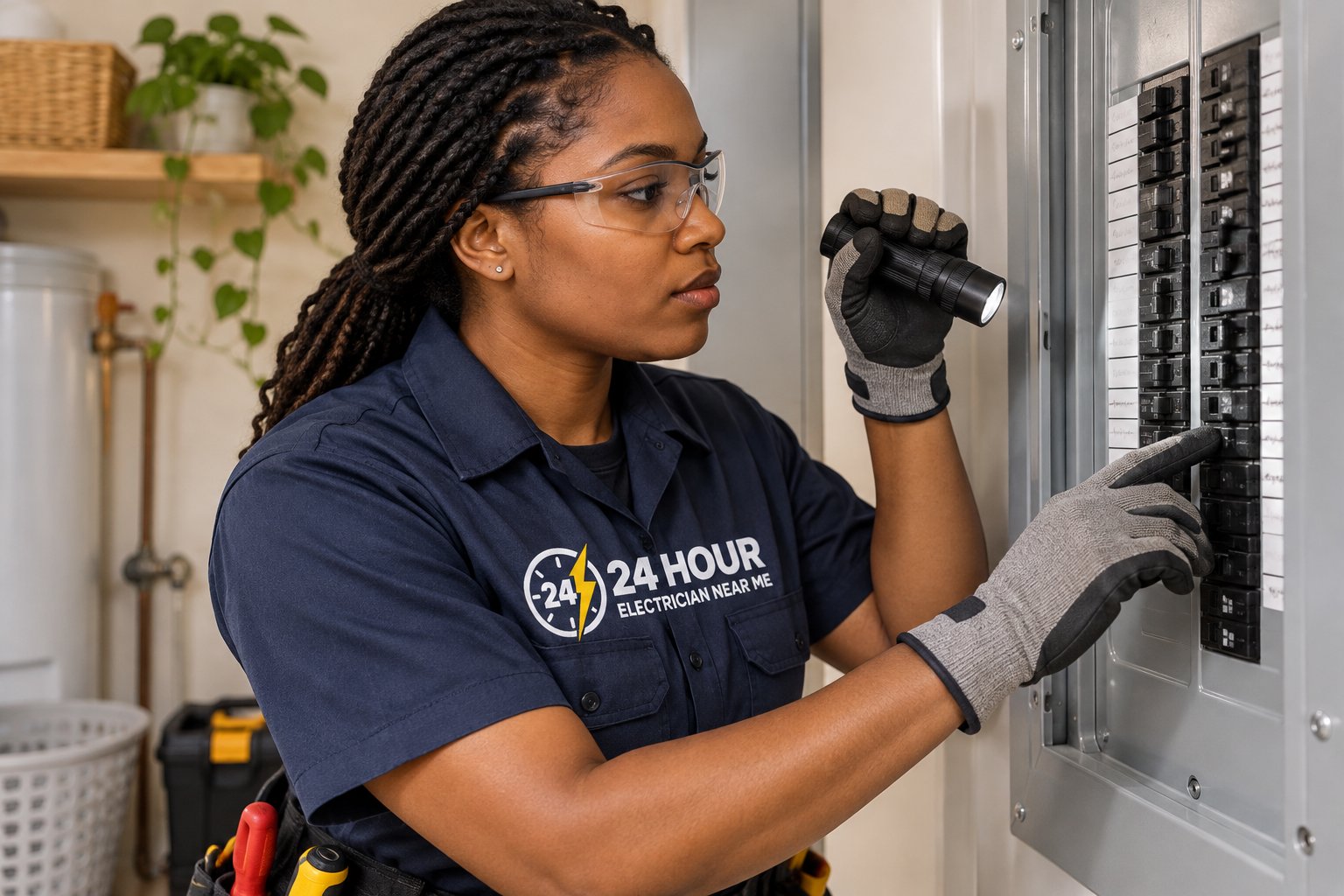
Start with the flood map designation for your address. Flood insurance maps divide properties into zones, and coastal high-hazard zones, mapped high-risk flood areas and lower-risk zones each come with different expectations. Your municipality's building or planning department can tell you the designation and the elevation reference for your lot, and many keep an elevation certificate on file for properties that have been permitted before.
An elevation certificate is a surveyor's document that records the height of the bottom floor, the attached garage and the machinery or equipment servicing the building relative to the flood reference. If you own one, bring it to any electrical consultation. If you do not, ask whether the building department has a copy before paying for a new one.
Ask three specific questions at the permit office. First, does the work you are planning count as new construction, a substantial improvement or a repair, because the category changes which rules apply. Second, is there an elevation requirement for service equipment, meters and outdoor condensers on your lot. Third, are there rules about flood-resistant materials below a certain height. Write the answers down, because they will guide where the electrician is allowed to put things.
Which equipment is affected and why it matters
Electrical equipment in a house is more scattered than most owners realize, and each piece has its own exposure to flooding. The service point and meter are usually on an exterior wall. The main panel may be in a garage, a utility closet or an outside enclosure. Subpanels can be in pool equipment areas, laundry rooms or additions. Air conditioning condensers sit outside, air handlers often sit in garages or closets, and water heaters are frequently on the ground floor.
When floodwater rises, anything with energized parts below the water line is at risk. Even if the water never touches the panel itself, moisture driven into conduit and boxes can follow wiring into places that look dry. Outlets low on walls, pool pumps, irrigation controllers and garage door openers are all common casualties.
A useful way to plan is to walk the property and list everything electrical, then mark its height. Equipment that is both critical and low, such as the main panel, deserves the first look. Equipment that is low but replaceable, such as a garage outlet, can often be left in place with the understanding that it will be inspected or replaced after any water event. The goal is not to raise every device, it is to make sure the things that are expensive, dangerous or hard to replace are not the ones sitting lowest.
Elevating a panel or meter: what is involved
Raising a panel sounds simple, but it is a significant piece of work. The panel is the end of a chain: the utility service comes in, passes through the meter, reaches a main disconnect and then feeds every branch circuit in the house. Moving the panel higher means extending or replacing the conductors that tie into it, rerouting branch circuits and often replacing conduit and fittings. The utility has to be involved whenever the meter or the service entrance is moved.
Some properties solve the problem by building a raised mounting structure outdoors, with the meter and main disconnect on a platform or on a pole, and a feeder running to the building. Others relocate the panel inside to an upper level or to a higher wall location in a utility room. Each option has trade-offs in space, appearance, wind loading and permit requirements.
Plan for a permit, an inspection and a coordinated power shutoff. Because the utility must disconnect and reconnect service, the schedule depends on both the electrician and the utility. Ask the electrician to explain the sequence before work starts, how long the house will be without power, and what needs to be protected or moved before the crew arrives. A job that changes the service location is one that needs an on-site visit before any quote can be given by phone.
Materials and methods that suit wet locations
Where equipment cannot be raised, choice of materials matters. Enclosures rated for wet or outdoor locations, corrosion-resistant fittings and conduit, and listed weatherproof covers all reduce the odds that a splash or humid air ends up inside a connection. In coastal areas, salt in the air speeds corrosion, so stainless or coated hardware is often a better choice than plain steel.
Conduit and wiring methods deserve attention too. Wiring that runs underground or through slab areas can fill with water if the conduit is not sealed properly at the ends. Sealing fittings, drip loops and correct slope for outdoor conduit all help keep water from migrating toward the panel. Wire insulation is rated for wet or dry use, and an electrician choosing conductors for a flood-prone location will look at those ratings.
Receptacles in garages, outdoors and near pools generally call for ground-fault protection, which shuts the circuit off when current leaks to ground. That protection is a safety layer, not a flood solution, but it matters if a wet device is energized. Discuss with your electrician which circuits on your property would be protected this way and whether weather-resistant devices are suitable for the exposed locations.
Generators, batteries and other add-ons in flood zones
Owners in flood-prone areas often want backup power, and the same elevation thinking applies. A generator sitting on the ground in a yard may be exactly where water collects. Some jurisdictions have rules about placing generators and fuel equipment above a flood reference, and about how much clearance is needed from openings and walls. A transfer switch or interlock that connects the generator to the house is itself electrical equipment and should be placed with the same care as a panel.
Battery systems and solar equipment add another layer. Inverters, battery cabinets and disconnects are typically installed in garages or on exterior walls, which are often the lower parts of a property. Manufacturers publish installation instructions that include allowable locations, and those instructions interact with local rules. Raising a battery system may mean mounting it on a platform or choosing a different wall.
Before buying equipment, ask whether it can be installed above the elevation your lot calls for and whether the installer is comfortable documenting that on the permit. A system that is not allowed in its first-choice location can mean extra conduit, a longer run of wire and a different layout, and it is better to learn that before the equipment arrives than after.
Permits, inspections and paperwork
Work in a flood zone almost always involves a permit, and the permit file is where elevation decisions are recorded. Inspectors may ask to see the location of the panel relative to the stated flood reference, the type of enclosure and the materials used below the reference height. If the work is part of a larger renovation, the building department may also be reviewing whether the cost of the project crosses a threshold that triggers additional flood requirements for the whole building.
Keep copies of the permit, the final inspection record and any elevation certificate. These documents help during insurance renewals, home sales and future repairs. Some insurers ask about the height of mechanical and electrical equipment as part of their underwriting, and a clear record is better than relying on memory.
If you are not the contractor of record, make sure you know who is pulling the permit and who is responsible for scheduling inspections. A permit that is never closed can cause trouble later. When in doubt, ask the permit office how to confirm the status of an open permit, and keep that confirmation with your records.
Before a storm: practical preparation
Even well-planned properties benefit from simple preparation before a storm. Know where your main breaker is and make sure everyone in the household can find it. Take photographs of your panel, meter and major equipment so you have a before record for insurance. Move portable items that plug in, such as extension cords, small appliances and tools, off the floor. Do not plug generators or other temporary sources into outlets or panels without a proper transfer device installed by a qualified electrician.
If water is forecast to enter the building, shutting off power at the main breaker before the water arrives is generally safer than leaving the system energized, but only if you can reach the panel dry and without standing in water. Never step into water to reach a panel, and never touch electrical equipment while wet. If the panel is already surrounded by water, stay out and wait for the utility or emergency responders to advise.
For life-threatening situations such as fire, a person in contact with energized equipment or downed lines near water, call 911 first. Our flooded home safety guide, the after-hurricane safety page and the hurricane season checklist cover what to do around the water, and for equipment questions see panel repair and generator transfer equipment. The short version is that anything that was submerged should be treated as unsafe until a qualified electrician has inspected it.
After flooding: what changes in the plan
If your property has already flooded, the planning conversation shifts from prevention to recovery plus prevention. Submerged panels, breakers, outlets and wiring are usually replaced rather than dried and reused, because contamination and corrosion can cause failures long after the building looks normal. This is also the moment when owners often decide to raise equipment, since the walls may already be open and the permit process is already underway.
Insurance and floodplain rules sometimes interact here. Repairs after a flood may count toward a substantial damage determination, which can trigger requirements to bring the building into line with current elevation rules. Speak with the building department before starting repairs, not after, so the electrical scope matches what is required.
A good electrician will walk the property with you, note what was affected, and separate what must be replaced from what can be tested and kept. That visit is how complicated jobs get scoped, and it is why quotes for flood recovery work are given only after the on-site look. When you are ready to talk through your property, call and describe what you have, and the office will explain how the visit and the service call charge work before anyone is dispatched.
Questions people ask
How do I find out whether my property is in a flood zone?
Your city or county building or planning department can tell you the flood zone designation for your address, and many also keep elevation certificates on file for previously permitted properties. Insurance agents and mortgage lenders often know the designation as well. Ask the permit office which elevation reference applies to electrical equipment on your lot, because the answer drives where a panel, meter or generator may be placed.
Do I have to raise my panel if I am in a flood zone?
Not automatically. Requirements usually apply when you are building new, substantially improving a building or relocating equipment, and the details vary by municipality. An existing panel that is not being changed may be left where it is, but you may choose to raise it for protection. Ask your local permit office how your planned work is classified, because that determines what rules apply.
Can I move my own electrical panel?
Moving a panel involves service conductors, the meter and often the utility, and it requires a permit and inspection in nearly every jurisdiction. It also exposes workers to dangerous energized equipment. For that reason it is not a do-it-yourself project. A qualified electrician working under a permit should handle it, with the utility coordinating any disconnect and reconnect of service.
Is a flooded panel safe to turn back on after it dries?
No. Panels, breakers and wiring that have been under water can corrode, hold contamination and fail later even if they look and smell fine. Do not try to switch them on. Stay clear, keep the main off if you can reach it safely, and have a qualified electrician inspect the entire system. Many components will need to be replaced rather than dried and reused.
Does elevating equipment affect my insurance?
It can. Some insurers and flood programs consider the height of mechanical and electrical equipment when they assess risk, and a clear record of where equipment sits can help. Terms differ between carriers and policies, so ask your agent what documentation they want, and keep your permit, inspection records and any elevation certificate together in one place.
Who gives a price for flood-zone electrical work?
Prices are given by phone only, and jobs that involve moving a panel, meter or service need an on-site visit first. There is a service call charge, and it is explained on the phone before anyone is dispatched. Call with a description of your property, your flood zone if you know it, and what you hope to protect.
If "Planning Electrical Equipment in a Flood Zone" sounds like your problem, call and describe what you see, hear or smell at the panel, the outlet or the fixture. We explain what the work involves, and some jobs need a visit before a quote.
Related pages
- After the Hurricane: Post-storm electrical hazards: damaged service equipment, flooded panels, generator misuse, and how to know when it is safe to restore power to a home.
- Flood Safety: What flood-exposed panels, outlets and wiring require before a home can be re-energized, and why drying equipment out is not the same as making it safe.
- Hurricane Checklist: A pre-season electrical checklist for South Florida homes: panels, outdoor equipment, generators and surge protection to review before the first storm.
- Panel Repair: Guide to electrical panel repair, replacement and capacity upgrades in South Florida: what an evaluation covers, permits and what to prepare before a visit.
- Generator Transfer: Guide to generator connections and transfer equipment in South Florida: load priorities, safe installation, permits and hurricane readiness.
- Inspection Day: Get ready for rough and final electrical inspections: access, labeling, timing with open walls, and what inspectors typically look at on each visit.