

Backup power begins with an outage plan.
Residential and commercial generator projects in Broward County and the cities from Boca Raton to North Miami can follow very different paths. One household may need a safe way to operate a refrigerator, a few lights and communications from a portable generator. Another may want a permanently installed standby unit that starts automatically. A condominium may have no individual outdoor location or authorized wiring route. A business may need selected operational loads, several transfer points, documented procedures and coordination among electrical, mechanical, fuel, fire, zoning and facilities teams.
The first useful question is not "What size generator should I buy?" It is "What must keep operating, what can remain off, and who will manage the system?" Those answers establish the load list, desired transfer method, acceptable level of manual involvement, fuel strategy and resilience goal. They also reveal where backup power cannot substitute for a broader emergency plan. A generator does not make a building safe to occupy during a hurricane, override an evacuation order, guarantee fuel delivery or restore equipment damaged by floodwater.
Planning should distinguish three things that are often blurred together: the generator, the transfer or connection equipment, and the selected building loads. The generator produces power. Listed transfer equipment prevents the alternate source and utility source from energizing the building at the same time in an unsafe arrangement. The load plan determines what the alternate source is expected to support. Each part must be compatible with the others and with the actual electrical service.
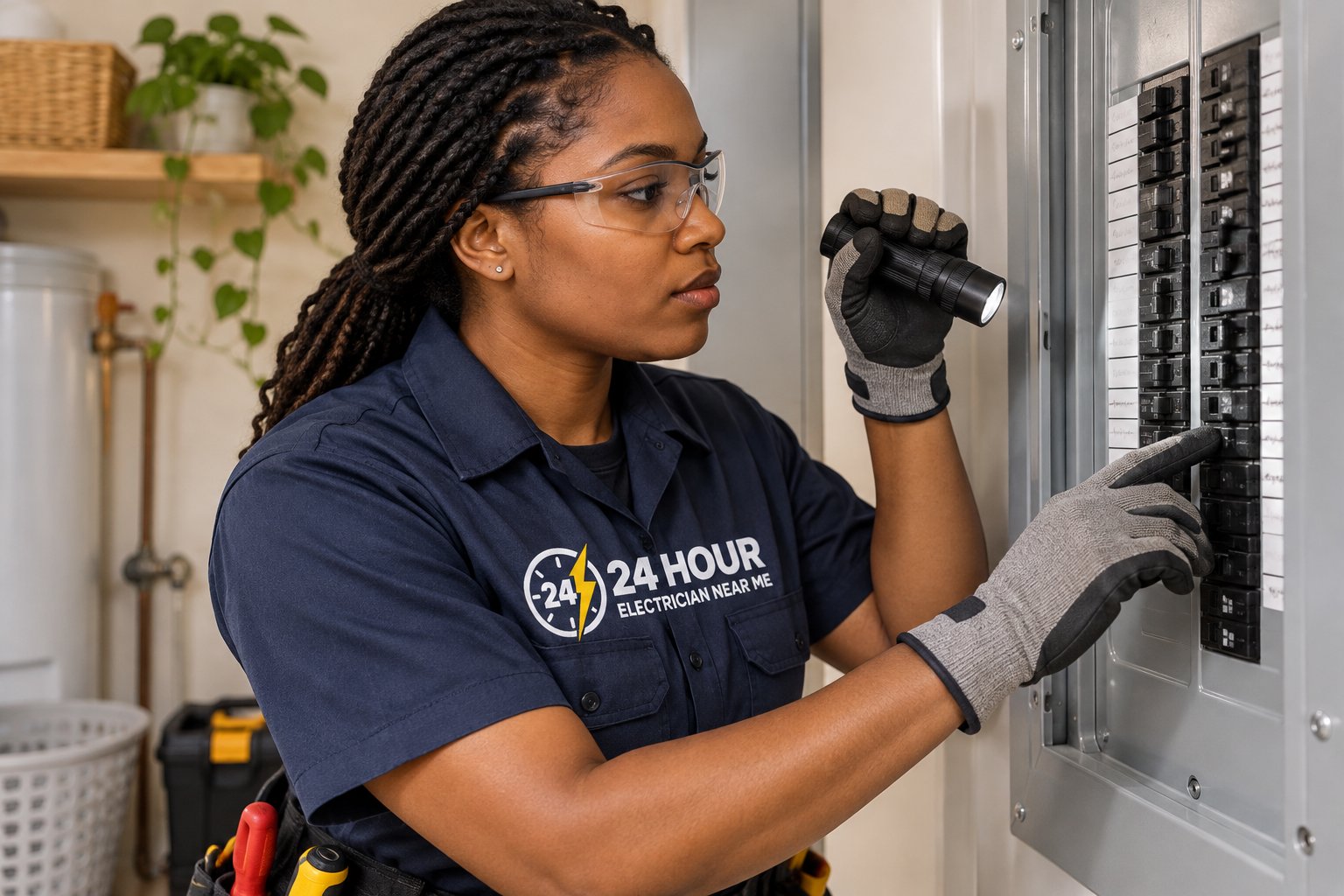
Photographs and equipment labels can prepare a visit, but sizing and scope require verified conditions. A final plan may also need input from a generator dealer, gas contractor, fuel supplier, utility, design professional, association, landlord or local authority having jurisdiction.
Keep exhaust outside and generator power off utility lines.
Immediate danger needs 911, not a service request.
Call 911 for fire, smoke, suspected carbon-monoxide exposure, active arcing, electric shock, a gas odor or another immediate threat. Move to fresh air immediately when a carbon-monoxide alarm sounds or poisoning is suspected. Follow emergency officials' instructions.
Portable generators produce carbon monoxide, a colorless and odorless poison. Never operate one in a home, garage, basement, crawlspace, shed, porch or other enclosed or partly enclosed area, even with a garage door, window or exterior door open. The U.S. Consumer Product Safety Commission says portable generators should operate outdoors only, at least 20 feet from the home or building, with exhaust directed away from windows, doors and vents. Apply that separation to neighboring occupied buildings and openings too. Manufacturer instructions and site-specific official requirements still apply.
Do not move a portable generator closer to a building to shelter it from South Florida rain. Water and electricity create shock and electrocution hazards. Follow the manufacturer's instructions for wet-weather operation and protection; any cover must preserve the required outdoor location and airflow. Keep hands dry, avoid standing water and do not touch equipment when conditions are unsafe. Flooded or storm-damaged electrical equipment must stay out of service until appropriately evaluated.
Never "backfeed" a house or business by plugging a generator into a wall receptacle, using a homemade double-ended cord, defeating an interlock, or improvising a connection at a panel. Backfeeding can energize utility lines, injure or kill lineworkers and neighbors, damage equipment, and bypass intended protection. FPL instructs customers connecting a generator to building wiring to use a transfer switch installed by a qualified electrician. Portable appliances used without a building connection should be supplied only in the safe manner permitted by the generator and appliance manufacturers, using appropriate outdoor-rated cords in sound condition.
Carbon-monoxide alarms are an essential layer of protection, but an alarm does not make an unsafe generator location acceptable. Follow current alarm placement, testing and battery guidance from the manufacturer and official safety agencies. Keep combustion exhaust away from air intakes. Never refuel a generator while it is running or hot. Store and handle fuel only in approved ways, outside living areas, and do not exceed the storage allowed by the property, fire authority, insurer or fuel provider.
A power inlet is not just an exterior outlet. It is part of a designed transfer system. Do not remove panel covers, alter wiring, test exposed conductors or attempt to create a transfer arrangement yourself.
Four common system paths solve different problems.
Portable does not mean casual
A portable generator may offer flexibility and a lower-infrastructure path, but safe use demands active decisions during a stressful outage. Someone must move it to a compliant outdoor operating location, connect only the planned loads, protect the equipment from unsafe weather without creating an enclosure, monitor fuel and conditions, and shut it down correctly. If the user cannot safely perform those steps, the portable path may not match the household or organization.
A manual transfer setup can reduce cord routing through a building and provide a controlled set of circuits, but it still requires an operator. The plan should be understandable in low light and bad weather. Labels need to match the actual circuits. The generator must remain within its capability. People should know which large loads stay off and what to do when utility power returns.
Standby does not always mean "whole building"
A permanently installed generator may serve a selected-load panel, a managed set of circuits or a broader building load, depending on the approved design. Advertising language such as "whole house" can hide important assumptions. Air conditioning, water heating, cooking, pool equipment, pumps and vehicle charging can materially affect the load plan. A system marketed for an entire building may still rely on load-shedding controls or operating restrictions.
Automatic starting can be valuable when a property is occupied by someone who cannot deploy a portable unit, when the owner is away, or when a business needs a defined continuity response. It also creates responsibilities: the equipment may start without a person standing nearby, so clearances, guards, service access, exhaust management, fuel condition and routine maintenance matter every day, not only after the forecast changes.
| Path | How it is used | Planning focus | Important boundary |
|---|---|---|---|
| Portable, appliance connection only | Selected appliances connect directly to an outdoor portable generator using manufacturer-permitted cords. | Outdoor placement, exhaust, weather, cord condition and rating, appliance starting demand, fuel and attended operation. | It does not connect to building wiring. Never feed a receptacle, panel or improvised building connection. |
| Portable with inlet and manual transfer equipment | An outdoor generator connects to a properly installed inlet; a user follows a defined manual sequence to isolate utility power and select generator-fed circuits. | Listed compatible inlet and transfer arrangement, accessible location, conductor route, selected loads, labeling, operating procedure and safe generator placement. | The inlet and transfer equipment must be designed and installed as one safe system. A cord alone does not create utility isolation. |
| Permanently installed standby system | A fixed generator and transfer equipment support selected or broader loads. An automatic system can detect utility loss, start and transfer according to its design. | Load calculation, transfer rating, load management, fuel supply, placement, slab and anchoring, exhaust, flood context, service configuration, permits and maintenance. | "Automatic" does not mean unlimited power or maintenance-no-obligation operation. The design must control loads within system capability. |
| Commercial or facility backup system | A documented system supports defined business, building or critical operations, potentially with several panels, transfer switches or supporting controls. | Continuity requirements, life-safety interfaces, engineering, selective coordination, operational sequencing, fuel autonomy, environmental review, testing and trained ownership. | Facility requirements can exceed a basic optional standby project. Design responsibility and applicable standards must be confirmed for that occupancy and use. |
The transfer method is the safety center of a building connection.
Transfer equipment changes the source supplying designated building wiring. Its central job is to keep the normal utility source and alternate generator source from being connected in an unsafe way. FPL's published service standards say customer-owned standby generators need a transfer device that disconnects the customer's service equipment from FPL's lines before connecting the emergency generator.
Manual transfer arrangements
A manual transfer switch or approved panel interlock arrangement requires a person to carry out the source-change procedure. The equipment should make the unsafe source combination mechanically or electrically unavailable as designed. The operator normally needs a clear sequence for reducing loads, connecting the generator, starting it, selecting the alternate source, adding loads deliberately, and later returning to utility power. That sequence must come from the installed system documentation, not a generic internet checklist.
Manual transfer can suit a portable generator and a disciplined load plan, especially when automatic operation is not required. The project should still consider the inlet location, generator cord routing, outdoor operating position, exhaust, labeling, grounding and bonding instructions, service configuration and whether the intended user can perform every step safely.
Automatic transfer arrangements
An automatic transfer switch monitors the normal source and transfers designated loads according to the system design. It may be paired with a selected-load panel, service-rated equipment, load-management controls or multiple transfer switches. The project team must define which loads transfer, which remain off, and how the generator is protected from overload. Service-entrance configurations and more complex commercial systems require close coordination with the electrical design and utility requirements.
Automatic transfer equipment does not eliminate an outage interruption, guarantee every appliance will restart correctly, or ensure communications and controls will function forever without upkeep. Some equipment has its own restart delay or lockout. Sensitive processes may need a separate uninterruptible power supply or controlled shutdown strategy. Those needs should be identified during discovery instead of after commissioning.
Selected-load panel, broader transfer or load management
A selected-load panel makes the supported circuits explicit. It can simplify priorities but may require rewiring and careful circuit identification. A broader transfer arrangement can offer flexibility, yet it depends on disciplined load control or automated shedding so demand stays within the approved generator capability. Load-management devices can temporarily block or sequence loads, but their compatibility and behavior must be verified. They are not a substitute for accurate design.
Do not buy a switch, inlet, interlock kit or generator cord because a photo online "looks like" the panel. Panel model, listing, service arrangement, ratings, available fault current, equipment instructions and local approval all matter.
A nameplate total is only the beginning of the assessment.
Generator sizing requires more than adding familiar appliance wattages. Motors and compressors can draw more power while starting than while running. Some loads cycle without warning. Voltage, phase, power quality, imbalance, harmonics and manufacturer limitations may matter. An existing panel schedule may be incomplete or mislabeled. A commercial building can have controls and supporting equipment that must operate together for one process to work.
The assessment starts with a verified inventory: equipment nameplate information, electrical characteristics, starting behavior, duty cycle, simultaneous-use expectations and operational priority. It also examines the transfer equipment rating, service configuration, distribution path, available spaces, condition of accessible equipment and any load-management strategy. For a standby system, fuel supply and site conditions can constrain the otherwise theoretical output.
Build the load plan in layers.
Life-safety systems, medically necessary equipment plans, safe egress, alarms and communications must be addressed with the responsible professionals. A consumer generator is not automatically a compliant life-safety source.
Define the minimum lighting, connectivity, refrigeration, point-of-sale, office, process or tenant services needed for the planned outage mode.
Large comfort and convenience loads may need to remain off, run in sequence or be controlled automatically to protect the alternate source.
For a home, discuss refrigeration, lighting, communications, cooking strategy, well or lift pumps, garage or gate access, home medical needs and cooling. Do not assume central air conditioning can be added later without revisiting the design. For a business, identify the operational consequence of each load, the maximum acceptable interruption, restart sequence, staff responsibilities, refrigeration or process limits, network dependencies and the equipment that must be shut down before transfer.
A planning estimate may compare scenarios, for example, "essential circuits only" versus "managed cooling plus essentials", but the final generator and transfer ratings should follow a documented assessment. A guessed size can leave the system unable to start priority equipment, encourage unsafe overload, or create unnecessary cost and fuel demand.
Medical needs require a separate continuity plan
Anyone who depends on electrically powered medical equipment should make an outage plan with the equipment provider and healthcare team. Confirm backup batteries, charging options, evacuation decisions and local emergency resources before storm season. Do not rely on a newly proposed generator as the only plan, and do not assume installation or fuel will be available during an approaching storm.
The electrical scope is only one part of a generator project.
Portable generators may use gasoline or other manufacturer-approved fuels. Permanently installed equipment may use natural gas, propane, diesel or another approved configuration. Each choice affects storage, replenishment, piping or tank work, runtime planning, maintenance, environmental considerations and how the system performs when regional infrastructure is disrupted. No fuel should be selected from a generic claim that one option is always best.
Natural gas service does not prove that the existing meter, regulator or piping can support a proposed generator together with other appliances. A qualified gas professional and utility may need to evaluate capacity and modifications. Propane and diesel projects can involve tank selection, siting, anchoring, delivery access, fire review, environmental rules and storm planning. Gas and fuel work may require separate permits and inspections.
Vendor boundaries should be written into the proposal. Identify who supplies the generator, transfer switch, inlet, batteries and accessories; who performs electrical work; who provides the slab, structural attachment, screening or bollards; who handles gas piping or tank work; who submits each permit; who coordinates with the utility; who starts the generator under warranty rules; and who returns for maintenance. "Generator installation included" is too vague for a multi-trade project.
Fuel planning is also an operations question. The owner should understand how fuel condition is maintained, who is allowed to refuel, how supply is checked before hurricane season, and what happens when deliveries are restricted. A theoretical runtime on a brochure is not a promise for a real property because load, equipment condition, ambient conditions, fuel supply and operating pattern differ. Commercial facilities should document replenishment assumptions and test them against the continuity plan.
A unit can be electrically suitable yet impossible to place, fuel or permit at the intended address. Early coordination reduces the risk of owning equipment that does not fit the approved project.
Ownership, occupancy and operations reshape the project.
Single-family home
Verify the electrical service, load priorities, generator operating location, neighboring openings, fuel plan, flood context, outdoor access, noise and zoning considerations, and who will operate or maintain the equipment.
Condominium
Establish whether the unit owner controls any suitable exterior area or electrical route. Association approval, common-element restrictions, structural rules, fire-rated penetrations, fuel restrictions and shared systems can determine feasibility.
Rental or multifamily
Obtain written owner authorization. Define whether the system serves one dwelling, common areas or a property function, and assign operation, fuel, access, maintenance and tenant-communication duties.
Commercial or facility
Translate continuity goals into supported systems, transfer points, operational modes, shutdown and restart procedures, staff roles, maintenance records, vendor response and periodic exercises.
Homes: plan for the people who will actually use it
A technically workable manual system may be a poor fit if the only available operator cannot move equipment, manage fuel or follow the transfer procedure during a storm outage. Review generator weight and storage, travel path to the outdoor operating location, cord handling, lighting and safe access. If a standby system is preferred, discuss automatic operation, weekly or periodic exercise behavior, owner absence, pets, landscaping, service access and neighbor-facing exhaust or sound considerations.
Household load priorities should be realistic. Decide whether occupants can live with selected circuits, whether cooling is part of the goal, and which appliances must not operate together. Labeling and a concise operating guide are part of the finished system. Everyone should know that a transfer system is not permission to ignore carbon-monoxide, weather or fuel safety.
Condominiums: individual intent meets shared property
A unit owner may not control the exterior wall, roof, garage, utility room, electrical riser, yard or fuel location needed for a generator. Portable equipment on a balcony, corridor, garage level or near another unit's opening can create severe exhaust and fire hazards and may be prohibited. The safe answer is never to "make it fit" in a common area without approval.
Ask management for the current alteration process, emergency power policy, insurance requirements, engineering expectations and approved contractor rules. A building-wide resilience project may be more appropriate than an individual generator. That project could focus on life safety, elevators, pumps, access control, communications or selected common loads and requires professional facility-level planning.
Rentals and multifamily properties: put responsibility in writing
A tenant should not alter wiring, add an inlet or place permanent equipment without written authorization. A property owner considering backup power should define the beneficiaries and operating policy. Who has access to the generator? Which loads receive power? Who communicates with tenants? Who maintains fuel and alarms? How will exhaust, noise and restricted areas be controlled? The electrical drawing cannot answer those management questions.
Commercial sites: design an operating mode
Business backup power is most useful when it supports a documented outage mode. List the functions that continue, those that shut down, and the sequence for restoring them. Check whether servers, telecom, refrigeration, fire alarm, pumps, security, doors, process controls and air-conditioning components depend on one another. Confirm whether any system has regulatory or insurance requirements beyond optional standby power.
Facilities may need engineering, multiple transfer switches, selective coordination studies, load-bank testing, remote annunciation, fuel-system review or environmental permits. Those possibilities should be scoped by qualified parties, not assumed from a residential template. The owner should designate a responsible person for records, testing, training, vendor access and corrective action.
Prepare the system before watches, warnings and lines for fuel.
Generator readiness is one component of a hurricane plan. Follow evacuation orders and local emergency information. Backup power does not make a structure safe from storm surge, flood, wind damage or fire. The plan should cover where people will go, how they will communicate, what medical needs exist, and when the generator will not be used because site conditions are unsafe.
Before hurricane season
When an outage occurs
First assess the property and follow emergency instructions. Stay away from downed lines, standing water near electrical equipment, damaged gas systems and storm debris. A portable generator should be deployed only when it can be operated outdoors in the safe location required by official guidance and its manufacturer. Do not place it in a garage or bring it closer to the building because weather is poor. Do not operate damaged or water-exposed equipment.
Use only the documented transfer and load sequence for an installed system. Add loads deliberately when the procedure calls for it. If the generator, transfer equipment or connected loads behave abnormally, such as repeated shutdown, unusual odor, smoke, sparks, leaking fuel or damaged conductors, stop according to the manufacturer's safe shutdown guidance when possible, keep people away and call the appropriate emergency or service resource. Do not bypass a protective device to keep the power on.
After utility power returns
Return to the normal source using the installed procedure. Do not assume that every circuit or appliance should restart at once. Check for storm, flood, fuel or equipment damage before normal use. Record faults and maintenance needs. Let portable equipment cool before refueling, moving or storage as the manufacturer directs, and store it without creating a fuel or fire hazard. An outage is also a useful test of the load plan: document what worked, what overloaded the routine and what should change before the next event.
- Review the official owner's manuals, transfer instructions and maintenance schedule.
- Confirm that smoke and carbon-monoxide alarms are present and working according to current official and manufacturer guidance.
- Have the installed system inspected or serviced when due; correct known faults before a storm approaches.
- Exercise the actual operating procedure with the authorized users under safe conditions. Do not simulate a hazardous outage or open electrical equipment.
- Verify circuit labels, load priorities, shutoff locations and the location of documentation.
- Check that vegetation, stored items and later property changes have not blocked required clearances, airflow or service access.
- Review fuel condition, permitted storage and replenishment arrangements with the appropriate fuel provider.
- Update the medical, communications, refrigeration and evacuation plans independently of the generator.
The property address determines the approval route.
Broward County and the cities from Boca Raton to North Miami contain many municipalities. A county name in the mailing address does not prove that the county building department is the authority having jurisdiction. Confirm whether the property is in a city or unincorporated area, then use the current official building, zoning, fire and utility instructions for that exact address. Requirements can change, and a checklist from a neighboring city may not apply.
Official county generator guidance explains that a portable unit powering a few directly connected appliances is treated differently from a portable generator connected to building circuits. A connection to building wiring requires an electrical permit and a safe connection device. Permanent outdoor generators require a building permit and coordinated review; the county also directs municipal properties to their municipal building department.
Broward County's published standby-generator application information likewise identifies a coordinated submittal with location, fuel, nearby openings, elevation and electrical-riser information. The project team should retrieve the current form set when preparing an application rather than relying on a saved copy or this summary.
Likely coordination points
FPL's service standards address customer-owned generators and require suitable transfer equipment that disconnects the customer's equipment from utility lines before generator connection. Utility requirements are a separate dependency from municipal permit approval. The design should preserve utility access and account for utility equipment, not treat the meter area as spare installation space.
Florida contractor verification
A proposal should identify which party owns each submission and dependency.
- Electrical: service and distribution design, transfer equipment, inlet, overcurrent protection, grounding and bonding context, labeling, disconnects and inspections.
- Building or structural: equipment support, slab, anchorage, wind considerations, penetrations and access.
- Zoning: setbacks, location, screening, sound or other site limitations.
- Mechanical: exhaust, ventilation and equipment-related mechanical scope where applicable.
- Plumbing or gas: fuel piping, meter or regulator changes, tanks and inspections.
- Fire and environmental: fuel storage, commercial tanks, spill planning or occupancy-specific review where required.
- Floodplain: design elevation and equipment protection based on the property and current requirements.
- Utility: service configuration, access, equipment clearances, planned interruption and any required coordination.
Move from continuity goals to a documented handoff.
1. Discovery and safety screen
Record the property type, ownership, jurisdiction, outage objectives, current generator equipment, medical or operational priorities, fuel options and any immediate hazards.
2. Site and electrical assessment
Review accessible service and distribution equipment, labels, proposed transfer location, inlet or generator location, route, openings, flood context, utility equipment, fuel path and maintenance access. Photographs help, but the field condition controls.
3. Load study and system path
Verify priority equipment, electrical characteristics and use patterns. Compare a portable manual-transfer plan, selected-load standby plan, managed broader-load design or appropriate facility solution. Document what remains unsupported.
4. Coordinated scope
Define the generator, transfer equipment, inlet or panels, controls, fuel scope, slab and anchorage, restoration, engineering, permits, utility work, commissioning, owner training, exclusions and vendor boundaries.
5. Approvals and procurement
Obtain owner or association authorization, current jurisdiction requirements, design documents and permits.
6. Installation and inspections
Coordinate authorized shutdowns, site access and all involved trades. Install to the approved documents, equipment instructions and applicable requirements. Complete required inspections and correct documented issues.
7. Startup and commissioning
Have the responsible qualified parties perform manufacturer-required startup, verify source transfer and controls, check the supported load plan, confirm labels and record settings without bypassing protection.
8. Owner handoff
Deliver operating instructions, emergency shutdown information, supported-load list, permit and inspection records, equipment manuals, warranty path, maintenance schedule, fuel responsibilities and service contacts.
A project can pause between phases. Association review, engineered drawings, utility coordination, gas work, equipment availability, inspections and corrective work may affect sequence. The honest schedule is based on known dependencies.
A successful start is not the same as a complete project.
Commissioning should verify that the installed system behaves as the approved design describes. The responsible parties should confirm normal and alternate source indications, transfer operation, supported circuits, load-management behavior, shutdown controls, alarms, labels and accessible operating information. Fuel and mechanical startup may belong to an authorized generator or gas provider. Commercial systems may require a more formal test plan, witnessed tests and facility records.
The test should not become an improvised stress event. Loads are applied according to the commissioning plan and equipment limits. If a priority motor, compressor or process cannot start reliably, the team should investigate the design or settings rather than encouraging the owner to "try it a few times." Any temporary settings, disabled loads or unresolved deficiencies belong in the written punch list.
Owner training should match the system. A manual-transfer user needs the exact safe sequence and supported-load restrictions. A standby owner needs to understand automatic operation, indicators, shutdown boundaries, exercise behavior, fuel responsibilities and when to call for service. Facility personnel need role-based procedures for normal testing, outage response, abnormal conditions, vendor access and returning to utility power.
The handoff record should identify model and serial information, approved drawings where applicable, permit and inspection documentation, settings, supported circuits, transfer and generator manuals, warranty registration responsibility, maintenance intervals, fuel contacts and the party responsible for future changes. If the electrical service or building loads change later, the generator plan may need review.
Readiness is a continuing operating responsibility.
Generators, batteries, transfer mechanisms, controls, fuel systems and connections need maintenance. Follow the current manufacturer schedule and the requirements applicable to the installation. A unit that exercises automatically can still have a weak battery, stale fuel, obstructed airflow, a control fault or a load problem that appears only during an outage. An exercise cycle is information, not proof that every priority load will perform indefinitely.
Keep a log of inspections, service, exercise events, faults, fuel checks and outage operation. Look for changes around the equipment: landscaping growth, insect or animal activity, corrosion, impact, stored materials, drainage changes, construction, new openings, new utility equipment or altered loads. Do not remove guards or open energized equipment for a homeowner inspection.
Portable equipment also benefits from a documented pre-season review. Confirm that the unit, cords and accessories are undamaged; the manufacturer's instructions are present; the planned outdoor location remains usable; alarms work; and fuel is handled as allowed. Never test-run a portable generator in a garage, even briefly. Do not wait for a hurricane watch to discover that the operating route, cord set or load plan no longer works.
A commercial maintenance agreement should define inspection content, response path, consumables, testing, records, load-bank or other testing when required, fuel-system responsibility and escalation for failed tests. The facility should know who receives remote alarms and who has authority to shut down or place the system out of service. Deferred faults should not disappear into an unlabeled email thread.
Pricing follows the design, and quotes are given by phone.
Generator and transfer projects vary with supported loads, generator type and output, transfer configuration, service and panel condition, conductor route, inlet location, site access, trenching, slab and anchorage, flood requirements, wind exposure, screening, sound considerations, fuel source, tank or gas work, utility coordination, engineering, permits, inspections, commissioning and restoration. Condominium and commercial approval packages can add design and coordination work.
Compare proposals line by line. Look for the exact equipment or a clear allowance, supported-load assumptions, transfer method, controls, fuel boundaries, permit responsibility, tax and fee treatment, restoration, startup, testing, training, warranty administration, maintenance and exclusions. Confirm whether a generator dealer, electrician, plumber or gas contractor, engineer and civil or concrete contractor are separate agreements.
Bring a complete brief without opening electrical equipment.
Never remove a panel cover, touch conductors, enter a restricted utility room, climb to a roof or approach damaged equipment for a photo. Mark uncertain information as unknown.
- Full property address, municipality, unit or suite.
- Owner, tenant, association or facility-manager role.
- Written owner or association requirements already obtained.
- Current electrical utility and known service changes.
- Portable, standby or undecided project path.
- Existing generator, inlet or transfer equipment model information.
- Priority-load list, with must-run and optional categories.
- Equipment nameplates photographed only when safely accessible.
- Any motors, pumps, refrigeration, cooling or process loads.
- Medical-equipment continuity plan and provider guidance.
- Desired manual or automatic operation.
- Safe photos of closed panel exteriors and readable labels.
- Proposed outdoor generator area and nearby openings.
- Neighboring doors, windows, vents and air intakes.
- Known flood history or flood-elevation documents.
- Fuel type under consideration and existing service information.
- Tank, slab, trenching or screening constraints.
- Commercial operating hours and acceptable interruption.
- Existing emergency or business-continuity procedures.
- Target outcome and any non-negotiable access restrictions.
Clear answers before equipment is ordered.
Can I plug a portable generator into a household outlet?
No. Plugging a generator into a wall outlet to energize building wiring is dangerous backfeeding. Never use a homemade double-ended cord or improvised connection. A building connection needs approved transfer equipment and an installed, permitted scope where required.
Can I run a portable generator in the garage with the door open?
No. Portable generators must never operate in a garage, home, shed or other enclosed or partly enclosed area. CPSC says to use them outdoors only, at least 20 feet from the home or building, with exhaust directed away from openings. Follow the manufacturer and site-specific official requirements too.
What is the difference between a manual and automatic transfer switch?
A manual arrangement requires an operator to carry out the approved source-change and load procedure. An automatic switch monitors the normal source and transfers designated loads according to its design. Both must safely isolate sources and match the service, generator and load plan.
Does an automatic standby generator power everything?
Not necessarily. It may support selected loads, managed circuits or a broader load. Generator capacity, transfer rating and controls determine what can operate. "Whole house" should be translated into a verified load list and operating plan.
What generator size do I need?
No responsible size can be selected from square footage alone. The assessment needs verified load characteristics, starting demand, simultaneous use, voltage and phase, transfer design, fuel and site conditions. Commercial projects may need engineering.
Can you determine sizing from panel photos?
Photos help identify questions, but they do not prove load, panel condition, service configuration, circuit accuracy, starting characteristics, routing or permit scope. They do not replace the required assessment.
Do portable-generator inlets need permits?
Local rules apply. Official county guidance states that connecting a portable generator to building circuits requires an electrical permit and a device that permits a safe connection. Confirm the current rule with the authority for the exact address.
Can I install a generator at a condominium?
Possibly, but individual projects can be constrained by common-property ownership, lack of a safe exterior location, fuel restrictions, structural rules, shared electrical systems and association approval. Begin with management and the association's current process.
Who handles natural gas or propane work?
The written scope should identify the qualified gas or fuel provider, utility coordination, permits, piping or tank work, startup and inspections. An electrical proposal should not silently imply that all fuel work is included.
Will a generator keep medical equipment running through any outage?
No such guarantee should be made. Develop a separate plan with the healthcare team and equipment provider, including batteries, alternate locations and emergency decisions. Generator readiness is one layer, not the only plan.
Can a generator operate after flooding?
Do not operate water-exposed or damaged equipment. Keep away from standing water and damaged electrical or fuel systems. Follow emergency guidance and obtain the appropriate qualified evaluation before use.
How long will the project take?
Timing depends on assessment, design, owner or association approval, equipment, engineering, permits, utility and fuel coordination, inspections and corrections.
How often should the system be maintained?
Use the current manufacturer schedule and any requirements applicable to the installation. The plan should cover the generator, battery, transfer equipment, controls and fuel system, with records of service and faults.
If "Plan the loads before the outage." sounds like your problem, call and describe what you see, hear or smell at the panel, the outlet or the fixture. We explain what the work involves, and some jobs need a visit before a quote.
Related pages
- Guest Suite Power: Electrical planning for a converted garage, in-law suite or detached unit: feeder size, subpanel choices, load calculations, metering and inspection steps.
- Aluminum Wiring: Aluminum branch wiring from the 1960s and 1970s: why it needs attention, repair options from connectors to partial replacement, and how a technician decides.
- Arc-Fault Breakers: Where arc-fault breakers apply, why they trip on certain loads, and how a technician adds arc-fault protection to existing circuits in older homes.
- Bathroom Fans: Wiring and replacing bathroom exhaust fans, fan and light combinations, humidity-sensing controls and the electrical details around venting.
- Ceiling Fan Installation: Residential and commercial ceiling-fan installation, replacement and troubleshooting planning for properties in Broward County and the cities from Boca Raton to North Miami.
- Circuit Breaker Troubleshooting: A safety-first South Florida guide to recurring breaker trips, circuit problems, breaker evaluation and documented electrical repair.