

What a surge is and where it comes from
A surge is a brief rise in voltage above the normal level. It may last a fraction of a second, but it can be large enough to damage electronics, appliances and wiring. Surges come from outside the home and from inside it. Outside sources include lightning strikes on or near the utility lines, switching operations by the utility and faults on the system. Inside sources include motors and compressors cycling on and off, such as an air conditioner, a refrigerator, a pool pump or a well pump.
South Florida has frequent summer thunderstorms and one of the highest lightning rates in the country, so external surges are a real concern. Lightning does not have to hit your house to cause trouble. A strike on a nearby pole, a tree or the ground can induce a surge on power, cable, phone and data lines. Outages and restorations after storms can also produce voltage spikes.
Not every surge is dramatic. Small, repeated surges can wear out electronics over time, shortening their life without obvious signs. Larger events can destroy a television, a router, a garage door opener or an air conditioner control board in an instant. Surge protection exists to limit these events, and the two layers address them in different ways.
How a whole-home device works
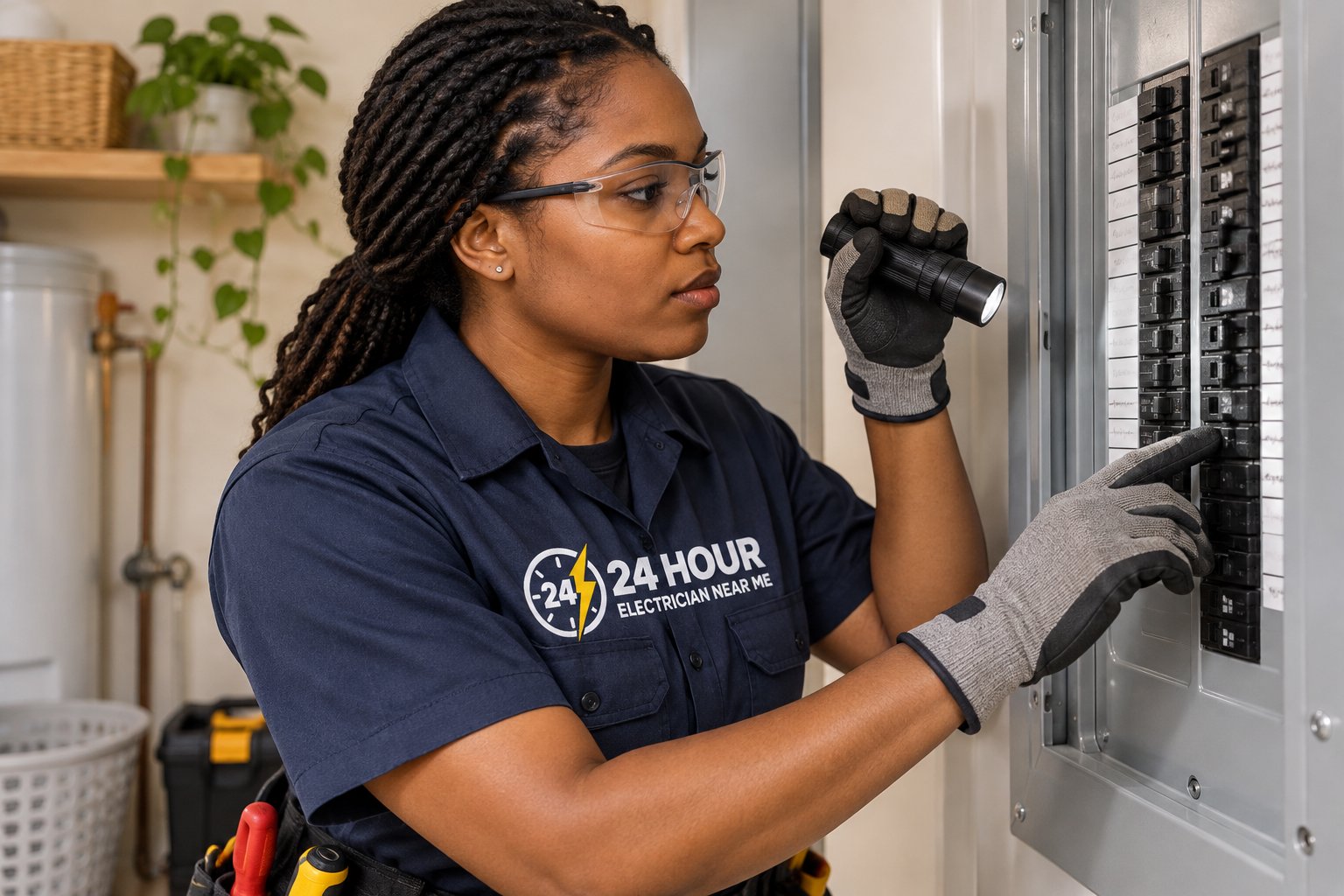
A whole-home surge protective device is installed at or near the main panel, connected to the electrical service. When voltage rises above a threshold, the device diverts the excess energy to ground, reducing what reaches the circuits in the house. It protects every branch circuit, including hardwired equipment such as air conditioners, water heaters, lighting, pool equipment and appliances that cannot be plugged into a strip.
Because it sits at the entrance, a whole-home device takes the first hit and handles the largest surges. It cannot eliminate every surge, since a very large lightning event may exceed any device, and it does not stop surges created within the home after the panel. But it reduces the energy that gets in, which is why it is considered the first layer of protection.
Our page on surge protection describes how installation works, and whole-home surge protector types explains the different forms, including panel-mounted devices and meter-mounted units. Installation involves work at the panel, so it is a job for a qualified electrician, not a do-it-yourself task.
How point-of-use protection works
Point-of-use protection is the familiar surge strip or a protected outlet, installed where equipment plugs in. It works on the same principle as the whole-home device, diverting excess voltage, but at a smaller scale and closer to the equipment. It limits what reaches the connected device and can address surges that originate inside the home, after the panel.
Quality varies widely. A basic power strip may only be a multi-outlet extension with no real protection. A true surge protector lists a clamping voltage, an energy rating, and indicators that show whether protection is still working. These devices wear out as they absorb surges, and many continue to power equipment after protection is gone, so they should be replaced periodically or after a significant event.
Point-of-use devices also protect data lines. Many protect coaxial cable, phone and network connections, which are common routes for surges to enter sensitive equipment such as routers, televisions and computers. A surge that comes through a cable line can bypass protection at the power strip if the connection is not protected, which is why connecting cable and network lines through the protector matters.
Why the layers work better together
The two layers complement each other. A whole-home device handles the large energy and protects hardwired equipment. A point-of-use device handles the residual, which is the portion that passes the first layer, and surges generated inside the house. Together they form a staged defense, similar to how a dam and a spillway work together: the first limits the bulk of the flow, the second smooths the rest.
Using only one layer leaves gaps. With only point-of-use strips, hardwired equipment such as the air conditioner, water heater, pool equipment and lighting is exposed, and the strips take the full force of each surge. With only a whole-home device, delicate electronics are protected from large surges but still see smaller ones, and surges from internal motors can pass through.
For valuable or sensitive equipment, such as home offices, entertainment systems, medical devices, smart home hubs and networking gear, layered protection is the sensible approach. For households with limited electronics, a whole-home device alone may be a reasonable starting point, with strips added where needed.
What each layer does and does not protect
The comparison below summarizes the typical scope of each layer. Real results depend on the device quality, wiring and grounding, and the size of the event, so no device can promise total protection.
Notice that neither layer is a substitute for sound grounding and bonding. A surge protector works by directing energy to ground, so the effectiveness depends on a good ground path. Our page on grounding and bonding explained describes why this matters, and an electrician can check your grounding when installing protection.
| Point | Whole-home device | Point-of-use device |
|---|---|---|
| Location | At or near the main panel or meter | At the outlet or plugged in near the equipment |
| Protects | Every circuit, including hardwired equipment | Only what is plugged into it |
| Strength | Handles larger external surges | Handles smaller residual and internal surges |
| Data lines | Not covered unless a separate device is used | Many models include cable and network ports |
| Installation | Qualified electrician at the panel | Plug in, though quality varies |
| Wear | Indicator shows status, replace when spent | Wears with each surge, replace periodically |
When a property needs a whole-home device
Whole-home protection makes sense when a property has equipment that is expensive, hardwired or hard to replace. Central air conditioning, heat pumps, pool equipment, water heaters, well pumps, generators with control boards, electric vehicle chargers and solar or battery systems are all common examples. A single surge can damage a control board that costs a lot to replace.
It also suits homes in areas with frequent lightning, homes with overhead service lines exposed to trees and poles, properties with a history of surge damage and households that depend on electronics, such as home offices and medical equipment. Older homes may benefit as well, since older wiring and grounding may not handle surges as well.
Condominiums and apartments have another factor: surge protection at the building level may exist at the main switchboard, but individual units may still benefit from protection at the unit panel or at outlets. Our guide on condo electrical responsibility explains who maintains what, and the association's rules may affect where devices can be installed.
When point-of-use protection is enough or still needed
Point-of-use protection is the simplest start and is often sufficient for renters and for modest households. If you cannot modify the panel, or your equipment is mostly plug-in electronics, quality surge protectors at the places that matter are a reasonable step. Focus on the equipment that is most valuable or hardest to replace: televisions, computers, routers, modems, audio equipment, medical devices and appliances with electronic controls.
Even with a whole-home device, point-of-use protection is still useful. It handles the residual surges that pass the first layer and the surges generated inside the home. It also protects data lines. Choose protectors from reputable makers with clear ratings, check indicators and replace them according to the manufacturer's guidance or after a major storm.
Avoid cheap strips with no stated protection, and do not daisy-chain strips. Do not plug large appliances such as refrigerators, space heaters or air conditioners into strips unless the manufacturer says so, because of the load. Our page on electrical safety with children and pets explains other cord and strip hazards worth knowing.
What surge protection cannot do
Surge protection is not a force field. A direct lightning strike can overwhelm any device. Protection also does not address sags, brownouts or outages, which are different problems. A device that has absorbed many surges may have lost its ability to protect, and indicators do not always tell the full story.
Protection cannot compensate for poor wiring, a loose neutral, bad grounding or damaged equipment. A loose neutral can cause high or low voltage on parts of the house that damages equipment, and surge protectors do not fix that. If lights flicker, brighten and dim or equipment fails repeatedly, the problem may lie in the wiring or service, not in a lack of protection. Our page on power flickers after a storm explains related issues.
Be wary of marketing claims. No honest seller can promise that a device will protect against every surge or that equipment will never be damaged. A qualified electrician can explain realistic expectations and which equipment benefits most from protection. For insurance matters, check your policy and keep records, but do not assume a device guarantees coverage.
After a lightning strike or storm
After a nearby strike, check for signs of surge damage. Dead outlets, tripped breakers, burning smells, failed electronics, an air conditioner that will not start, a garage door opener that stopped and flickering lights are all possible. Some damage appears days later, as stressed components fail. Surge protectors that absorbed a large event should be replaced even if they still seem to work.
Have the panel and key circuits inspected if you see signs of damage, and leave water-damaged or scorched equipment off until a qualified person checks it. Our page on lightning strike electrical damage explains what to look for, and the guide on electrical emergency or can it wait helps you decide how urgent it is.
If you plan to claim damage through insurance, photograph affected equipment, keep receipts and note dates, and ask about requirements. An electrician's findings may help document the cause, though the outcome depends on your policy and the insurer.
Installation, grounding and what an electrician checks
A whole-home device is installed by connecting it to a breaker in the panel or to the service equipment, with short, straight leads to keep performance high. The electrician checks the panel's condition, the grounding electrode system and the bonding, because protection depends on them. Where grounding is deficient, correcting it may be part of the job.
Other checks include confirming that the panel has space for the device's breaker, that connections are tight and clean of corrosion, that the service is in good condition and that the device is suited to the panel and the voltage. In a flood-prone or coastal property, location and corrosion resistance matter. Our guide on salt air corrosion and electrical systems explains why.
Installation usually requires a permit and inspection in many places. Quotes are given by phone for typical cases, and a site visit is needed when the panel or service raises questions. A service call charge applies and is explained before anyone is dispatched. A technician can also advise which point-of-use protectors are worth adding.
Questions to ask before you buy or install
Whether you are buying a strip or hiring an electrician, a few questions help. What is the device's rated protection, and does it have an indicator that shows when it has worn out? Does it protect data lines? Is it suited for the equipment it will protect? What happens when it is spent? Who is responsible for replacing it? What does the manufacturer's documentation say about use and limits?
For a whole-home device, also ask about the grounding and bonding check, the breaker or connection used, the permit and what happens if the device fails or an indicator shows a fault. Ask for the manufacturer's literature and keep it with your records. Be cautious of anyone offering guaranteed protection or promising to cover your equipment.
If you are weighing the options, call and describe your home, the equipment you want to protect and your concerns. We will explain which layers make sense for your situation and what an installation would involve.
A practical plan by property type
For a single-family home with central air conditioning and a pool, the usual plan is a whole-home device at the panel, plus quality point-of-use protectors for the television, home office and networking equipment. For a condominium, the plan may be unit-level protection if allowed, plus point-of-use protectors, with attention to the building's own protection. For a rental, point-of-use protection on key equipment is often the practical approach.
For a home with an electric vehicle charger, solar or battery system or a generator with electronic controls, a whole-home device is strongly worth considering, and the equipment's own manuals may recommend protection. For a home office or medical equipment, add dedicated protectors and consider a battery backup for critical devices.
Whatever the plan, treat protection as part of a healthy electrical system. If you are seeing frequent tripping, flicker or equipment failure, have the system inspected. Our guide on why summer heat strains home electrical systems explains how load and heat interact with these issues. When you are ready, call and we will help you decide.
Questions people ask
Do I need both whole-home and point-of-use protection?
Using both gives the best coverage. The whole-home device limits large surges and protects hardwired equipment such as air conditioners and pool equipment, while point-of-use protectors handle residual surges, internal surges and data lines. If you can only start with one, choose based on what you most need to protect and whether you can modify the panel.
Will a surge protector stop lightning damage?
It reduces the risk but cannot promise to stop it. A direct or very close strike can overwhelm any device. Protection works best against the common smaller and moderate surges that cause cumulative and sudden damage. Treat claims of total protection with caution, and replace devices that have absorbed a large event.
How do I know if my surge strip is still working?
Look for a protection indicator light and check that it is on according to the manufacturer's instructions. Many strips keep passing power after protection is spent, so the light matters. Replace strips that are old, have no indicator, have been through a major storm or show signs of heat or damage.
Is a whole-home surge device a do-it-yourself job?
No. It connects at the panel or service equipment, which involves live conductors and requires correct wiring, grounding and, usually, a permit. A qualified electrician should install it and check the grounding and bonding that its performance depends on.
Can surge protection fix flickering lights?
Not by itself. Flicker usually points to loose connections, heavy loads starting, utility voltage changes or wiring problems. A surge protector addresses brief spikes, not these causes. If lights flicker regularly or equipment fails repeatedly, have the wiring and service inspected.
Do condo and apartment residents need surge protection?
They can benefit from it. The building may have protection at the main service, but units still see internal surges and residual events. Point-of-use protectors are a practical start, and unit-level devices may be possible if the association allows it. Check building rules and ask an electrician about options.
Dealing with "Whole-Home or Point-of-Use Surge Protection?"? Tell us where in the building it happens and what changed before it started. We will say what the electrician would check and how the visit charge is explained.
Related pages
- Whole-Home & Commercial: A practical guide to layered residential and commercial surge protection in Broward County and the cities from Boca Raton to North Miami.
- Surge Protector Types: Panel-mounted surge protective devices compared: Type 1 and Type 2 designs, ratings that matter, and what to expect from an installation in Florida.
- Grounding and Bonding: What grounding electrodes, bonding jumpers and equipment grounds each do, why many older Florida homes lack them, and how a technician checks yours.
- Lightning Damage: A house can seem fine after a lightning strike and still have hidden damage to wiring, the panel and devices. Learn what to watch for and what gets checked.
- Post-Storm Flicker: Lights flickering after a storm may be utility restoration or damaged service equipment on your side of the meter. Learn how to tell them apart and what to do.
- Older Home Wiring: Wiring materials found in mid-century South Florida construction, how they age in humid conditions, and signs that an older system needs attention.