
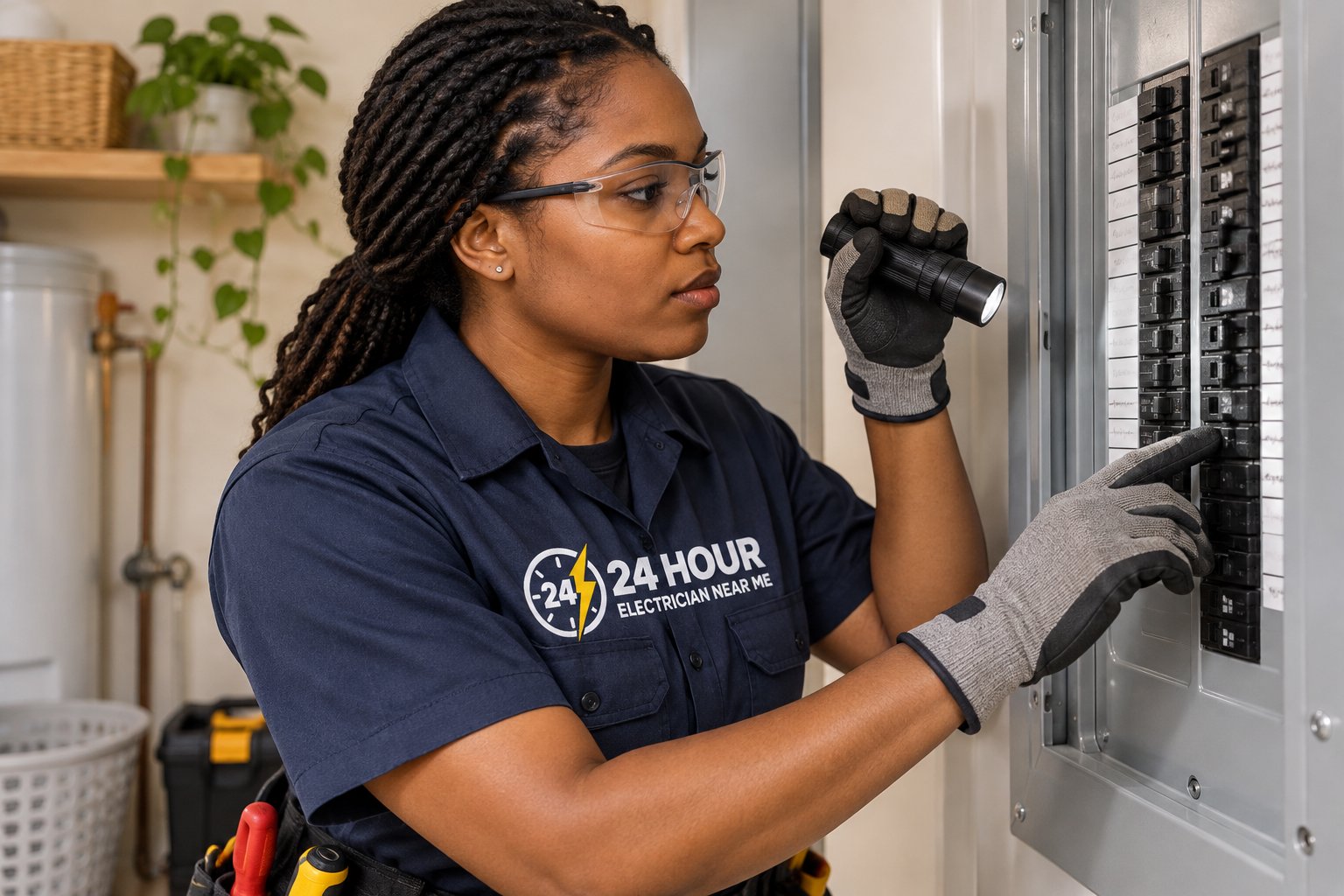
Why water in a panel is so serious
An electrical panel is the point where the incoming power is divided into the circuits that feed your home. Inside are bus bars carrying large amounts of current, breakers, terminals and conductors, all of them close together and arranged on the assumption that the interior is dry. Water changes that assumption in several ways at once.
Water conducts electricity, especially when it carries salts, minerals or dirt, which in coastal South Florida it nearly always does. A film of moisture across the bus bars or between a breaker and the enclosure can create paths for current that were never intended. Those paths can cause arcing, tripping, heating and, in a worst case, fire or energized metal surfaces.
Even when the water is gone, the damage may remain. Corrosion eats at terminals and bus bars, raising resistance, and rust can jam the mechanism of a breaker so it no longer trips when it should. A panel that was wet may seem to work for weeks and then fail in a way that endangers the building, which is why a wet panel should always be inspected before it is trusted again.

How water gets into a panel in South Florida
Understanding the route matters because stopping the water is as important as repairing the panel. The same leak will otherwise return after the next storm. Typical entry points differ between older and newer homes and between single-family houses and condominiums.
In many homes, the panel sits on an exterior wall, in a garage or in a utility closet, with the service entrance cable arriving from the roof or the meter outside. Water follows cables and pipes, and stucco, flashing and sealant that have aged can all open paths for it.
- A damaged or poorly sealed service mast or weatherhead on the roof, which lets rain run down the service cable into the panel.
- Cracks or gaps in stucco or siding around an exterior-mounted panel or meter.
- Conduit that enters the panel from above without proper fittings, allowing water to track along the cable or collect and run in.
- Roof leaks, window leaks or wall leaks that drip onto or behind the panel.
- Plumbing leaks from pipes in the wall or ceiling above the panel, including condensation on cold pipes.
- Condensation from humid air meeting a cool enclosure, common in garages and utility rooms.
- Flooding or storm surge that reaches the panel height, or wind-driven rain during a hurricane.
Immediate safety: what to do and what not to do
The central rule is simple: do not touch the panel, and do not stand in water near it. Electric shock risk increases sharply when you are wet, barefoot or standing on a damp floor. If water is dripping, pooling or running on or near the panel, treat everything as potentially energized.
If you can see the panel is wet but the floor is dry, do not open the cover. If the area is safely dry and you can reach the main breaker without touching a wet surface, switching it off may reduce risk, but only if you can do it without stepping into water, touching a wet panel or standing near the leak. If there is any doubt, do not approach. Leave the main as it is and call for help. If there is smoke, a burning smell, sparking or buzzing, leave the building and call 911.
Never use a hair dryer, a towel or a paper wipe to dry the inside of the panel. Never spray anything into it. Never restore power by resetting a breaker that tripped from moisture until a qualified technician has inspected the panel. And never assume that because the lights still work, the panel is safe.
- Keep everyone away from the panel and out of any standing water around it.
- Do not touch the panel, the breakers or any wet wiring, and do not open the cover.
- If, and only if, you can reach it while standing on a dry surface and without touching wet items, switch off the main breaker.
- If water is flowing in from a roof, wall or pipe, stop the source if you can do so without entering the wet area, for example by shutting the water main for a plumbing leak.
- Call 911 for smoke, fire, sparks or a burning smell, or if anyone is hurt.
- Call a qualified electrical technician and, separately, whoever can stop the water source.
Hurricane season, flooding and storm surge
Severe storms are the most common reason people find water in a panel. Wind-driven rain can enter through the service mast, the meter enclosure and any gaps in exterior walls. Flooding and storm surge can submerge panels in low-lying homes, in ground-floor condominium rooms and in garages, especially in flood-zone neighborhoods along the coast and canals.
After a flood, the rule is firm: do not turn on power to a home where water has reached the panel or any outlets. Equipment that has been submerged is usually considered unsafe to reuse until it has been inspected, and in many cases breakers and panel components must be replaced, because silt, salt and contamination remain inside even after drying. The utility may need to disconnect and later reconnect service after the work is done.
The guides on electrical safety after a hurricane, flooded home electrical safety and flood-zone electrical planning explain the sequence and how to plan equipment locations to reduce future risk.
Leaks at the service mast and weatherhead
On many single-family homes, the service cable enters at the roofline through a mast topped with a weatherhead, a curved fitting designed to let rain run off while the conductors pass through. The cable then runs down the outside wall to the meter and into the panel. If the weatherhead cracks, the seal fails or the mast loosens, rain can travel along the conductors into the meter box and the panel.
Water that enters this way often shows as rust streaks, damp insulation and corrosion on the main lugs or at the top of the panel. It may appear only during rain, so the panel can look dry on a sunny day yet be harmed repeatedly. Because the service conductors are on the utility side of the main disconnect, parts of this equipment may be energized even when you switch off your main breaker.
That is a reason to let a professional handle it, and in many cases the utility's involvement is needed to disconnect power safely. The page on service mast and weatherhead repair explains what the repair involves, and meter and service responsibilities explains who is responsible for which parts.
Condensation, plumbing leaks and humid enclosures
Not every wet panel comes from a storm. In humid climates, warm moist air that contacts a cool panel enclosure or conduit can condense inside. Panels in garages, outdoor closets or on exterior walls are prone to it, and conduit that runs from a humid attic to a cooler panel can carry moist air straight inside. Over time, this produces rust at the bottom of the enclosure and on the lower breakers.
Plumbing leaks are another cause. A slow drip from a pipe above or behind the panel, a leaking air conditioner drain line or a water heater near the panel can wet it for weeks before anyone notices. Panels should not be installed below plumbing, and a panel with a history of drips needs the source corrected.
If you find rust, water stains or beads of moisture, report them even if the panel seems to work. Early repair is easier and safer than repair after a failure. A technician can check for corrosion, test breakers and suggest steps such as sealing penetrations, adding a drip shield or relocating the equipment if conditions require.
What restoration involves
Restoration begins with making the area safe. The technician confirms the source of the water has been stopped, makes sure power can be safely isolated, and sometimes works with the utility to disconnect service. Only then is the cover removed and the interior inspected with proper protective equipment.
The inspection looks at the bus bars, the breakers, the lugs and the conductors for corrosion, pitting, discoloration, carbon tracking and rust, and checks whether breakers move smoothly. Minor surface moisture on a newer panel may be dried and cleaned. Corroded breakers are replaced. Damaged bus bars, rusted enclosures or contamination by salt water or sewage normally mean replacement of the panel or the affected components.
The technician will also correct the cause: resealing or replacing the weatherhead, adding proper fittings, repairing flashing, or relocating the panel. Work like this may require a permit and inspection, and the technician explains that. Pricing is only given by phone, and larger jobs need an on-site visit first. There is a service call charge, explained before dispatch. For related work, see electrical panel repair and meter socket replacement.
Condominiums and shared electrical rooms
In a high-rise or garden-style condominium, the water may enter an electrical room, a meter bank or a riser closet that serves many units. A leak from a unit above, a failed roof membrane, a clogged drain or a wind-driven rain event can reach equipment that nobody in the building thinks of as theirs. If you find water at a panel inside your own unit, the first call is to a technician, and the second is to your management office so the source can be traced.
Common-area equipment is generally handled by the association and its contractors, and access may be restricted to authorized people. Do not open locked electrical rooms or climb around meter banks. Report the water, name the location precisely, and make clear that it involves electrical equipment, which tends to move a work order up the list.
The guides on condominium electrical responsibility and high-rise electrical emergencies explain how responsibility is usually divided and what to do when a problem spreads across several units.
Insurance, documentation and what to tell the technician
If water entered because of a storm or a leak, document what you see before anything is changed. Take photographs of the panel from a safe distance, of the surrounding wall and ceiling, and of any water stains, rust or standing water. Write down when you noticed it and what the weather was. If you plan to make an insurance claim, ask the insurer what documentation they need, and keep any replaced parts if you are asked to.
Tell the technician when the water appeared, whether it is still entering, whether the lights or outlets have behaved oddly, whether a breaker tripped and whether you have seen sparks or smelled burning. Mention any recent roof, plumbing or stucco work. Those details help find the source.
In condominiums, the panel may be in a unit, a common area or an electrical room, and responsibility differs. Tell your management office as well. The page on insurance inspection electrical findings explains how electrical conditions are viewed in inspections.
When to call and prevention
Call promptly if you see any water, rust streaks, stains or dampness at or inside the panel, if a breaker has tripped during rain, or if the panel is on an exterior wall that has leaked in the past. Call urgently if the panel is wet, if you hear buzzing, if there is a burning smell or if someone has felt a tingle from a nearby fixture. Call 911 first if there is smoke, fire or sparks.
Prevention is largely about keeping the area dry: maintain roof, stucco and sealant around exterior electrical equipment, keep sprinklers pointed away from panels and meters, keep the area around a panel clear, and address plumbing leaks quickly. Before hurricane season, a check of the weatherhead, the meter and the panel is a sensible part of preparation.
The 24-hour name describes the service concept, and availability is confirmed on the call. When you are ready, call, describe what you see and let the dispatcher help you decide how soon a technician is needed, and what to do in the meantime.
Questions people ask
Is it safe to switch off the main breaker if the panel is wet?
Only if you can reach it while standing on a dry surface, without touching anything wet or standing near the leak. If there is any doubt, stay away and call. Parts on the utility side of the main may remain energized, so a wet panel needs a qualified technician.
Can I dry the panel and keep using it?
No. Drying the outside does not remove moisture, salt and corrosion from the inside, and rust can stop breakers from tripping properly. A panel that has been wet should be inspected before it is used, and often some components or the whole panel must be replaced.
Why does water appear only when it rains?
Rain entering at the service mast, weatherhead, conduit, stucco or roof will show only during wet weather. The panel may look dry afterward while corrosion continues. A technician can trace the entry point and recommend a repair so the leak does not return.
What if the water came from a flood?
Do not turn the power on. Flooded electrical equipment is normally unsafe to reuse until inspected, and many components must be replaced. Contact a qualified electrician, and be aware that the utility may need to disconnect and later reconnect service after repairs.
Can condensation really damage a panel?
Yes. In humid climates, moist air meeting a cooler enclosure can condense inside, causing rust over time on breakers and the bottom of the enclosure. Sealing penetrations and correcting the conditions are part of the repair, and a technician can advise what suits your location.
Will I need a permit to repair or replace a wet panel?
Replacing a panel or major components generally needs a permit and inspection, while some smaller repairs may not. Requirements depend on the local building department. A technician can explain what applies to your property and what the inspection involves before work begins.
If "Water Found in the Electrical Panel" sounds like your problem, call and describe what you see, hear or smell at the panel, the outlet or the fixture. We explain what the work involves, and some jobs need a visit before a quote.
Related pages
- Panel Repair: Guide to electrical panel repair, replacement and capacity upgrades in South Florida: what an evaluation covers, permits and what to prepare before a visit.
- Service Mast Repair: Storm-bent masts and pulled weatherheads: what the electrician repairs, what the utility handles, safety around the line to the house, and how repairs proceed.
- Flood Safety: What flood-exposed panels, outlets and wiring require before a home can be re-energized, and why drying equipment out is not the same as making it safe.
- After the Hurricane: Post-storm electrical hazards: damaged service equipment, flooded panels, generator misuse, and how to know when it is safe to restore power to a home.
- Meter Socket: Who does what when a meter socket is damaged: the owner, the electrician and the utility, how power is disconnected and restored, and how to plan the repair.
- Flickering Lights: Why house lights flicker: separating bulb, switch, circuit and utility service causes, and which flicker patterns call for an electrician right away.
After the water is gone: why the panel is not simply dried and reused
It is tempting to believe a panel that has been dried is safe again, but water leaves traces. Moisture can carry minerals and salts that settle on metal and plastic, forming films that conduct electricity or corrode connections over time. Hidden damp inside conduits, behind the panel or within breaker bodies may continue to affect the equipment long after the surface looks clean. Because of this, a wet panel is evaluated carefully, and parts are often replaced rather than trusted. Those hidden effects are why professionals treat the evaluation as a necessary step instead of an optional extra, even when the panel seems to be working fine again.
The assessment looks at which components were exposed, how long they stayed wet, and whether the water was clean, salty or contaminated. A short drip from a roof leak is not the same as flooding. Breakers, bus parts, wire insulation and the enclosure are each judged separately, and some may need to be replaced, while others may be cleaned. The technician explains what was found and what is recommended before any work begins so you can weigh the options. The explanation you receive should be specific, so that you understand which parts are affected and why, and can ask sensible questions before deciding how to proceed.
Until that evaluation is done, keep the panel off limits. Do not open it, do not try to dry it with a fan or heater, and do not turn the power back on yourself. If the power was shut off by the utility or by a professional, wait for confirmation that it is safe to restore. Call us, describe what happened and the condition of the area, and ask about availability for a visit. Patience at this stage protects both people and equipment, and a short delay for a proper evaluation is far preferable to the consequences of a panel returned to service too early.