
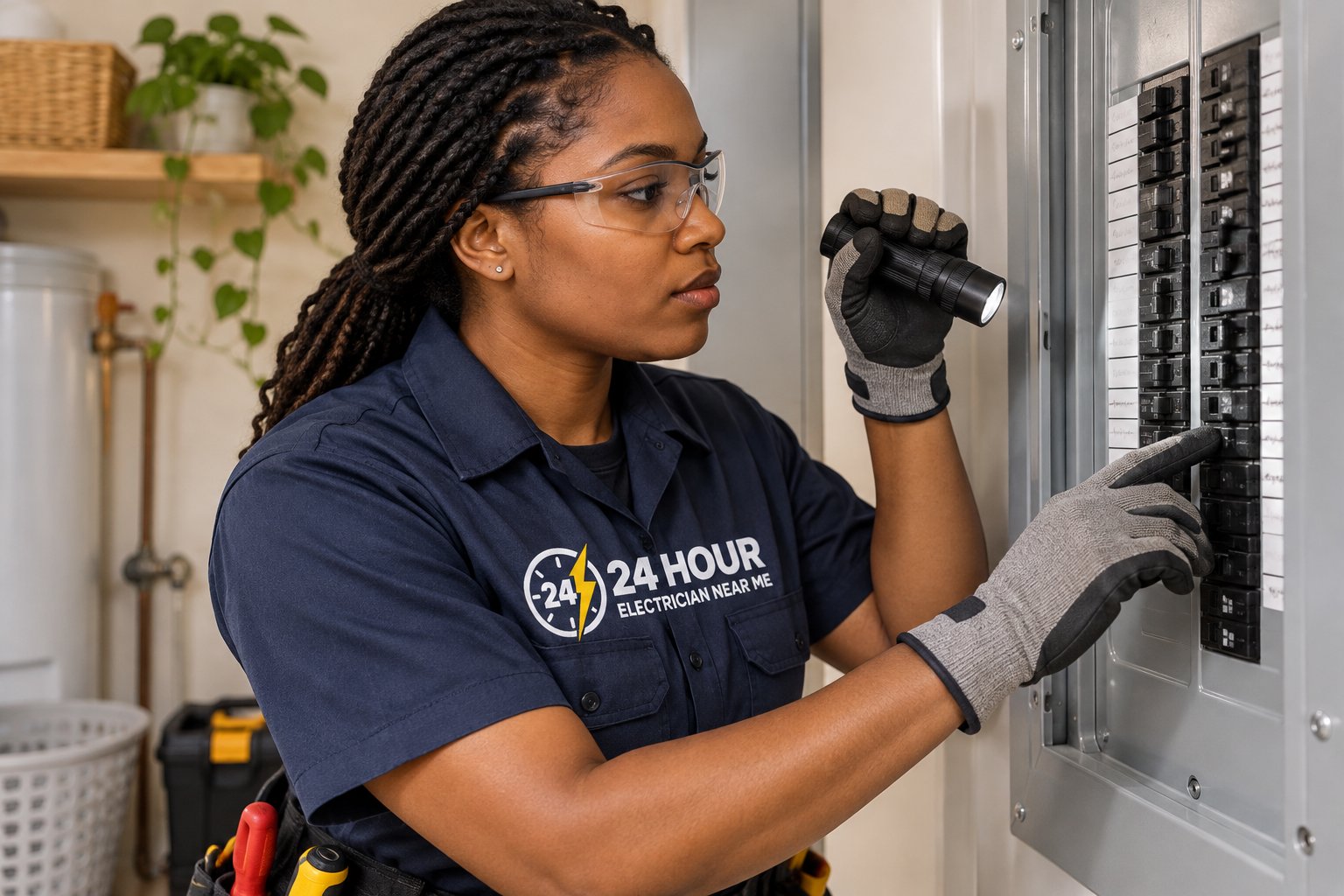
The path power takes to your building
Electricity reaches a building along a fairly consistent path. From a transformer on a pole, on a pad or in a vault, conductors run to the property. In many South Florida neighborhoods these are overhead wires that attach to a pole and drop to the building. In newer communities and in many condos, they are underground cables that rise out of the ground at a service point.
Overhead service usually ends at the building in a weatherhead, a curved fitting at the top of a pipe called a mast, which supports the wires and keeps rain out of the conduit. The conductors continue down the mast to a meter socket, the box that holds the meter. From the socket, conductors run to the main disconnect and the panel, where power splits into branch circuits for the building.
Each component has a role, and each has an owner. When you understand the order, from transformer and service wires to the weatherhead, mast, meter socket, main disconnect and panel, it becomes much easier to tell whether a problem needs the utility or an electrician. This guide follows that path and notes where responsibility changes.

What the utility typically owns
In general, the utility owns and maintains its transformers, poles, overhead wires and underground cables up to the point where they connect to the customer's equipment. It also owns the meter in most cases. The meter measures energy use for billing, and it is sealed so that only the utility's personnel may remove or tamper with it. Breaking a meter seal is serious and can lead to penalties.
Because the meter belongs to the utility, an electrician cannot simply pull it out to work on a socket without coordination. When a repair requires de-energizing the service, for example replacing a damaged meter socket or mast, the utility must disconnect the service and later reconnect it. The details of how that scheduling works are set by the utility, and they vary by area and by the type of work.
The utility is also responsible for restoring power after widespread outages, trimming vegetation around its lines in most cases, and repairing damage to its own equipment, such as a transformer that has failed or a service wire pulled down by a fallen limb. If the fault is on that side, the right call is to the utility, not to an electrician.
What the property owner typically owns
The property owner usually owns everything from the point of attachment onward. That includes the mast and weatherhead on an overhead service, the meter socket or meter base that holds the meter, the conduit and conductors beyond the utility's connection, the main disconnect, the panel, every breaker and all branch wiring, outlets, switches and fixtures.
That ownership comes with responsibility. If the mast is bent by a storm, the socket is cracked or corroded, or the wires pull away from the building, the owner must arrange the repair through an electrician, and often through a permit. Our page on service mast and weatherhead repair explains what a repair typically involves.
A property owner also owns the risk that comes with the equipment. A corroded meter socket, a loose lug or a cracked weatherhead can lead to overheating, water entry and fire. These are not parts to ignore even when the lights are working. If you see rust staining, melted plastic or a meter that looks loose, treat it as something to have inspected.
The gray areas
The dividing line is not always sharp. In some service types, the meter socket is supplied by the utility or specified by it, even though the owner pays for the installation. In others, the line between the utility's underground cable and the owner's conduit sits at a specific point such as a handhole, a pad or the property line. Local rules and utility standards define it, and those standards may differ between jurisdictions.
Condominiums and apartment buildings add another layer. A meter bank serving many units may be owned by the building or the association, with the individual meters owned by the utility. The feeders from each meter to a unit may belong to the association or the unit owner depending on the governing documents. Our guide on condo electrical responsibility covers how these divisions commonly work.
When unsure, describe what you see. A technician can usually tell from photographs and a short description which party owns the damaged part. Then the next step, whether it is calling the utility, arranging an electrician or coordinating with an association, becomes clear.
Storm damage and who handles it
Storms usually cause one of three kinds of damage: damage to the utility's equipment, damage to the owner's service equipment, or both. A limb that takes down the service wire at the pole is a utility repair. A limb that rips the mast off the roof is damage to both, because the wires will no longer be supported, and the owner's mast must be repaired before the wires can safely be reattached.
After a hurricane, the sequence often looks like this. The utility isolates the damaged service for safety. The owner hires an electrician to repair or replace the mast, weatherhead and socket as needed. Where a permit and inspection are required, those steps happen before reconnection. Then the utility reattaches its wires and restores service. The electrician cannot reconnect the utility's wires, and the utility cannot repair the owner's mast.
Because many homes are damaged at once after major storms, waiting times can be long, and the order of work can seem frustrating. Planning ahead helps: know your equipment, photograph it, keep an electrician's number handy and read our guide on electrical safety after a hurricane before you step outside.
Why a permit and inspection may come first
When service equipment is repaired or replaced, the local permitting authority often requires a permit and an inspection before the utility will restore power. The purpose is safety: service equipment carries the full current for the building and a mistake can lead to fire or shock. The inspector verifies that the mast, conduit, socket, grounding and bonding meet adopted requirements.
In some places the utility will not reconnect without proof of a passed inspection. In others, the process is simplified after emergencies. Because the rules differ between cities and counties and change over time, the safest course is to ask the permit office or your electrician what applies to your location. Our page on electrical permits in South Florida offers a general overview.
It can feel like a delay, but it is protection for you. An unpermitted repair can leave hidden defects, create insurance problems and complicate the sale of the property later. A permitted, inspected repair leaves a record that the work was checked.
Warning signs at the meter you should not ignore
The meter area is worth a look from a safe distance now and then. Watch for a meter socket that is loose or leaning, a mast that is bent or pulling at the roof, wires that sag or rub against a tree, rust or green corrosion, cracked plastic, missing covers, a weatherhead that has cracked or opened, and water stains or insect nests inside the box.
Other warning signs include buzzing or humming, a hot or discolored meter, a burning smell, and lights that flicker or dim without a pattern. Any of these can mean a loose connection, which generates heat. In coastal areas, salt air accelerates corrosion, so equipment close to the water often shows wear sooner. Our guide on salt air corrosion and electrical equipment discusses that in more detail.
If you see any of these signs, do not touch the meter or the box. Do not try to tighten anything. Call, and describe what you see. If there is smoke, fire, sparking or the meter is hanging by its wires, move away and call 911. Our page on a damaged or hanging meter box covers that situation.
Upgrading service and what it touches
Many older homes were built with smaller electrical service than modern households use. Adding an electric vehicle charger, a larger air conditioner, an electric range, a pool or a home addition may call for a service upgrade. An upgrade usually replaces the meter socket, the main disconnect, the panel and sometimes the mast and service conductors, and it requires coordination with the utility.
Because the utility must disconnect and reconnect power, and because inspections are involved, an upgrade is a multi-step project. Our page on main service upgrades explains what the work involves, and our guide on choosing electrical service size helps you think about how much capacity you actually need.
A technician will look at the existing equipment, the loads you plan to add and local requirements before giving a quote. Quotes are given by phone, but a service upgrade needs an on-site visit to confirm the details. A service call charge applies and is explained on the phone before anyone is dispatched.
Questions to settle before you call
Before you call anyone about the meter area, a few answers help. Is the problem a loss of power, a visible damage or a warning sign such as heat or noise? Does the damage seem to be on the wires from the pole, or on the mast, box or conduit attached to the building? Is the building a single-family home or part of a larger complex with shared equipment?
If the issue appears to be on the utility's wires, call the utility. If it is on your equipment, call an electrician. If you cannot tell, call an electrician and describe what you see, and they can often point you to the right party or coordinate both. If anyone has been hurt or there is fire, call 911 first.
When you call us, we will ask where the damage is, whether power is on, whether the utility has already been contacted and what the building is. We will explain what a visit would involve and how the call works. We will never ask you to touch the meter or the box. When you are ready, call and tell us what you see.
Underground service and shared meter rooms
Not every property has an overhead service with a mast. Many newer subdivisions and most larger buildings are served by underground cables. In those cases the visible equipment may be a pad-mounted transformer on the ground nearby, with cables running underground to the meter or to a meter room inside the building. Where the utility's responsibility stops depends on its standards, and often sits at the transformer or a defined connection point.
In a building with a meter room, a bank of meters is fed from a main switchboard, and each tenant or owner has a feeder from their meter to their own panel. If one meter loses power while the others stay on, the issue is probably in that unit's feeder, its breaker or the meter connection. If the whole bank is out, it is probably the main switchboard or the utility's feed. The building manager and the utility each have a role, and an electrician may be called for the building's equipment.
For a single-family home with underground service, damage often comes from digging. A landscaper or contractor who hits a buried conduit creates a hazard, so call before digging, and never dig near a service route without knowing where it runs. If a conduit is exposed or cracked, keep people away and report it. A damaged underground service is a utility and electrician matter, and not a repair for the owner to attempt.
Questions people ask
Who owns the electric meter?
In most cases the utility owns the meter, which is sealed and may be removed or tampered with only by the utility. The property owner usually owns the meter socket or base that holds it, along with the mast, conduit and everything beyond. Local rules vary, so ask if you are unsure who owns a particular part before arranging a repair.
Can an electrician remove the meter to repair the socket?
Not on their own. Because the meter is sealed and belongs to the utility, the service typically must be disconnected by the utility before a socket is replaced, and reconnected afterward. An electrician can explain the sequence for your location and arrange the permit and inspection steps that may be required.
Who repairs a bent mast after a storm?
The property owner is generally responsible for the mast and weatherhead, so an electrician repairs or replaces them. The utility handles its wires. Often the utility needs the mast repaired before it can safely reattach wires, and a permit and inspection may be required first. Ask your electrician what applies in your city.
Is a hot or buzzing meter box dangerous?
It can be. Heat and noise at a meter socket often indicate a loose or corroded connection, which can lead to damage or fire. Do not touch or tighten anything. Keep a safe distance, call and describe what you see. If you see smoke, flames or sparking, call 911 and move away from the building.
Do condominium owners own their meter equipment?
It depends on the building and its governing documents. Meter banks are often owned or maintained by the association, with individual meters owned by the utility, and the wiring from each meter to a unit may belong to either. Check the documents or ask the association, and an electrician can help interpret what you find.
Why do I need a permit to repair service equipment?
Service equipment carries the full current for a building, so errors can cause fire or shock. A permit and inspection verify that the work meets adopted requirements, and in many places the utility will not reconnect without it. Permitted work also leaves a record that helps with insurance and with selling the property later.
If "Who Owns What at the Electric Meter" sounds like your problem, call and describe what you see, hear or smell at the panel, the outlet or the fixture. We explain what the work involves, and some jobs need a visit before a quote.
Related pages
- Utility vs Home: How to tell a utility outage from a fault at your own property, with simple safe checks to run before anyone is called and what each result means.
- Service Mast Repair: Storm-bent masts and pulled weatherheads: what the electrician repairs, what the utility handles, safety around the line to the house, and how repairs proceed.
- Meter Socket: Who does what when a meter socket is damaged: the owner, the electrician and the utility, how power is disconnected and restored, and how to plan the repair.
- Damaged Meter Box: A meter box knocked loose by a vehicle, storm or rust is a hazard. Learn what to avoid, who handles which side, and what an electrician checks.
- Service Upgrade: When a home outgrows its electrical capacity: replacing the service entrance, meter base and main disconnect, how the utility fits in, and what to expect.
- GFCI or AFCI: GFCI devices protect people from shock and AFCI devices guard against arcing fires. Learn what each does and where each is expected in a home.
What to photograph and note before making calls
When something seems wrong near the meter, a few photographs and notes can save a lot of back and forth. Take pictures from a safe distance of the meter, the box it sits in, the main disconnect or breaker, the conduit running up the wall or mast, and any wires leading to the building. Capture the overall scene first, then close ups of anything damaged, loose, scorched, or leaning. Include something for scale, such as a doorway or a fence post. Do not touch, open, or move anything, and do not stand in water to get a better angle.
Add a short written description. Write the address, which unit if there is more than one meter, what you saw and heard, and when it started. Note whether the power is out in the whole building, in part of it, or not at all. If a tree, a vehicle, or storm debris is involved, say so, and mention whether anyone has already been told. These details help whoever answers your call decide whether the issue sits with the utility, with the property owner, or with both, and they save time at the very first conversation.
Photographs also help later. If damage needs to be repaired, the record shows the condition before anyone changed it, which can matter for insurance questions, for utility coordination, and for the property owner. Keep the images with your notes and the names of anyone you spoke to. This habit costs a few minutes and is worth doing before the situation changes, especially after a storm when equipment is likely to be moved, cleaned up, or covered by debris. A clear record makes every later step easier. Small details shared early often make the whole visit go more smoothly.