

The small device that gets used every day
A switch in a busy household is operated dozens of times a day. Each time it opens and closes a circuit, tiny arcs form between the contacts, and over years those contacts pit and wear. A switch that was crisp and quiet when new may become sticky, noisy or unreliable. It may begin to feel warm. It may produce a faint crackle when turned on. These are normal signs of aging, and they are also signs that the switch should be replaced before it fails in a worse way.
In South Florida, switches face extra stress. Humidity gets into wall boxes, particularly in homes where the exterior walls are concrete block and moisture wicks through. Salt air accelerates corrosion on exterior switches and in coastal homes. Heat in attics can bake the insulation on conductors at connected fixtures. A switch that worked for decades in a dry climate might not last as long here.
Most switch problems are modest, and a replacement is quick. Occasionally, though, a failing switch is the visible part of a deeper problem: a loose connection in the box, an overloaded circuit, a damaged conductor or an old wiring practice that has reached the end of its life. Knowing the difference is the reason to treat a warm switch with respect rather than simply swapping it and moving on.
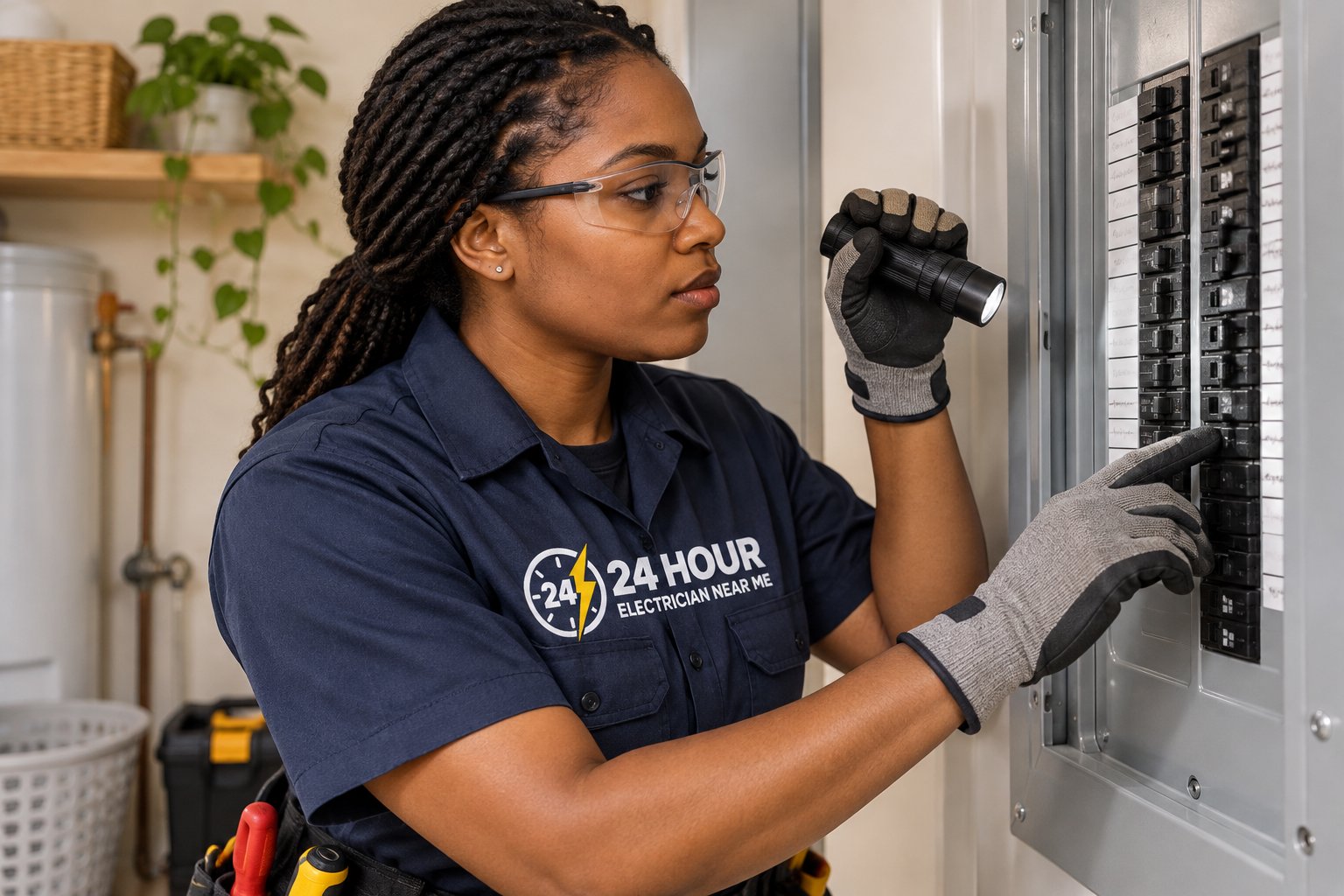
Warning signs that a switch needs attention
Some symptoms deserve prompt attention. If you notice any of the following, stop using the switch if you can do so safely, and have it checked.
- The switch plate or toggle feels warm or hot to the touch.
- You hear buzzing, crackling or sizzling when the switch is on or being moved.
- There is a burning smell, or the plate is discolored or scorched.
- The switch feels loose, wobbles in the wall or does not click firmly.
- The light flickers when you touch or move the switch.
- The switch works only in certain positions, or the light works unpredictably.
- You see sparks or feel a tingle when touching the plate.
How a basic switch works and why it fails
A single-pole switch is the simplest type. It has two terminals, and flipping the toggle either connects them or disconnects them, completing or breaking the circuit to a light. Inside, a pair of metal contacts touch or separate. A spring mechanism snaps them apart quickly to limit arcing.
Failure happens in a few ways. The contacts can wear until they no longer touch cleanly, causing resistance and heat. The spring can weaken, leaving the toggle loose or sluggish. Plastic around the terminals can crack from heat. Connections can loosen, which is the most dangerous failure, because a loose connection under load can arc and heat without tripping a breaker.
Back-stab connections, where wires are pushed into small holes on the back of a switch instead of being wrapped around a screw, are a common source of trouble. They rely on a small spring clip, and over time the grip can weaken. Better practice is to use the screw terminals, or devices with clamp-style terminals that hold the wire securely. A technician replacing a switch will usually move the wires to the screw terminals and check that the insulation is intact.
Three-way and four-way switches explained
Many rooms, hallways and staircases have lights controlled from more than one location. A three-way switch system uses two matched switches, one at each location, that work together to control one light or group of lights. Each switch has a common terminal and two traveler terminals. The travelers run between the two switches, and the arrangement lets either switch turn the light on or off regardless of the other's position.
A four-way switch is added in the middle when three or more locations are needed. It sits between two three-way switches and reverses or passes the travelers. A long hallway with doors at both ends and a room in the middle is a typical place for one. Because these switches have specific terminals, installing them without careful identification leads to lights that behave oddly, such as turning on only when the other switch is in a certain position.
Troubleshooting multi-location systems requires patience. If a light works from one switch but not the other, the cause may be a failed switch, a loose traveler connection or a miswired replacement from an earlier repair. Reconnecting without identifying which wire is the common and which are the travelers can create shorts. This is the sort of job where a technician's testing equipment and experience save time. Smart switches add another layer, since many require a neutral wire and careful handling in three-way setups. See smart switch and dimmer installation.
When the problem is not the switch
A frustrating fact is that replacing a switch does not always fix a switch problem. The device may be reacting to something upstream or downstream. A few examples show how.
A switch that feels warm may be controlling a load that is too large for it, such as a bank of high-wattage bulbs or a fan on a switch rated for lights. Replacing it with the same type leads to the same warmth. A switch that buzzes may be paired with a dimmer and an incompatible LED lamp, as covered in LED drivers and dimmer compatibility. A light that flickers when the switch is moved may have a loose neutral or hot connection in the fixture, not in the switch.
A switch that works intermittently may have a failing connection at a splice in the box or an upstream receptacle on the same circuit. In older homes, switch loops, where power goes to the fixture first and a cable returns to the switch, create unusual wire arrangements, with white wires acting as hots. Replacing a switch without recognizing that can be dangerous. Our page on warm outlet or switch plate and lights flickering in house explain related symptoms.
Dimmers, smart switches and compatibility
Upgrading from a toggle to a dimmer or a smart switch introduces more variables. A dimmer must match the load type. Dimmers designed for incandescent bulbs do not work well with many LEDs, and the result is flicker, buzzing or a limited dimming range. Choose a dimmer listed for LED loads and compatible with the specific lamps.
Smart switches commonly need a neutral wire at the box, and many older boxes do not have one. Where neutrals are missing, options include switches designed to work without a neutral, though they may have load limitations, or running new wiring. A technician will open the box, check what is present and choose a device that matches.
Heat is another factor. Dimmers generate heat, and gang boxes with several dimmers side by side must be derated according to the manufacturer's instructions. Cramming too many into one box causes overheating. If your box is crowded, a technician may recommend a larger box. Our pages on lighting installation and repair and recessed lighting installation relate to many dimmer setups.
Outdoor, bathroom and garage switches
Switches in damp or wet locations deserve extra care. An exterior switch needs a weatherproof enclosure and cover, rated for the exposure. A switch at a patio door, in a lanai or at a pool deck is constantly exposed to humidity, rain and sometimes pool chemicals. Corrosion is frequent, and a corroded switch is a heat and shock hazard.
Bathroom switches should be kept out of reach of tubs and showers in accordance with the rules, and fan or heater controls must match the load. In garages, switches often get hit by tools or bumped by vehicles. A cracked plate or loose switch needs repair.
If a switch is wet, corroded or damaged, do not operate it. Turn off the breaker for that circuit if you can do so safely, and call. See weatherproof boxes and outdoor covers and outdoor outlet installation for more on exterior devices. Pool areas have their own rules, and our page on pool and spa electrical wiring covers them.
What a technician checks during a visit
A good switch visit starts with questions and observation. Which switch is it, what does it control, and when did the symptoms begin? Is the plate warm? Is there a smell? The technician then turns off the breaker, verifies the circuit is dead with a tester and removes the plate.
Inside the box, they look for signs of heat: darkened insulation, melted plastic, brittle conductors, discolored terminals. They check the wire gauge against the breaker, make sure connections are tight and that the conductors are properly stripped and seated. They identify the common and traveler wires in multi-location setups and test the switch itself for continuity.
If something looks wrong in the box, such as scorching or a loose splice, they will explain what they found and what it means. The repair may involve cutting back damaged conductors, replacing the box, correcting a splice or addressing an upstream issue. They will test the light and the circuit when finished and explain what was done in plain terms.
What you should and should not do yourself
Replacing a switch is a task some homeowners attempt, and when it is a simple like-for-like swap on a clearly understood circuit it can be done safely by someone who turns off the breaker, tests that the wires are dead and follows the instructions. The risks are real, however. A breaker label that is wrong, a shared neutral that keeps a wire live, or a box with unfamiliar wiring can turn a simple swap into a shock hazard.
Leave the job to a qualified electrician if the switch is hot, scorched or buzzing, if you see aluminum wiring, cloth-covered wire or brittle insulation, if the box is crowded, if the switch is part of a three-way or four-way arrangement you do not fully understand or if the room is damp. Also leave it if you are not certain the circuit is off. A non-contact tester is a helpful extra check but is not a substitute for careful testing.
Never bypass a switch by connecting wires together to make a light stay on, and do not keep using a switch that heats up. Treat those as signs to stop and call.
Code and safety considerations
Modern wiring rules call for a neutral conductor at most switch locations in new work, so that smart controls can be used. Boxes must be properly sized for the number of conductors and devices. Metal boxes must be bonded. Covers must be intact, with no gaps around the device. Receptacles and switches in the same box must be properly separated, particularly if they are on different circuits.
Where a repair triggers corrections, the technician will tell you. For example, an old ungrounded switch box may be acceptable to leave as is in some cases, but replacing the device may require the use of a grounded device or arc-fault protection in some situations. Our pages on electrical code corrections and outlet and GFCI service explain how these issues are handled.
Switch replacement itself is often considered minor work, but permit rules vary by municipality, and more extensive work such as new circuits or rewiring does require permits. Our electrical permits in South Florida guide gives the general picture.
Three switch problems and how they usually resolve
A hallway light controlled from both ends stops working from one end. The technician finds that a previous owner replaced the switch at that end and landed the wires on the wrong terminals, so the circuit only completes in one position. Moving the common and traveler wires to the correct terminals restores normal operation. No parts were broken, and it only needed careful identification.
A bedroom switch is warm and crackles slightly. Inside the box, the technician finds the wires pushed into back-stab holes, with one connection discolored from heat. The wire is cut back to clean copper, the new switch is connected on its screw terminals and the box is checked for damage. The warm switch was a connection problem that would have worsened with time.
A lanai switch fails every year or two. The box is corroded, the cover does not seal and moisture reaches the contacts. Replacing the switch alone repeats the cycle. A weather-resistant switch, a gasketed box and a proper cover end it. In each case, the fix addressed the cause rather than only the part that failed.
What to have ready when you call
Quotes are given only by phone, and complicated jobs need an on-site visit. There is a service call charge, explained on the phone before dispatch. These details help us understand the situation.
- Which switch it is, what it controls and whether it is part of a multi-location setup.
- The symptoms: warm, buzzing, flickering, loose, not working, intermittent.
- The type of lights it controls, including whether they are LED and whether a dimmer is involved.
- The age of the home and whether you have seen older wiring in the area.
- Whether the problem began after a storm, remodel or new fixture installation.
- Any burning smell, discoloration or sparks, which we treat as urgent.
A small device worth getting right
Switches are easy to overlook until one misbehaves. A warm plate, a crackle or a light that works only when you wiggle the toggle is the house telling you something. If you are noticing any of these, call and describe what you see. We will help you decide whether a straightforward replacement will do, whether a deeper look is warranted and what a visit would involve.
Questions people ask
Why is my light switch warm?
Slight warmth can come from a dimmer, which generates heat by design. A switch that feels hot, or any switch that has become warmer than it used to be, can have worn contacts, a loose connection or too large a load. Stop using it if you can do so safely and have it checked, because heat at a connection can lead to damage.
Why does my switch buzz or crackle?
Common causes are worn contacts, a loose connection, a dimmer paired with an incompatible LED lamp or an overloaded circuit. Crackling or sizzling is more serious than a faint hum. Turn the light off, avoid using the switch and call for a check, particularly if there is a burning smell.
How does a three-way switch work?
Two switches at different locations control the same light. Each has a common terminal and two traveler terminals, with traveler wires running between them. Flipping either switch changes the path, so either can turn the light on or off. Four-way switches are added in between when three or more locations are needed.
Can I replace a light switch myself?
A simple like-for-like swap can be done by someone who turns off the right breaker, tests the wires and follows instructions. Leave it to a qualified electrician if the switch is hot, scorched or part of a multi-location setup, or if you see aluminum wiring, brittle insulation or damp conditions.
Why does my light not turn on from one of two switches?
In a three-way circuit, a failed switch, a loose traveler wire or a miswired replacement can leave one switch working and the other dead. Identifying the common and traveler terminals is the key step, and testing is required. A technician can find the fault without trial and error.
Do I need a neutral wire for a smart switch?
Many smart switches need a neutral at the box. Older homes often do not have one at switch locations. Some models work without a neutral but with limits on the loads they can control. A technician will check what is in the box and choose a device that fits, or discuss running new wiring.
For "Repairing or Replacing a Light Switch", a phone call comes first. Describe the circuit, the breaker or the equipment, and we will talk through the safe next steps and whether the job needs an on-site look.
Related pages
- Lighting Installation &: South Florida lighting planning and troubleshooting for homes, condominiums, commercial spaces, exteriors and managed properties.
- Smart Switches: Adding smart switches and dimmers to existing boxes: neutral wire availability, load compatibility, three-way setups and how to choose a hub or no-hub system.
- Outlet & GFCI: A safety-first South Florida guide for dead, loose, warm, damaged and GFCI-protected outlets in homes and commercial properties.
- Warm Outlet: A warm outlet or switch plate can be normal under load or a sign of a loose connection. See the difference, what to unplug, and when to call right away.
- Dimmer Problems: Dimmers that buzz, flicker or run hot are often mismatched to LED bulbs, overloaded or crowded in a box. Learn the causes, safe checks and when to call.
- Service Upgrade: When a home outgrows its electrical capacity: replacing the service entrance, meter base and main disconnect, how the utility fits in, and what to expect.