

Where the electrical work starts and stops
A solar project involves several parties. A solar company designs the system, supplies panels and inverters and usually handles utility paperwork. Roofers and structural engineers may be involved. An electrician, either from the solar company or hired separately, makes the connections inside and around the house. That final connection is where the new equipment meets the existing electrical system, and it is where many problems and many inspection failures arise.
Homeowners often assume the solar company will sort out everything about the panel. In practice, the solar design assumes the existing equipment can accept the new system, and that assumption is sometimes wrong. A crowded panel, an older brand, a main breaker that is too small for the planned backfeed or a damaged meter socket can all stall a project after the equipment has been ordered. Having a qualified electrician look at the house before signing is a sensible step.
Batteries add more questions. A battery system can store solar energy, provide backup during outages and sometimes manage the loads in the house. It needs its own wiring, its own protection and a sound place to live. It also changes how the panel is arranged, because the circuits you want to back up are often moved into a separate protected-loads panel.
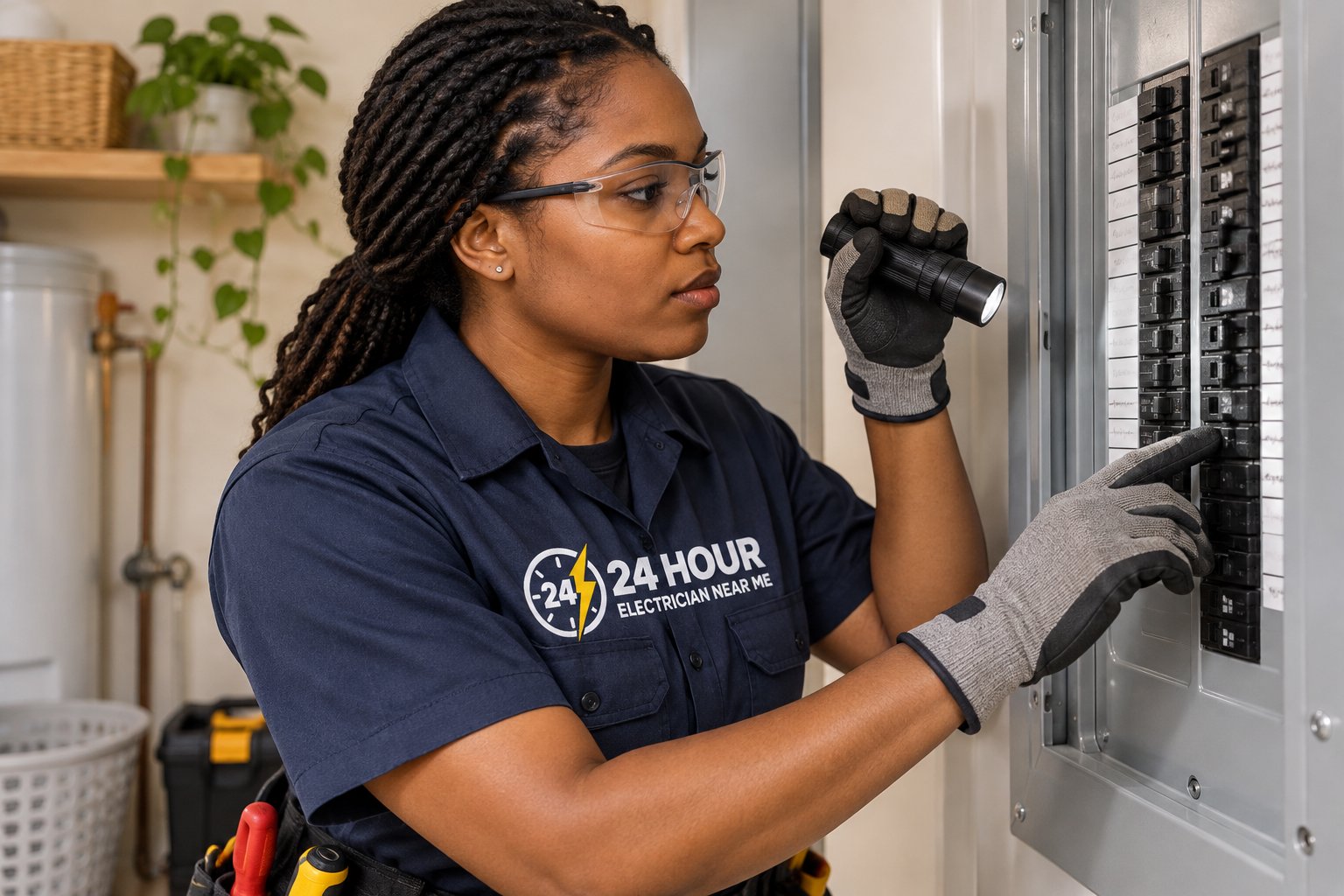
How solar power enters the house
Rooftop panels produce direct current. An inverter converts it to alternating current at household voltage. In many systems, small inverters sit under each panel, while in others one large inverter sits on a wall near the panel. The alternating current then travels through a protected path to the main panel or service equipment.
There are two common ways to connect. The first is a load-side connection, where a dedicated breaker in the main panel receives the solar output. The system feeds the panel's bus bars backward, which is called backfeeding by design, and the panel is built and rated to allow it under specific conditions. The second is a supply-side connection, where the solar conductors tap into the service conductors ahead of the main breaker. Each method has rules about the size of the breaker, its location in the panel and the rating of the bus.
The rules exist because a panel's bus bars have a maximum safe current. If the main breaker, the solar breaker and the bus rating are not coordinated, the bus can be overloaded without any breaker tripping. This is why the arrangement is checked, calculated and inspected, and why it is not a good place for improvisation. The electrician confirms the numbers before any breaker is added.
Disconnects, labels and rapid shutdown
A solar installation includes several safety devices that exist for the benefit of firefighters, utility workers and service technicians. Understanding them helps you check that your system has them.
- An AC disconnect near the meter or panel, so utility personnel and first responders can isolate the solar system.
- A DC disconnect, usually at or near the inverter, to isolate the panels from the inverter for service.
- Rapid shutdown equipment that reduces voltage on the roof wiring quickly when the system is turned off.
- Labels and placards at the panel, meter and disconnects identifying the solar source and its location.
- Proper grounding and bonding of panel frames, racking and inverter enclosures.
- Conduit, fittings and junction boxes suited to roof and outdoor exposure, sealed against water.
Labeling and documentation at the main panel
Labels may seem minor, but they matter. A firefighter arriving at a house with solar needs to know where to cut power and what remains energized. A utility lineworker needs to know the house can send power outward. A future electrician opening the panel needs to know which breaker is the solar source and why it must not be moved to a different position.
In most installations, the panel carries placards stating that the system is backfed, warning not to relocate the breaker, and identifying the location of disconnects. The meter area often has a directory showing where the solar disconnect and inverter are. Labels must be durable and weather-resistant, because a paper note that fades in a year defeats the purpose.
Your panel directory should be updated as well. A solar breaker, a battery breaker and any new circuits should be listed clearly. Our page on panel labeling and circuit mapping explains how that works. Good labeling also helps during storm preparations, when you need to know what is connected to what.
Can your panel accept solar and batteries
Before committing to a system, ask whether your panel can accept it. An electrician considers several things. The bus rating and main breaker size determine how much solar can be connected on the load side. The physical space determines whether the breaker can go in the required location, which is often at the end of the bus farthest from the main. The brand and condition of the panel matter, since some older panels have known problems and may not be suitable for backfed breakers.
If the panel falls short, options include replacing it, adding a subpanel, using a supply-side tap or reducing the breaker size by limiting the system. Some projects combine a panel replacement with the solar work. If your panel is old, crowded or showing signs of heat, read our pages on electrical panel repair and main service upgrade.
The meter socket is another point of inspection. A corroded, loose or damaged socket can prevent the utility from connecting the system. Our page on meter socket replacement explains when it needs attention. The service mast and weatherhead should also be sound, particularly if roof work is involved, as described in service mast and weatherhead repair.
Home batteries: what changes in the electrical system
A battery can serve several roles. It can store solar energy for use at night, provide backup during outages, or both. The electrical arrangement depends on the role. A battery that only supports a few circuits typically connects through a protected-loads panel, with the selected circuits moved from the main panel to the backup panel. A whole-home battery may support the entire house, but the larger the load, the larger and more expensive the equipment, and the more careful the planning.
Choosing which circuits to back up is a practical exercise. Refrigerators, lights, fans, internet equipment and phone charging are the usual candidates. A central air conditioner, an electric range, a dryer and a pool pump often draw too much for a modest battery. Our page on whole-home battery backup systems covers the tradeoffs.
Batteries also have placement rules. They should be installed in locations that meet manufacturer instructions and local requirements, with clearances, ventilation or temperature limits and protection from impact and flooding. In a garage, they often need to be protected from vehicles. In South Florida, flood exposure and heat are real concerns, and the mounting height and location deserve careful thought. See flood zone electrical planning for related issues.
Solar, batteries and generators together
Many households want a layered backup plan, with solar and a battery for everyday resilience and a generator for long outages. These systems must be coordinated. A generator connected to a house with solar must not backfeed the grid or conflict with the inverter. The transfer equipment has to isolate the house correctly, and the interactions between the battery inverter, the generator and the main breaker must be designed, not assumed.
In a grid outage, a standard grid-tied solar system shuts off for safety. Panels alone will not keep your lights on. Only a system with battery storage or a specific backup-capable inverter can supply power to the house while the grid is down. Owners are sometimes surprised by this, so ask your solar provider exactly what the system will do in an outage.
Our pages on generator transfer equipment and transfer switches versus interlocks explain how generator connections are made, and why mixing solutions without planning is dangerous.
Permits, inspections and utility approval
Solar and battery projects require building and electrical permits, and the utility must approve the interconnection before the system is switched on. The process includes plan review, inspections during and after installation, and a utility step that may involve a meter change. Requirements differ among municipalities and utilities, so ask the installer to explain the sequence for your address.
Inspectors check for the safety devices mentioned earlier, for conductor sizing, for the panel arrangement and for labeling. A project can fail an inspection for something as small as a missing placard or a loose conduit fitting. Correcting issues early avoids delays in receiving permission to operate.
Keep your paperwork. The permit, final inspection record, utility approval and equipment manuals are needed if you sell the house, file an insurance claim or service the equipment. Our electrical permits in South Florida guide explains the general process, and the guide on insurance inspection electrical findings shows what insurers may look for.
Hurricane season, roofs and electrical safety
Solar equipment sits on a roof exposed to wind and flying debris. Mounting, flashing and conduit must be done to resist storms, and that is the solar installer's responsibility. From an electrical standpoint, you should know how to shut the system down before a storm and how to treat it afterward.
After a storm, do not assume a damaged solar system is dead. Panels produce voltage whenever light hits them, even if the grid is out, and damaged wiring can be live. Stay off the roof, keep away from any visible damage, and do not touch fallen conduit or cables. Contact the installer and a qualified electrician for inspection. Our page on after hurricane electrical safety explains post-storm precautions.
Water intrusion in the battery area, a flooded garage or a damaged meter is an emergency situation that should be handled by professionals. If there is smoke, a burning smell or fire, call 911 first.
Three project scenarios and how they usually resolve
Take a homeowner with a 200 amp panel in good condition and a modest rooftop system. The electrician confirms that the bus rating allows the planned breaker, finds an open space at the end of the bus, installs the backfed breaker with its required labels and adds a disconnect near the meter. The project passes inspection on the first visit because everything was checked in advance. This is the easy case, and it is common.
Now consider a 1980s home with a 100 amp service and a crowded panel that has no room at the end of the bus. The solar design assumed a simple breaker connection. The practical answers are a panel replacement sized for solar and future loads, or a supply-side connection ahead of the main breaker. Either choice changes the project schedule, which is why the panel review belongs at the start and not after the equipment is on the truck.
A third case is an owner who already has solar and now wants a battery. The existing inverter may not support storage, so a new battery inverter or a different arrangement may be needed. The circuits to be backed up must be chosen and moved to a protected-loads panel, and the wiring has to be coordinated with the existing system and the utility. The owner's goal, whether it is covering evening use or running essentials through a multi-day outage, decides the design. Describing that goal clearly at the start leads to a better-sized system and fewer change orders.
Living with the system after it is installed
Once the system is running, a few habits keep it safe. Know where the disconnects are and how to operate them, and make sure everyone in the household who might need to knows too. Keep the area around the inverter, the battery and the disconnects clear. Do not stack storage boxes against equipment or block the labels.
Watch for changes. A breaker that begins to trip, an inverter showing repeated error codes, a hot enclosure, a buzzing sound or a new burning smell deserves a prompt call to the installer or a qualified electrician. Do not attempt to open sealed enclosures or reset equipment beyond the steps in the owner's manual.
Finally, keep your records current. If you add a major appliance, an EV charger or a new subpanel, the solar and battery arrangement may be affected, and the load calculation should be revisited. Our page on EV charger installation explains how a charger fits in. A system that was well matched to the house on day one stays that way only if changes are checked against it.
What to have ready when you call
Quotes are given only by phone, and projects like this need an on-site visit. There is a service call charge, explained on the phone before dispatch. We can answer more helpfully if you have these details.
- Whether you already have solar, are planning it, or are adding a battery to an existing system.
- The solar company's name, design documents and equipment list if you have them.
- The brand, age and amperage of your main panel and a photo of its label.
- The circuits you most want to keep running during an outage.
- Where the battery or inverter will be installed, and whether the area is prone to flooding.
- Any existing problems: hot panel, tripping breakers, a damaged meter or mast.
Check the connection before you commit
A solar or battery project is a long-term investment in the house, and its electrical connection deserves as much attention as the equipment. A short review of your panel, meter and service before you sign can reveal limits, avoid delays and keep surprises off the project schedule. If you are planning solar, adding a battery or already have a system you do not fully understand, call and describe it. We will explain what we would check and whether an on-site visit makes sense.
Questions people ask
Will my solar panels work during a power outage?
A standard grid-tied system shuts down during an outage for the safety of utility workers, so panels alone will not power the house. A system with battery storage or a backup-capable inverter can supply selected circuits while the grid is down. Ask your installer exactly what your design does in an outage.
Can my existing electrical panel accept solar?
Often, but it must be checked. The bus rating, main breaker size, available space and panel brand determine how much solar can connect. Older or crowded panels may need replacement, a subpanel or a supply-side connection. An electrician can review the numbers before equipment is ordered.
What labels are required at the panel for solar?
Most installations carry placards identifying the solar source, warning that the breaker is backfed and must not be relocated, and showing where disconnects are located. Labels must be durable and weather-resistant. They help firefighters, utility workers and future electricians understand what is energized.
Which circuits should a home battery back up?
Most households choose the refrigerator, lighting, fans, internet equipment and phone charging. Large loads such as central air, an electric range, a dryer and a pool pump usually exceed what a modest battery supports. A technician can help you sort circuits into those that matter most and those that can wait.
Do solar and battery projects need permits?
Yes. They need building and electrical permits, inspections and utility approval before the system is switched on. The process varies by municipality and utility, so ask your installer to explain it for your address and keep the final approvals with your home records.
Is a damaged solar system safe after a storm?
Not necessarily. Panels can produce voltage whenever light reaches them, even when the grid is down, and damaged wiring may be live. Stay off the roof, keep away from visible damage and call the installer and a qualified electrician. If you see smoke or fire, call 911 first.
For "Electrical Connections for Solar and Batteries", a phone call comes first. Describe the circuit, the breaker or the equipment, and we will talk through the safe next steps and whether the job needs an on-site look.
Related pages
- Service Upgrade: When a home outgrows its electrical capacity: replacing the service entrance, meter base and main disconnect, how the utility fits in, and what to expect.
- Generator Transfer: Guide to generator connections and transfer equipment in South Florida: load priorities, safe installation, permits and hurricane readiness.
- Meter Socket: Who does what when a meter socket is damaged: the owner, the electrician and the utility, how power is disconnected and restored, and how to plan the repair.
- Battery Backup: How whole-home battery backup behaves in a South Florida outage, which circuits stay on, and how the battery ties into your main panel.
- Circuit Mapping: Find out which breaker feeds which outlet, light and appliance so your panel directory finally matches the house, and what a mapping visit involves.
- Subpanel Installation: Adding a second electrical panel for a garage, addition or pool equipment without replacing the main panel: sizing, feeder wiring, grounding and permits.