

Start with what you want to keep running
Sizing starts with a list, not a number. Walk through the house and decide what matters in an outage. For many South Florida households the first items are the refrigerator and freezer, some lights, internet equipment, phone charging and a few outlets. Next come comfort loads: air conditioning, a ceiling fan or two, and perhaps the water heater. Last are the large optional loads such as pool equipment, a clothes dryer, an electric range or an irrigation pump.
The point of the list is to separate essential from convenient. A generator that carries only essentials can be much smaller than one that carries everything, and the smaller option is simpler to install and run. A generator that carries the full house is a different class of equipment and comes with its own requirements for fuel supply, placement and transfer equipment.
Have everyone in the household contribute. People forget loads they use every day, like a medical device, a well pump or a garage door opener. If someone depends on powered medical equipment, tell the technician at the start, because it affects how the plan should be built and what backup arrangements should exist besides a generator.
Running watts and starting watts
Electrical loads are measured in watts. Every device has a running wattage, the power it draws once it is operating. Motor-driven devices also have a starting wattage, a brief surge, often for a second or less, when the motor first turns. The starting surge for a compressor or a pump can be several times the running figure.
A refrigerator is a typical example. It may run on a modest amount of power but needs a larger burst each time the compressor kicks on. An air conditioner compressor and a well pump are bigger examples. If the generator cannot supply the starting surge, the motor will fail to start or the generator will stall or trip.
Sizing therefore uses two numbers. The generator must be able to carry the sum of the running loads that operate together, and it must also be able to cover the largest starting surge on top of the other running loads at that moment. The nameplate on each appliance usually lists amps or watts, and a technician can read it, calculate the totals and show you the result.
How a load calculation works
A proper load calculation takes the list of chosen loads, writes down the running watts for each and identifies which ones can run at the same time. It then adds the largest starting surge. The total is compared against the generator's continuous rating and its surge capability.
Not everything runs at once. A water heater cycles on and off, an air conditioner cycles with the thermostat, and a dryer is a deliberate load. A technician applies judgment about diversity, meaning how likely loads are to overlap, and may suggest controlling certain loads, such as using a load management device or a transfer panel that limits what the generator sees.
The calculation is more than arithmetic. It takes into account voltage, since many large loads are 240 volts, and phase, since homes use split-phase service. It also considers the transfer equipment, because the transfer switch or interlock has its own ampere rating. The generator, the switch and the wiring have to be matched. The page on transfer switches versus interlocks discusses that side.
Essential circuits versus whole-house coverage
There are two broad philosophies. In an essential-circuits design, the generator powers a selected group of circuits through a transfer switch with its own small panel. The generator can be smaller, because the load is limited by design. It handles an outage with fewer comforts but with less fuel use and less complexity.
In a whole-house design, the generator is sized to carry most or all of the home, including central air conditioning. This offers the closest thing to normal life during an outage, but the generator is larger, uses more fuel, requires more space and demands careful starting-load planning. A large air conditioner can be the deciding factor.
Between the two lies a middle path: a generator large enough to carry the essentials plus one air conditioning zone, with load management that keeps larger loads from running together. The right choice reflects how long outages typically last for your area, how you live, the size of the house and your comfort with managing loads during a storm.
Comparing common coverage levels
The table below describes typical coverage approaches. It does not give sizes or prices, because those depend on the home and the equipment chosen.
| Coverage approach | What it powers | Main trade-off |
|---|---|---|
| Essentials only | Refrigerator, lights, internet, a few outlets | Smaller generator, but no air conditioning |
| Essentials plus comfort | Adds one cooling zone, water heater cycling or a pump | Needs load control to avoid overload |
| Whole house | Most or all circuits including central air | Largest equipment, fuel use and placement needs |
Fuel type and what it means for sizing
Standby generators commonly run on natural gas or propane, and portable units often use gasoline. Fuel type influences how the generator is sized and installed. A natural gas unit connects to the home's gas service and runs as long as the gas supply continues, but the gas line must be able to deliver enough volume for the generator in addition to the home's other gas appliances. That needs to be checked by the gas utility or a plumber qualified for gas work.
Propane runs from a storage tank on the property. The tank size determines how many hours the generator can run, and the generator's fuel consumption rises with load. Gasoline units depend on stored fuel that degrades over time and must be handled carefully. Storing large quantities of gasoline at home has its own risks and rules.
Fuel supply during a storm is a practical issue. Roads may be closed and stations may be out of power. A generator with a reliable, on-site fuel supply is less dependent on a trip to a gas station. This is one reason natural gas and permanently installed propane tanks are popular for standby systems. Gas connections themselves are not part of electrical work and are done by the appropriate gas professional.
Placement, clearances and local rules
A generator has to sit outdoors, with clear space around it for cooling air, exhaust and service access. Exhaust contains carbon monoxide, so the unit must be placed a safe distance from windows, doors and vents, following the manufacturer's clearances and local rules. It should never be in a garage, on a lanai, or near an air conditioner intake.
Local jurisdictions set rules on noise, setbacks from property lines and flood elevation. In South Florida, equipment in flood-prone areas may need to be elevated. Condominium and homeowner associations often have their own rules about where a generator can go and what type is allowed, and approval may be needed before any work starts.
Hurricane considerations are also part of placement. The unit should be secured and positioned so that wind-driven debris and water are less likely to affect it. A technician will discuss placement and permits with you, and the details differ between municipalities, so it is a conversation to have early in the planning.
- Keep the generator outdoors and away from windows, doors and vents.
- Leave the manufacturer's clearances for airflow and service.
- Check association rules before choosing a location.
- Consider flood elevation and wind exposure.
- Plan the cable or conduit route to the transfer equipment.
Transfer equipment, wiring and the panel
The generator does not stand alone. It connects to the house through transfer equipment and wiring sized for the generator output. The conductors, the breaker that protects them and the transfer device must all be rated for the current involved. A larger generator needs heavier conductors and a larger transfer device.
The panel itself has to be in suitable condition. Adding a generator connection to an older panel with known problems is not recommended, and the panel may be part of the project. The condition of the grounding and bonding system also matters. Standby systems have particular requirements for how the neutral and ground are connected depending on the transfer device used.
The page on generator transfer equipment describes the installation side, and automatic transfer switches are covered separately. A technician will look at the existing panel and service before recommending a generator size, since the best generator for the home is one that matches the rest of the electrical system.
Example scenarios, described without numbers
Consider a one-story concrete block house with one central air conditioner, a gas water heater and a refrigerator. The household wants lights, refrigeration, the internet and, if possible, cooling on the hottest afternoons. The air conditioner compressor is the largest motor and sets the surge requirement. A generator sized for the essentials alone would not start the compressor, so the plan either includes a unit large enough for it or uses a soft-start device and load control to ease the surge.
Now consider a townhome with a small panel, no pool and two window units in addition to central air. Here the essentials list is short and the building rules limit where equipment can go. An essential-circuits transfer panel with a modest generator might be a better fit than whole-house coverage, because the space and the association rules restrict the equipment.
A third case is a larger house with a pool pump, an irrigation pump, two air conditioners and an electric range. Whole-house coverage would call for a large generator, a service-entrance transfer switch and an assessment of the fuel supply. Many owners in this position choose to power the pool and irrigation only as needed, using load management so that big loads do not start together.
Common sizing mistakes
The most common mistake is to size by running load alone and ignore starting surge. A generator that matches the running watts of an air conditioner may not be able to start it. Another is to buy a generator first and ask about connection afterward, only to find that the panel, the transfer equipment or the placement rules do not fit the unit.
A third mistake is to oversize without reason. An oversized generator costs more to buy and run and tends to operate at light load, which is less efficient for some engines. Undersizing is just as common, and results in tripped breakers and equipment that will not start when it is needed most.
Finally, people forget future changes. If you plan to add an EV charger, a pool, an addition or a second air conditioner, say so. A modest margin built in now can save a lot of trouble later. A technician can also explain how a load management device can keep a smaller generator within its limits.
How to prepare for the sizing conversation
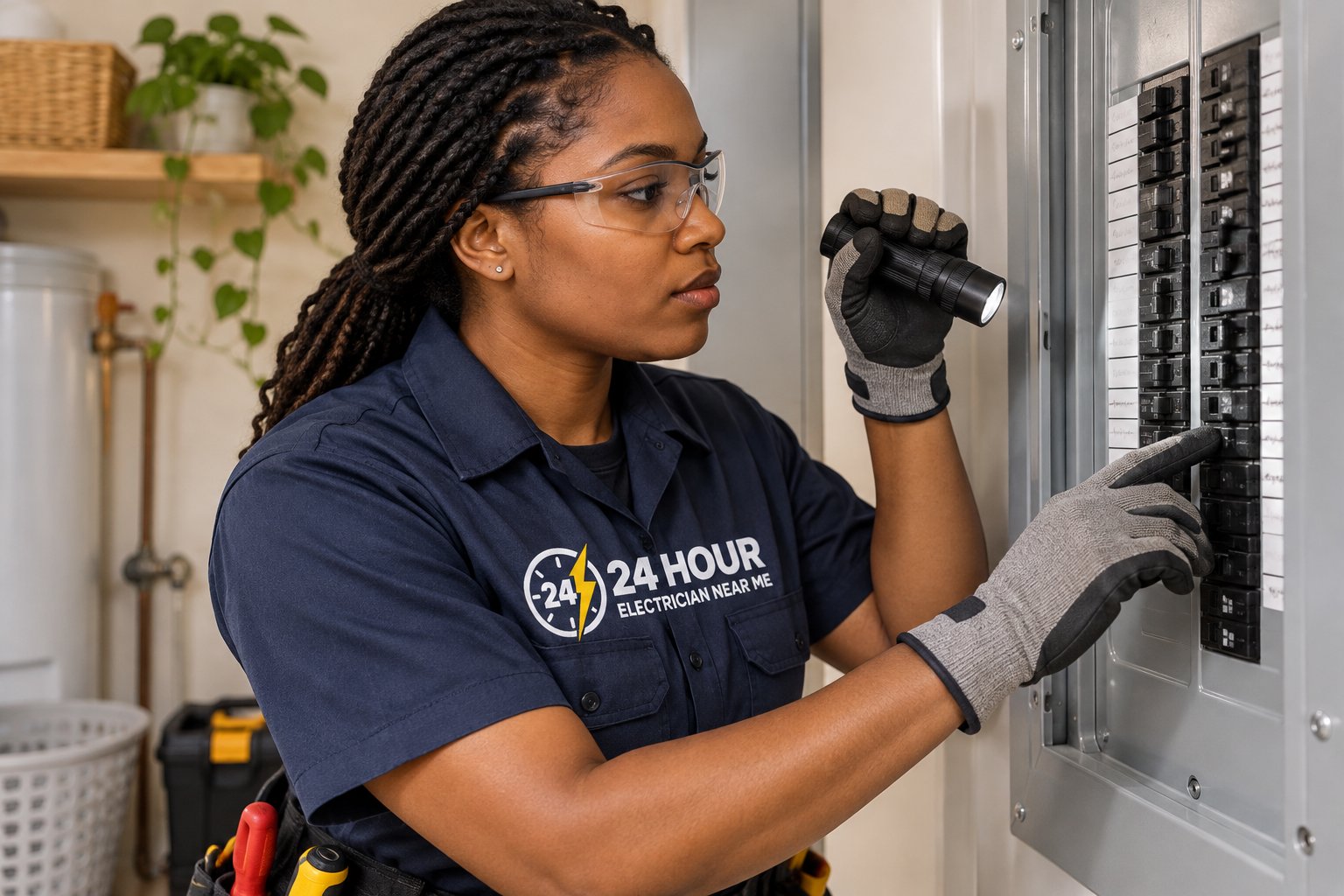
Gather simple information before calling. Note the size of the home, the type of air conditioning and how many units there are, the water heater type, whether you have a well or pool pump, the main breaker size and the panel brand. Take a photo of the panel with the cover open if you can do so safely, or ask the technician to look at it.
Decide on your priorities. Do you want the refrigerator and lights, or air conditioning as well? How long an outage do you want to plan for? Do you have anyone who depends on powered medical equipment? These answers shape the recommendation more than any brochure.
Quotes are given only by phone. Complicated jobs need an on-site visit, and there is a service call charge that is explained on the phone before dispatch. Call when you are ready, describe the home and your priorities, and the technician can explain the sizing approach and what a visit would involve.
Questions people ask
How do I know what size generator my home needs?
Start by listing what you want to power in an outage, then add up the running wattage of those loads and the largest motor starting surge. A technician performs a load calculation to confirm. The result depends on whether you want essentials only or whole-house coverage including central air conditioning.
What are starting watts and why do they matter?
Motors, such as air conditioner compressors and pumps, draw a brief surge when they start that is much higher than their running power. A generator has to cover that surge on top of the other running loads, or the motor will not start or the generator will stall. Sizing uses both running and starting figures.
Can a standby generator run my air conditioner?
It can if it is sized for the compressor's starting surge and the rest of the loads running with it. Central air conditioning is often the deciding factor in generator size. Some homes use load management so that a smaller generator can run one cooling zone at a time. A technician can calculate what your system needs.
Which fuel is best for a standby generator?
It depends on the home. Natural gas runs from the gas service as long as supply continues, propane runs from a storage tank, and gasoline relies on stored fuel that degrades and needs careful handling. Gas supply capacity and tank size are checked as part of planning. Gas connections are done by a gas professional.
Do I need a permit and an inspection?
Generally yes. A standby generator and its transfer equipment involve electrical work, and often gas work, that need permits and inspections from the local building department. Associations may also require approval. A permitted installation protects you for insurance and resale and keeps utility workers safe.
How do I get a quote for a generator installation?
Quotes are given only by phone. Tell the office about your home, the loads you want to run, the panel brand if you know it and where the generator would go. Complicated jobs need an on-site visit, and there is a service call charge that is explained on the phone before dispatch.
If "How a Standby Generator Is Sized for a Home" sounds like your problem, call and describe what you see, hear or smell at the panel, the outlet or the fixture. We explain what the work involves, and some jobs need a visit before a quote.
Related pages
- Generator Transfer: Guide to generator connections and transfer equipment in South Florida: load priorities, safe installation, permits and hurricane readiness.
- Transfer Switch vs Interlock: How transfer switches and panel interlock kits keep generator power off the utility lines, what each can power, and the trade-offs for a South Florida home.
- Automatic Transfer Switches: How an automatic transfer switch detects an outage, starts the generator and moves the load, where it is installed, and what it needs to work reliably.
- Smart Panels: Circuit-level monitoring and load-shedding devices explained for homes with EV chargers, heat pump equipment and backup power, and how they fit a panel.
- Generator Inlet: How an exterior generator inlet and panel interlock let you power chosen circuits safely during an outage without backfeeding the utility grid.
- TR and WR Receptacles: What tamper-resistant and weather-resistant receptacles are, where each is expected in a home, how they are built, and what to know before replacing outlets.