

Why so many Florida lawns have their own pump
In much of South Florida, a high water table and sandy soil make shallow irrigation wells a practical way to water a lawn without drawing treated water from the municipal supply. Waterfront homes may draw from a canal or lake instead. In both cases a pump moves the water, a controller decides when it runs and a set of valves directs it to zones around the yard.
The pump is an electric motor, often a one horsepower or smaller unit, and it works hard. It starts under load, runs for long stretches in the early morning and sits outdoors the rest of the day. The wiring serving it is exposed to heat, humidity, irrigation overspray, salt air and the occasional lawn service weed trimmer. Over the years, insulation on cables dries, fittings corrode and connections loosen.
When the lawn goes brown or the system fails to start, owners often call an irrigation company. Frequently the underlying problem is electrical: a tripped breaker, a failed relay, a burned contactor, a damaged cable or a pump motor that is struggling because of low voltage. Understanding the electrical side helps you decide who to call and what to say. Irrigation contractors handle pipes, heads and valves, and an electrician handles the circuits, protection and connections to the pump and controller.
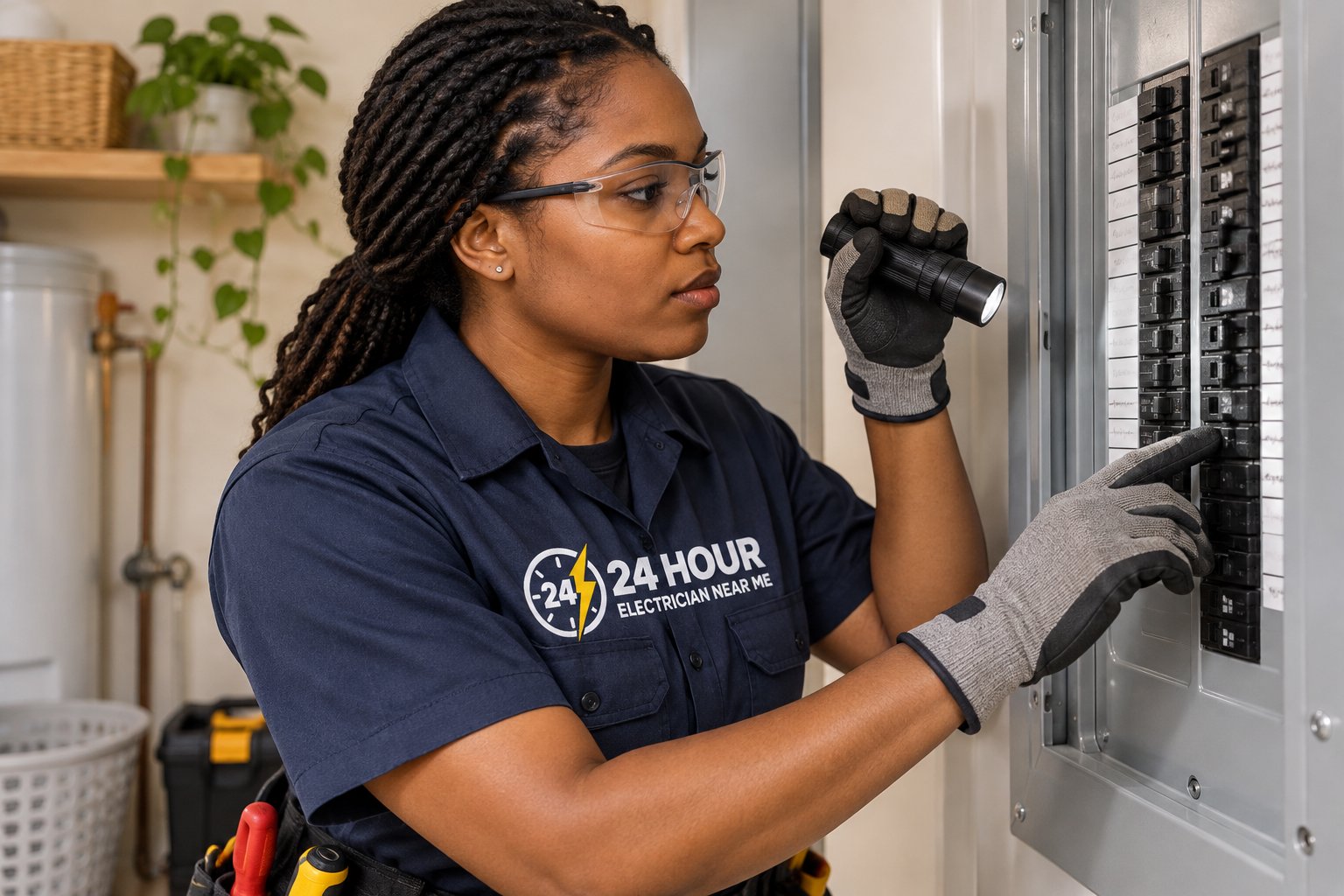
The pieces of an irrigation pump circuit
A typical residential setup combines several electrical components. Knowing the names lets you describe what you see.
- A breaker in the main or garage panel feeding the pump, sized for the motor's nameplate current and starting needs.
- A disconnect near the pump or at the point where the circuit leaves the building, so the pump can be isolated for service.
- A pump start relay or contactor, which is an electrically operated switch that lets the controller start the motor.
- A controller or timer, usually mounted in a garage or on an exterior wall, that sends a low-voltage signal to the relay and valves.
- A pressure switch or pressure sensor on well-type systems, which starts and stops the pump based on pressure.
- The wiring and conduit connecting everything, with grounding to the pump frame and any metal piping.
Pump relays and controllers
A modern irrigation controller does not power the pump directly. It produces a low-voltage signal, typically in the range of 24 volts alternating current, that closes a relay. The relay's contacts then complete the higher-voltage circuit to the pump motor. This separation protects the controller and allows a small timer to control a big motor.
The relay is a frequent failure point. Its contacts arc each time the pump starts, and they gradually pit and burn. A failing relay can cause a pump to chatter, start intermittently, stay on or not start at all. Owners may hear a click at the controller but see no pump operation. Replacing a worn relay with one sized for the motor current is usually straightforward for an electrician.
Controllers also fail. Moisture and insects get into outdoor enclosures, and lightning-induced surges damage circuit boards. A controller that has lost its program, shows an error or does not respond may need replacement. Wi-Fi controllers add convenience but also depend on a power supply and a signal, and they are vulnerable to surges. Our page on surge protection describes how to protect them. Wiring from the controller to valves should be properly spliced with waterproof connectors, since most field failures start with a corroded splice in a valve box.
Motor circuits, voltage and sizing
Pump motors are sold in 120 volt and 240 volt versions. A 240 volt motor draws half the current for the same power, which allows smaller conductors and reduces voltage drop on long runs. Many homeowners with a pump far from the panel find that a 240 volt motor runs better, but changing motor voltage is not a casual swap. The motor, the starting components and the circuit must all match.
Conductor size depends on the motor's nameplate current and the length of the run. Pumps often sit at the far end of a property, and a long run of undersized wire produces voltage drop. A motor running at lower than rated voltage draws more current, heats up and wears out faster. Symptoms include a pump that struggles to start, a breaker that trips after a few minutes and dim lights in the garage when the pump starts.
Starting current is higher than running current, sometimes several times higher. A properly selected breaker allows the motor to start without tripping while still protecting the circuit. If a motor repeatedly trips a correctly sized breaker, the cause may be a failing capacitor, a seized pump, a bad bearing or voltage drop. A technician measures voltage and current at the motor to find out. Our page on dedicated circuit installation explains why a pump should have its own circuit.
Wet locations, grounding and ground fault protection
Irrigation equipment lives in wet places, so the electrical rules for it emphasize protection. Enclosures must be rated for outdoor use. Conduit fittings must be watertight. Cable that runs along the ground or underground must be an approved type, installed at the proper depth or inside conduit. Exposed wiring that a lawn crew can strike with a trimmer is a hazard and should be protected.
Grounding the pump and its metal parts is essential. A fault inside a motor can energize its frame and the water in the piping, and anyone standing on wet ground could be shocked. A continuous grounding conductor from the panel to the pump is part of the circuit, and bonding of metal piping may be required. Corroded or missing ground connections are a frequent finding in older systems.
Ground fault circuit interrupter protection is commonly required for outdoor receptacles and for certain pump circuits, depending on the installation and the edition of the code. A ground fault device that trips often is warning about moisture, a leaking motor or damaged cable, and repeated resets do not fix the cause. Read our page on outlet and GFCI service to understand why ground fault devices trip. For general outdoor work, see weatherproof boxes and outdoor covers.
Well pumps, lake pumps and the details that differ
A shallow well pump setup has a pump above ground or a submersible pump down the well casing, with a pressure tank and switch. The electrical connection to a submersible pump runs through a sealed cable inside the casing, and its splice at the pump head must be watertight. Failures often appear as a pump that cycles on and off rapidly, which can burn out the motor.
A lake or canal pump sits near the water, often on a dock, seawall or platform. That means exposure to splashing, corrosion and, in some cases, flooding. Wiring near water has its own rules, and marine environments are harsh on metals. Our page on dock and boat lift wiring covers similar issues, and the guide on salt air corrosion explains why materials matter.
Pumps near water also raise the question of electric shock in water. Never touch a pump, a cord or a power connection while standing in water or on wet ground, and never attempt repairs while the circuit is energized. If a canal pump trips repeatedly, treat the area as potentially hazardous. Have the circuit shut off and tested by a qualified electrician.
Common symptoms and what they usually mean
A pump that does not start at all may have a tripped breaker, a failed relay, a controller fault, a broken connection or a dead motor. Check the breaker first without forcing it. If it is tripped, resetting it once is reasonable. If it trips again, stop. A pump that hums but does not turn may have a failed start capacitor or a seized impeller, and repeated attempts can burn the windings.
A pump that runs but does not deliver water might have a mechanical issue such as lost prime, a clogged intake or a worn impeller. That is more of a plumbing and irrigation problem than an electrical one, though a motor that runs at the wrong speed because of low voltage could be involved. A pump that runs all the time may have a stuck relay or a failed pressure switch.
Zones that do not turn on while the pump runs normally usually point to valve wiring or solenoids, not the pump circuit. The pattern helps decide which professional to call. If the pump itself is silent, or if breakers and ground fault devices are tripping, an electrician is the right call. If the pump runs but some zones do not water, an irrigation specialist may be the better first call, and the two can coordinate.
Storms, sandy soil and seasonal wear
Summer thunderstorms are hard on irrigation controllers and pump circuits. Nearby lightning can induce surges on long runs of wire across a yard, and valve wires act like antennas. Owners often find a controller dead after a storm. Surge protection at the panel and at the controller reduces the risk, but does not eliminate it.
Sandy soil drains quickly but shifts, and buried cable can be exposed by erosion or damaged by digging. Landscapers, pool crews and fence installers sometimes cut irrigation wiring without noticing. If a section of the yard stops watering after outside work, a damaged buried cable is worth considering. A technician can trace the cable and repair it with proper waterproof splices, not tape.
Heat and humidity speed corrosion at terminals, and ants and other insects enjoy relays and controllers. A periodic look inside enclosures, done with the power off by a qualified person, can catch problems early. After a hurricane or flood, any pump that was under water should not be energized until it has been inspected, because saturated motors and wiring can fail dangerously. See after hurricane electrical safety and flooded home electrical safety.
Permits, water management rules and who handles what
New circuits and disconnects for a pump usually require an electrical permit, although practices vary by municipality. Replacing a relay or a controller in kind is often minor work. Drilling a well and installing the pump involve other rules, including water management district requirements and well permits, which are separate from the electrical permit and are handled by the well or irrigation contractor.
Some communities restrict irrigation hours, and the controller must be set to follow them. That is a scheduling matter, not an electrical one, but a technician replacing a controller can set it up with you. Homeowner associations sometimes have rules about visible equipment near the street or the water, which can influence where enclosures are mounted.
Our electrical permits in South Florida guide explains how permits generally work. If your property has an older installation with a mystery of wiring, a safety review can document what is there. See electrical safety inspection.
Three pump problems and how they usually resolve
A homeowner finds the lawn browning and the pump silent. The breaker is on, the controller clicks and the timer shows normal. The electrician measures voltage at the relay and finds the contacts burned. Replacing the relay with one sized for the motor current restores the pump, and the technician checks the connections for heat damage at the same time.
Another owner has a pump that runs for a few minutes and then trips the breaker, mostly on hot afternoons. Measurements show low voltage at the motor because the run from the panel is long and the wire is undersized. The fix is larger conductors, and possibly a higher voltage motor, not a bigger breaker. A larger breaker would only hide the problem while the motor overheated.
A third owner has a ground fault device that trips every time it rains. Water has entered a splice near the pump head. Redoing the splice with proper watertight connectors and replacing a cracked fitting stops the trips. In each case, a measured diagnosis pointed to the real cause.
What to have ready when you call
Quotes are given only by phone, and complicated jobs need an on-site visit. There is a service call charge, explained on the phone before dispatch. Details that help us include the following.
- Whether the pump draws from a well, a lake or a canal, and where it sits relative to the panel.
- The pump's horsepower, voltage and any nameplate information you can read safely.
- What happens: no start, hum, trip, runs constantly or fails after storms.
- The brand and location of the controller and whether it connects to Wi-Fi.
- Whether a breaker or ground fault device is tripping, and how often.
- Any recent landscaping, digging or storm damage.
Keep the water flowing safely
An irrigation pump is easy to ignore until the lawn turns brown. Behind it is a circuit that has to handle motor loads, long runs and wet conditions. If your pump will not start, trips a breaker or ground fault device or has been affected by storms, call and describe what you see. We will help you work out whether it is an electrical problem, a pump problem or a job for your irrigation contractor, and explain what a visit would involve.
Questions people ask
Why does my irrigation pump keep tripping the breaker?
Common causes include a failing start capacitor, a seized or dragging pump, voltage drop on a long run, moisture in a connection or a breaker that does not suit the motor. Repeated resets can damage the motor. Reset once at most, then leave it off and call so the circuit and motor can be tested.
My controller clicks but the pump does not start. What is wrong?
The controller is sending its signal, so the fault is likely in the pump relay or contactor, the wiring after it, the breaker or the motor. A worn relay is a common cause. An electrician can test voltage at each stage and replace the failed part rather than guess.
Does an irrigation pump need ground fault protection?
Often yes, depending on the installation and the code edition applied locally. Outdoor receptacles and many outdoor pump circuits are protected because wet ground raises shock risk. A device that trips repeatedly signals moisture or a fault. Do not bypass it. Have the cause found.
Can lightning damage my sprinkler controller and pump circuit?
Yes. Long runs of valve wire can pick up surges from nearby strikes, and controllers are often damaged during summer storms. Surge protection at the panel and at the controller helps. Nothing prevents all damage, so check the system after storms and before assuming it is working.
Should I switch my pump from 120 volts to 240 volts?
A 240 volt motor draws less current and tolerates long runs better, but the motor, starting components, wiring and breaker must all match. It is not a simple swap. A technician can measure the existing voltage drop and advise whether a change or heavier wire is the better fix.
Is it safe to work on a pump near a canal or in wet soil?
Not while the circuit is energized. Never touch a pump, cord or connection while standing in water or on wet ground. Switch off the circuit and leave testing and repair to a qualified electrician. If the area was flooded, do not re-energize the pump until it has been inspected.
If "Electrical Work for Irrigation Pumps" sounds like your problem, call and describe what you see, hear or smell at the panel, the outlet or the fixture. We explain what the work involves, and some jobs need a visit before a quote.
Related pages
- Dedicated Circuit Installation: South Florida dedicated-circuit planning for residential and commercial appliances, equipment, renovations and electrification.
- Outdoor Outlets: Adding outdoor outlets safely: weatherproof in-use covers, GFCI protection, and mounting on stucco and block exteriors in South Florida.
- Pool and Spa Wiring: Electrical work for Florida pools and spas: bonding, GFCI protection, pump and heater circuits, underwater light safety and what to check before swimming.
- Whole-Home & Commercial: A practical guide to layered residential and commercial surge protection in Broward County and the cities from Boca Raton to North Miami.
- Dock and Boat Lift: Dock power, shore power and boat lift motor wiring, and the added leakage-current protection that waterfront electrical systems need.
- Kitchen Upgrades: Counter outlets, appliance circuits, under-cabinet lighting and island power: how kitchen electrical is planned during a remodel in South Florida.