

Why mini-splits need their own electrical plan
A mini-split looks small on the wall, but the outdoor unit contains a compressor and a fan motor, and those pull a serious load when they start. Treating the unit like a plug-in appliance is the most common mistake. In nearly every case the manufacturer calls for a dedicated circuit, which means a breaker that serves that one system and nothing else, with wire sized to the nameplate on the outdoor unit rather than to a guess.
In South Florida the unit may run for most of the year. A system that runs for months at a time exposes weak connections, undersized wire and marginal breakers far faster than a window unit used a few weeks each summer. Heat builds at a loose lug in a way that is invisible until a breaker trips repeatedly or a conductor discolors. Planning the electrical work properly at the start takes far less effort and stress than chasing a nuisance trip in August.
Mini-splits also come in several shapes. A single-zone system has one outdoor unit feeding one indoor head. A multi-zone system has one outdoor unit feeding several heads, and its electrical demand is higher. Some units are powered at the outdoor unit with a low-voltage communication cable running to the indoor head. Others are powered from both ends. The installation manual for the exact model decides which, and the electrician works from that document, not from habit.
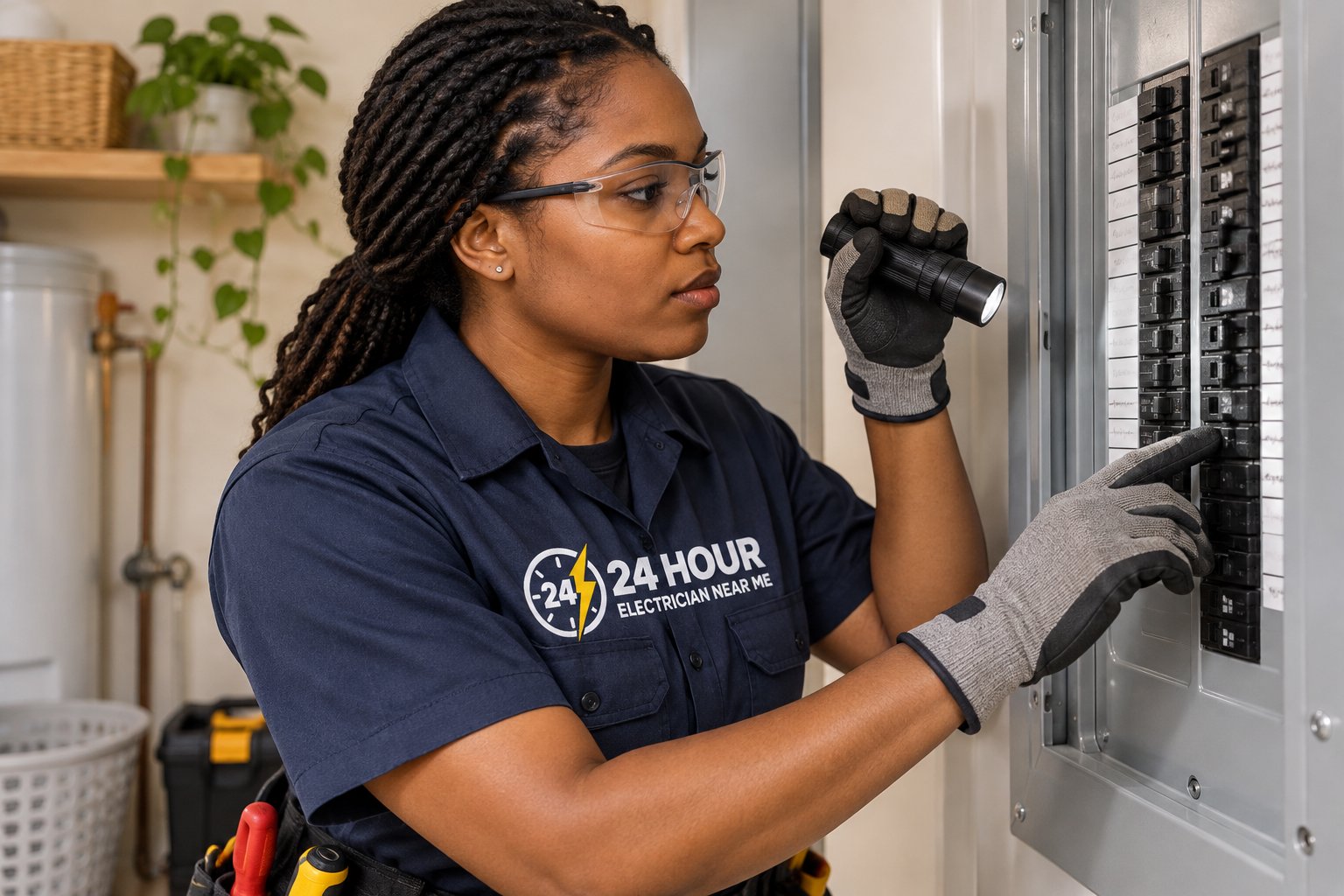
What the dedicated circuit includes
A properly wired mini-split circuit has several pieces that work together. Each one has a job, and leaving one out is how problems start later.
- A two-pole breaker in the panel, rated according to the maximum overcurrent protection printed on the outdoor unit's nameplate.
- Conductors sized for the minimum circuit ampacity on that same nameplate, not simply matched to the breaker.
- A weatherproof disconnect within sight of the outdoor unit so that anyone servicing it can cut power right there.
- Conduit or cable suited to the route, with fittings rated for outdoor and damp locations.
- A grounding conductor carried the whole way and bonded at the equipment.
- A properly sized low-voltage control cable between the outdoor and indoor units when the manufacturer requires one.
Reading the nameplate: ampacity and breaker size
Every outdoor unit carries a data label. Two numbers matter most. The minimum circuit ampacity tells the electrician how large the conductors must be. The maximum overcurrent protective device rating tells them the largest breaker the manufacturer permits. These two numbers are different on purpose. The wire has to carry the running load with margin, while the breaker has to be large enough to let the compressor start without tripping but small enough to protect the unit.
This is why a quote by phone starts with questions. We will ask you for the brand, the model number and the capacity, because a small single-zone unit and a multi-zone system can need very different circuits. If a different installer has already mounted the equipment, a photo of the nameplate is the single most useful thing you can have ready. Do not open the unit to find it, and do not read it by removing panels. The label is on the outside casing.
A common problem is an existing circuit that someone hopes to reuse. An old circuit may serve an air handler, a water heater or a spare outlet. Whether it can be reused depends on its conductor size, its condition, its length and what else is connected. A technician can check the wire at the panel and at the unit location, but reuse is a judgment made on site, not from a description.
The outdoor disconnect and why it matters
The disconnect is a lockable or pull-type switch mounted near the outdoor unit. Its purpose is to let a service technician remove power from the equipment without walking back to the panel. In a tight side yard or on a roof, that can mean the difference between a safe repair and an unsafe one. Some manufacturers supply a disconnect, while others leave it to the electrician. Local inspectors generally expect one to be present and accessible.
Placement is more important than most people realize. The disconnect should be within sight of the unit, reachable without moving equipment, and mounted so that it is not blocked by the unit's own service clearance. In Florida it must also be rated for wet locations because rain, irrigation overspray and salt air all reach it. Low-grade, undersized or indoor-rated enclosures corrode from the inside, and a corroded disconnect is a common source of heat and failure.
Some units use a combination of a disconnect and a surge device or a receptacle inside the same enclosure. That is acceptable only when the product is listed for the purpose. An electrician checks the listings and the manufacturer's instructions before choosing the enclosure.
Garages, sheds and detached spaces
Garage conversions and detached workshops are among the most frequent mini-split locations in South Florida. A garage may have only one or two lighting circuits and a few receptacles, and the existing feed may be a small cable run from the house panel with no thought for a cooling load. Adding a mini-split there requires looking at the whole feed, not only the new circuit.
If the garage has a subpanel, the electrician needs to know whether it has spare capacity and whether the feeder to it can carry the additional load. If it does not have a subpanel, a new circuit may need to run from the main panel through the attic, along an exterior wall or underground. Underground runs bring their own rules for depth, conduit type and protection, and they should be planned before anyone digs. For a workshop that will also run tools, a lighting upgrade or an EV charger later, a subpanel installation may be a better long-term choice than a single long circuit.
Detached buildings add another question, which is grounding and bonding at the second structure. Metal conduit or a feeder may bring ground along, but the details depend on how the building is fed. This is an area where a quick improvised connection can be dangerous, and where an inspection exists for good reason.
Additions, bonus rooms and enclosed porches
When a screened porch becomes a sunroom or an attic becomes a bedroom, a mini-split is often the answer because extending ductwork is awkward. The electrical side then connects to a larger project. The new room needs lights, receptacles and perhaps a smoke alarm, and the cooling circuit is one part of that package. If you are planning any of this, the discussion in our page on home addition wiring is worth reading, because the question of whether the main panel can carry the extra load applies directly.
Load matters in the panel. A house with a full central system, an electric range, a dryer, a pool pump and a water heater may already be using most of its service. Adding a mini-split may be perfectly fine, or it may be the addition that pushes the panel past what it should carry. A technician can perform a load calculation, which is a structured way to add up connected equipment, and that tells you whether the existing panel is adequate. If it is not, the conversation shifts to a main service upgrade, and it is better to learn that before the equipment is bought.
Enclosed porches also bring moisture. Cable and boxes in a space that is partly open to weather need the right ratings. An electrician will choose weather-resistant devices and the proper fittings when the room is not fully conditioned.
Running the line set and control cable without creating problems
The refrigerant line set and the control cable are usually run together from the outdoor unit to the indoor head. The HVAC installer typically owns the refrigerant lines, but the electrical conductors that travel with them must be handled correctly. Low-voltage control cable must be kept separate from high-voltage conductors according to the installation instructions. Running them in the same sleeve, or strapping them tightly together, can cause interference and communication faults that look like a defective unit.
Wall penetrations deserve attention too. A hole through an exterior wall that is not sealed lets humidity and insects in, and a hole through a fire-rated assembly has requirements of its own. Before any wall is opened, the electrician and HVAC installer should agree on the route, the location of studs, and what is behind the wall, whether that is a water line, a data cable or existing wiring.
When two trades are involved, coordination is the real challenge. A common scenario is that the HVAC installer arrives, mounts the unit, and then discovers that the circuit is not ready. Or the electrician finishes the circuit, but the unit chosen needs a larger breaker than was planned. The simplest way to prevent both is to choose the exact unit first, share its model number, and let the electrical work follow its specification.
Permits, inspection and what to expect
Adding a new circuit and a disconnect is normally work that requires a permit in South Florida municipalities, and the mechanical side of the installation has its own permit requirements. Permit rules vary between cities and counties, and the permitting office is the final authority. Our guide to electrical permits in South Florida explains the general process in plain language.
An inspection usually looks at the disconnect, the conductor size, the breaker, the grounding and the general workmanship. It happens at the stage when the work can still be seen, which is why panels are not closed and walls are not finished before the inspector arrives. If you are hiring separate trades, ask who is responsible for pulling each permit so that nothing is left to chance.
Skipping a permit can cause trouble later. An insurance claim, a home sale or a refinance may surface unpermitted work, and the cost of correcting it after the fact is usually larger than doing it properly the first time. Our page on permit versus no permit work looks at that decision in more detail.
Problems that point back to the electrical side
Many mini-split complaints are not equipment failures at all. If a system shuts off at the same time every day, the breaker may be tripping from heat or from a loose connection. If the display shows an error and the unit restarts after power is cycled, the cause may be low voltage at the unit or a failing control cable. If the outdoor unit hums but does not start, a weak connection may be starving it of power.
There are things you can safely observe without touching anything. Note whether the breaker in the panel is in the tripped position. Note whether the unit's indicator lights behave differently than usual. Note the time of day and what else in the house was running. Do not open the outdoor unit, do not touch the disconnect if it looks scorched or wet, and do not repeatedly reset a breaker that keeps tripping. Repeated resets can turn a small fault into damage.
If you notice a burning smell, discoloration at the disconnect, or crackling, treat it as an emergency, turn the system off at the thermostat or remote only if that is safe, and call 911 if there is smoke or fire. Otherwise call us and describe what you see.
What to have ready when you call
A quick, well-prepared call saves time and gets a more accurate answer. Quotes are given only by phone, and complicated jobs need an on-site visit. There is a service call charge, and it is explained on the phone before anyone is dispatched. To help us understand the job, gather the following before you call.
- The brand, model number and capacity of the unit, or the product page if you have not bought it yet.
- Whether it is a single-zone or multi-zone system and how many indoor heads you want.
- Where the outdoor unit and indoor head will go, with rough distances from the panel.
- Whether the space is in the main house, a garage, a porch or a detached building.
- The size and age of your main panel, and a photo of the inside of the door if you can take one safely.
- Whether another contractor is handling the HVAC installation and the permit.
How the visit goes and why to call
On a visit, the technician will look at the panel, the available space for a new breaker, the route to the equipment location and the condition of any existing wiring you hope to reuse. They will take measurements, check the unit's requirements and explain the plan in plain words before work is scheduled. If the job is simple, it can be straightforward. If it involves a trench, a new subpanel or a service upgrade, they will say so and explain why.
A well-planned mini-split circuit should feel boring afterward. The unit starts without lights dimming, the breaker stays where it belongs, and the disconnect sits quietly outside for years. If you are planning a ductless system, or you already have one that trips, hums or restarts, call and describe the situation. A conversation early on is the best way to avoid an expensive surprise later.
Questions people ask
Can I plug a mini-split into a regular outlet?
Small units sold with a plug exist, but most ductless systems are hardwired and need a dedicated circuit sized to the nameplate. Plugging a hardwired system into an ordinary outlet, or using an extension cord, is unsafe and may void the manufacturer's instructions. A technician can tell you which type you have and what the circuit should look like.
Do I need a disconnect next to the outdoor unit?
In most installations, yes. A disconnect lets anyone servicing the outdoor unit remove power right there without going to the panel. Local inspectors generally expect it within sight of the equipment. The enclosure must also be rated for wet locations, because rain, irrigation spray and salt air all reach it in South Florida.
Can my existing circuit be reused for a new mini-split?
Sometimes, but not by assumption. The wire size, length, condition and what else shares the circuit all matter, and the answer has to match the new unit's nameplate. A technician checks the conductors at the panel and at the unit location. If anything is undersized or worn, a new dedicated circuit is the safer choice.
Why does my mini-split breaker keep tripping?
Causes include a loose connection that heats up, a breaker that is the wrong size for the unit, a failing compressor, or moisture in the disconnect. Repeatedly resetting the breaker can make the damage worse. Leave the unit off, note when the trip happens, and call so a technician can test the circuit properly.
Does a mini-split installation require a permit?
Usually yes. A new circuit and disconnect generally need an electrical permit, and the mechanical side may need its own. Rules differ between municipalities, and the local building department is the final authority. Ask whoever is doing the work who is pulling each permit, and keep the paperwork for future sales and insurance.
Will a mini-split overload my electrical panel?
It depends on what the panel already carries. A house with a range, dryer, water heater and central air may be near its limit. A technician can run a load calculation to check. If the panel is short on capacity, the usual answer is a service upgrade, and it is better to learn that before buying equipment.
For "Wiring for Ductless Mini-Splits", a phone call comes first. Describe the circuit, the breaker or the equipment, and we will talk through the safe next steps and whether the job needs an on-site look.
Related pages
- Dedicated Circuit Installation: South Florida dedicated-circuit planning for residential and commercial appliances, equipment, renovations and electrification.
- Subpanel Installation: Adding a second electrical panel for a garage, addition or pool equipment without replacing the main panel: sizing, feeder wiring, grounding and permits.
- AC Electrical Work: Electrical work for air conditioners: disconnects, whips and breaker sizing at outdoor units, and why the electrician and AC contractor coordinate.
- Addition Wiring: Wiring a home addition: tying new rooms into an existing panel, judging whether the service can carry the load, and sequencing rough-in and inspections.
- Garage Upgrades: Workshop power, freezer circuits, lighting and subpanel options for attached and detached garages, with notes on moisture, heat and safe planning.
- Outdoor Kitchens: Plan power for a lanai or patio kitchen: refrigerators, lighting, GFCI protection and weather-rated outlets, and what to settle before the cabinets arrive.