
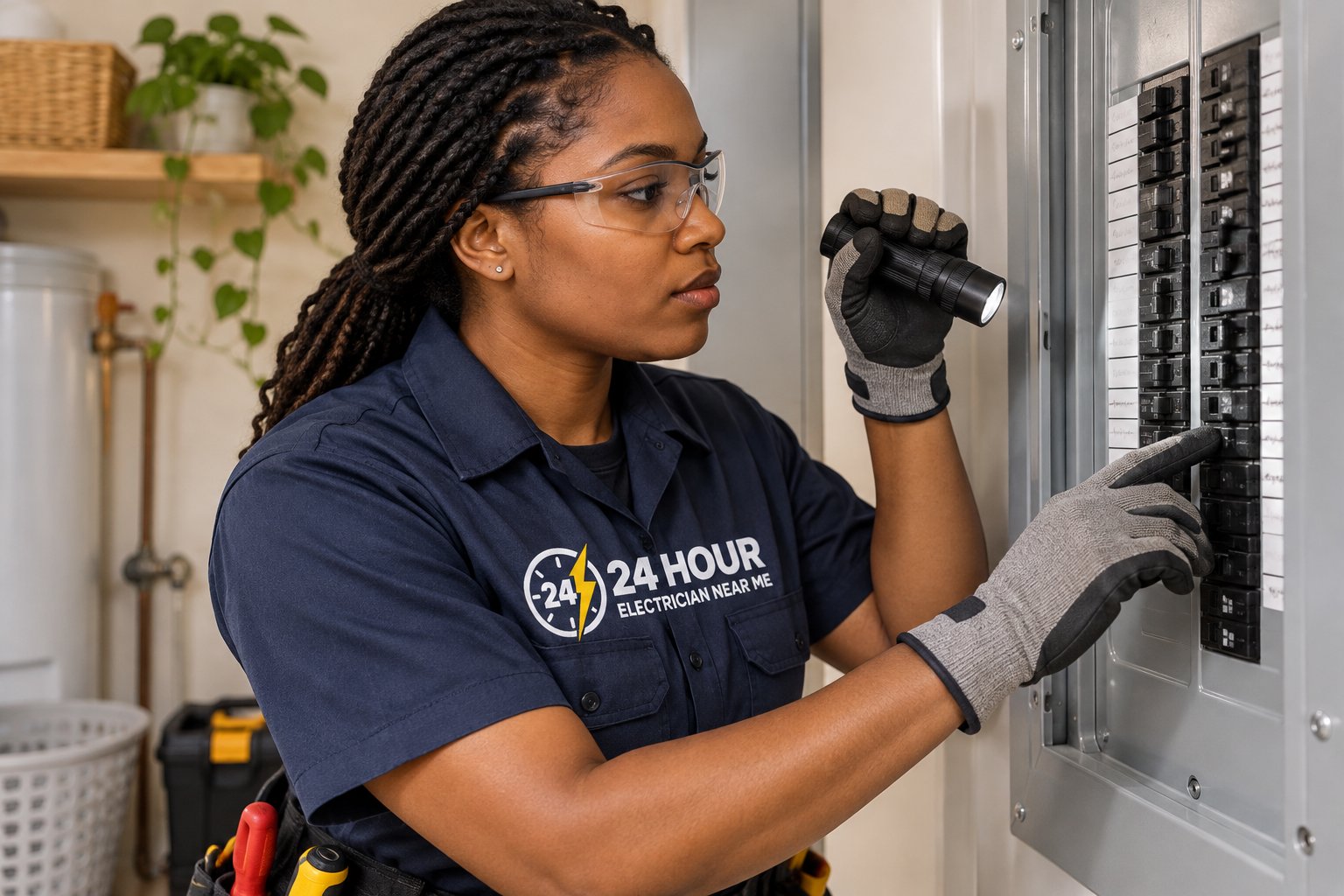
Why outdoor kitchens are an electrical project first
Most people start an outdoor kitchen by choosing the grill, the countertop and the stools. The electrical side tends to arrive as an afterthought, usually when the contractor asks where the power will come from. That order of decisions causes most of the trouble. The grill island, the refrigerator and the lighting all need circuits, and those circuits need a path from the panel to the patio that is protected from moisture, from lawn equipment and from the settling of the ground.
In South Florida the stakes are a little higher than in a dry climate. Afternoon storms, sprinklers that hit the cabinets, humidity that never really leaves and salt air near the coast all work on electrical equipment every day. A receptacle that would last for years in a dry garage can corrode in a single season on a lanai. The way a circuit is built outdoors, from the breaker to the cover plate, is designed around that reality.
The goal of this page is not to teach you to wire the kitchen. Outdoor work involves wet locations, buried conduit, ground-fault protection and permits, and it belongs with a qualified electrician. The goal is to help you ask good questions, make layout decisions that avoid expensive changes later, and understand what a technician will look at when you call.

What a typical outdoor kitchen asks of the electrical system
Think about the kitchen as a list of loads rather than a list of appliances. Each load has a different personality, and the circuit plan follows from that list.
Some loads run constantly and quietly. An outdoor-rated refrigerator or beverage center is the best example. It cycles on and off all day and all night, and a tripped breaker can go unnoticed until the contents spoil. Other loads are brief but heavy, such as a countertop burner, an electric griddle, a blender or a warming drawer. Lighting is a steady load that is usually small, but it is spread across the whole space. Then there are the convenience loads: phone chargers, speakers, a television, a ceiling fan over the dining table.
- Refrigerators, beverage centers and ice makers: constant cycling, preferably on a dedicated circuit so a trip elsewhere does not warm the contents.
- Gas grill and side burner ignition, rotisserie motors and vent hoods: low power but still need weather-rated receptacles or hardwired connections.
- Electric cooking equipment such as induction cooktops, griddles and warming drawers: heavier loads that may need their own circuit.
- Lighting: task lighting over the grill, ambient lighting for the seating area, and path or step lighting.
- Convenience receptacles along the counter and at the seating area for small appliances and chargers.
- Fans, misters and speakers if the lanai is covered or screened.
Ground-fault protection and why it matters most outdoors
Water and electricity do not mix, and the protective device built for that problem is the ground-fault circuit interrupter, usually called a GFCI. It watches the current leaving on the hot conductor and returning on the neutral. If a small amount goes missing, for example through a person or through water, it shuts the circuit off fast enough to prevent a serious shock.
Outdoor receptacles at a residence are expected to have this protection, and outdoor kitchens are exactly where it earns its keep. Protection can come from a GFCI breaker in the panel or a GFCI receptacle at the first point in the circuit. Each approach has trade-offs, which are covered in the page on GFCI breakers versus outlets. For an outdoor kitchen, many electricians favor protecting the whole branch at the breaker so every outlet and the lighting downstream is covered, and so the reset button is not hidden in a cabinet that is hard to reach.
A GFCI that trips is doing its job, not failing. Frequent tripping after rain usually means moisture has found its way into a box, a fixture or a connection. That is a reason to have the circuit looked at, not a reason to replace the device with something less sensitive. The page on outlet and GFCI service explains how a technician tracks down that kind of nuisance trip.
Weather-rated receptacles, covers and boxes
The receptacle itself is only part of the story. Outdoor outlets are generally expected to be weather-resistant types, and where something will be plugged in for long periods, such as a refrigerator or a string of lights, the cover is expected to keep the plug dry even while it is in use. These are the deeper bubble-style covers you see on well-built patios, as opposed to a flat flip lid that only protects an empty outlet.
Boxes matter just as much. A weatherproof box with proper gaskets, sealed entries and corrosion-resistant hardware will outlast a basic box that was meant for indoor walls. Near the coast, stainless or coated hardware and listed fittings make a visible difference after a few years. The page on weatherproof boxes and outdoor covers covers the choices in more detail.
Placement is a design decision as well as an electrical one. Outlets mounted on the face of a counter island, hidden under an overhang or tucked behind a stool are convenient but may be exposed to splashing, sweeping water or pressure washing. A technician will usually suggest positions that are accessible, out of the direct path of water, and not blocked by the appliances you plan to install.
Dedicated circuits and how loads are divided
A single circuit that feeds the refrigerator, the lights, the blender outlet and the speakers is a common mistake. When the blender and a toaster oven run together, the breaker trips, and the refrigerator goes down with them. Dividing the loads into sensible circuits avoids this.
A typical approach separates the refrigeration, the countertop receptacles and the lighting into different circuits, and gives any heavy electric equipment its own circuit. How many circuits, what size, and what kind of protection each one needs depends on the specific appliances, which is why the manufacturer's installation instructions should be in hand before the plan is finalized. The page on dedicated circuit installation explains why some appliances deserve a circuit of their own.
If the existing panel is full or already heavily loaded, the outdoor kitchen may call for a subpanel near the patio or a rearranged panel. Cases like these are discussed in subpanel installation, and a service-level question may come up if the house has been adding loads for years. A technician will usually look at the panel before any quote is discussed on the phone.
Getting power from the house to the patio
The path from the panel to the kitchen is where most of the cost, effort and permit questions live. There are a few common routes. A short run through the garage wall and along the exterior of the house is the simplest. A trench across a yard to a freestanding island is more involved, because underground wiring must be in an approved type of conduit or cable, buried to depths the rules specify, and clear of irrigation lines and other utilities.
Florida soil makes this interesting. Sandy ground shifts, high water tables mean conduits can fill with moisture, and root systems and sprinkler lines are everywhere. Conduit materials, seals at the ends and drainage considerations are not trivial. The page on conduit types in Florida explains why material choice matters.
Wire size is chosen for the load and the distance, because long runs lose voltage. A grill island that sits a long way from the house may need larger conductors than the load alone suggests. This is one reason to avoid guessing: an undersized feeder causes dimming, nuisance trips and heat, and it is difficult to fix after concrete has been poured.
Lighting that works in the dark and in the weather
Good outdoor kitchen lighting does three jobs. It lets the cook see the food on the grill without glare, it makes the seating area comfortable, and it lights steps and edges so guests do not trip. Mixing those jobs on one switch is a missed opportunity. Separate switching, preferably with dimming on the ambient lights, makes the space more usable.
Fixtures need to be rated for the location. A covered lanai is often a damp location, while an open patio or anything the sprinklers can reach is a wet location. The right rating is printed on the fixture or its packaging, and the difference is real: a damp-rated fixture exposed to direct rain will fail early. The page on indoor and outdoor rated fixture choice walks through the labels.
Dimmers and LED drivers need attention too. Not every dimmer works with every LED fixture, and outdoor LED strips often rely on a driver that must be placed somewhere dry and ventilated. Details like these are covered in LED drivers and dimmer compatibility.
Gas appliances still need electricity
People sometimes assume that a gas grill island needs no electrical planning. In practice, even gas-fired equipment draws on the electrical system. Electronic igniters, interior grill lights, rotisserie motors, vent hood fans, refrigerators, ice makers and the rest of the cabinet-mounted features all need power. Built-in grills commonly ask for a nearby receptacle that is protected and weather-rated.
Gas lines themselves are a separate trade and are installed and tested by the appropriate professional. Where gas and electrical work meet, the planning conversation helps. For instance, the location of a gas shutoff, the clearance around a grill, and the position of the receptacle that powers its ignition should be settled together rather than discovered during the last inspection.
If you are using propane tanks, the placement of the tank cabinet and its distance from ignition sources, outlets and openings is a safety question. The installer of the gas side can speak to specifics. From the electrical side, the point is to avoid placing receptacles or junction boxes where they could be exposed to leaking gas or the heat of a grill.
Permits, inspections and the paperwork nobody enjoys
New circuits, new feeders and new outdoor receptacles are usually permit work. The permit office in your city or county sets the process, and it differs between jurisdictions in Broward County and the cities from Boca Raton to North Miami. Some want a simple permit for a few circuits, others ask for drawings if a subpanel or a major run is involved. A qualified electrician or a permitted electrical contractor can pull the permit and arrange the inspection.
It might be tempting to skip this step, in particular if a friend with a handy streak offers to do the wiring on a weekend. The risks are real. Unpermitted work can complicate insurance claims, surface during a home sale, and hide defects that an inspection would have caught. The page on electrical permits in South Florida explains the process and the page on permit versus no permit explains why it matters.
Inspections are also where good planning pays off. An inspector will typically look at the protection devices, the box and cover types, the burial method, the grounding and bonding, and the labeling at the panel. Having these details right the first time means one inspection instead of three.
Before you build: a planning checklist
Gather these items before talking to an electrician. They make the conversation faster and the plan more accurate.
- The make and model of every appliance, with the manufacturer's installation sheet or specification page. Electrical needs vary, and the sheet states the circuit requirements.
- A rough sketch of the layout: where the island sits, where the house wall is, where the panel is, and any trees, pools or irrigation between them.
- A list of what you want to plug in without extension cords: blender, speakers, chargers, a television, string lights.
- Whether the space is open, covered or screened, and whether sprinklers or pool splash can reach the cabinets.
- Photos of the panel with the door open, and of any empty breaker spaces. The photo helps the technician judge whether a subpanel is needed.
- Your preferred timeline, in particular if the countertop or cabinet delivery is already scheduled, since the wiring has to be roughed in first.
- Any homeowners association rules about exterior changes, lighting levels or trenching in common areas.
What the technician will check on the visit
For a project like this, quotes are given by phone for simple scopes and after an on-site visit for anything complicated. There is a service call charge, and it is explained on the phone before anyone is dispatched. The visit is a practical one. The technician will look at the panel, count open spaces, check the age and condition of the equipment, and measure the route to the patio.
They will ask about the appliances and the plan, and they may point out issues that are not obvious, such as a panel without enough capacity, aging wiring at the exterior wall, or an existing outdoor outlet that is not properly protected. If something is unsafe, they will tell you and explain the options. You are not obliged to take any work on the spot, and a good technician will separate what is urgent from what is optional.
If the home has an older panel, this is a good time to read about Federal Pacific panels and older panel brands, because adding a large outdoor load to a questionable panel is something to think through before the concrete is poured.
What not to do yourself
Outdoor kitchen wiring is not a good place for improvisation. The combination of water, grounded metal appliances, bare feet and tile makes shocks more serious. Do not run extension cords through a window or under a door as a permanent solution, do not use indoor-rated outlets or covers outside, and do not bury cable that is not rated for burial. Never open a panel, work on a live circuit or reset a breaker repeatedly if it keeps tripping.
If an outdoor outlet sparks, smells hot or feels warm, stop using it and turn off the breaker if you can do so safely. If there is smoke or fire, call 911 first. Similar warning signs are explained in warm outlet or switch plate.
When you are ready to talk it through, call and describe the project in plain terms: what appliances, what distance, what kind of covering. A technician can tell you whether a phone quote is possible or whether a visit makes sense first, and can walk you through the next step.
Questions people ask
Do I need a permit to add outlets and lighting to an outdoor kitchen?
In most South Florida jurisdictions, new circuits, new outdoor receptacles and new feeders to a patio are permit work. Details vary by city and county, and the permit office decides what is needed. A qualified electrician or permitted electrical contractor typically handles the application and schedules the inspection. Ask during the phone call so the permit step is built into the timeline rather than added later.
Should the outdoor refrigerator have its own circuit?
Often yes. A refrigerator cycles all day, and sharing its circuit with a blender or griddle means a trip can shut it off unnoticed. The manufacturer's installation sheet states what the appliance requires, and the technician will use that along with the rest of your plan to decide how circuits are divided. Your own preference for reliability counts as well.
Why does my outdoor outlet trip after rain?
Ground-fault protection trips when it senses current leaking where it should not. After rain, the usual cause is moisture inside a box, a cover that no longer seals, a damaged cable or a fixture with water in it. Resetting repeatedly is not a fix. Leave the circuit off and have a technician find where the water is getting in.
Can I use an extension cord for the grill island?
Extension cords are meant to be temporary. Running one permanently through a door or window, across a wet patio or under a mat creates shock, trip and overheating risks, and it often means the real need was another outlet or circuit. An electrician can add properly protected, weather-rated receptacles where you actually use them, which is safer and tidier.
Does a gas grill need electrical power?
Usually it does. Igniters, interior lights, rotisserie motors, vent fans and any built-in refrigerator or ice maker need power, and the receptacle must be suited to an outdoor location. The gas line itself is a separate installation done by the appropriate trade. Both sides should be planned together so clearances and positions line up.
How do I get a quote for outdoor kitchen wiring?
Quotes are given by phone only. For a simple scope the technician may be able to give one from a description of the appliances and distance. Complicated jobs, such as long runs, subpanels or older panels, need an on-site visit first. There is a service call charge for visits, and it is explained on the phone before anyone is dispatched.
If "Electrical Planning for Outdoor Kitchens" sounds like your problem, call and describe what you see, hear or smell at the panel, the outlet or the fixture. We explain what the work involves, and some jobs need a visit before a quote.
Related pages
- Outdoor Outlets: Adding outdoor outlets safely: weatherproof in-use covers, GFCI protection, and mounting on stucco and block exteriors in South Florida.
- Outlet & GFCI: A safety-first South Florida guide for dead, loose, warm, damaged and GFCI-protected outlets in homes and commercial properties.
- Dedicated Circuit Installation: South Florida dedicated-circuit planning for residential and commercial appliances, equipment, renovations and electrification.
- Pool and Spa Wiring: Electrical work for Florida pools and spas: bonding, GFCI protection, pump and heater circuits, underwater light safety and what to check before swimming.
- Circuit Mapping: Find out which breaker feeds which outlet, light and appliance so your panel directory finally matches the house, and what a mapping visit involves.
- Generator Inlet: How an exterior generator inlet and panel interlock let you power chosen circuits safely during an outage without backfeeding the utility grid.