
Why a calendar helps more than a reaction
Most owners think about electrical work only when something fails: a breaker that will not reset, a dead outlet, a burning smell. By then the cause has usually been developing for a long time. Connections loosen gradually, corrosion advances slowly, devices wear and loads creep upward as new appliances arrive. A routine of short, safe checks tied to the seasons turns those slow changes into things you notice.
South Florida adds its own rhythm. There is a long, hot and wet season, a hurricane season that overlaps most of it, and a milder, drier winter. Each part of the year puts a different stress on the system. Summer pushes air conditioning to its limit and brings daily thunderstorms. Hurricane season raises the chance of outages, surges and flooding. Winter brings seasonal residents, holiday lighting, guests and the use of heaters on the few cold nights.
This page organizes electrical attention by season. It focuses on observations a homeowner can make safely: looking, listening, smelling and pressing a test button. It does not ask you to open panels, touch wiring or work on energized equipment. Where an item needs a qualified person, it says so, along with what to ask for. It is not a rigid schedule and it does not claim that any particular interval is required. It is a practical way of pacing your attention. Your own house, its age and its equipment may call for more or less, and a technician can help you adjust the list to fit.

Late winter and early spring: the quiet season for a thorough look
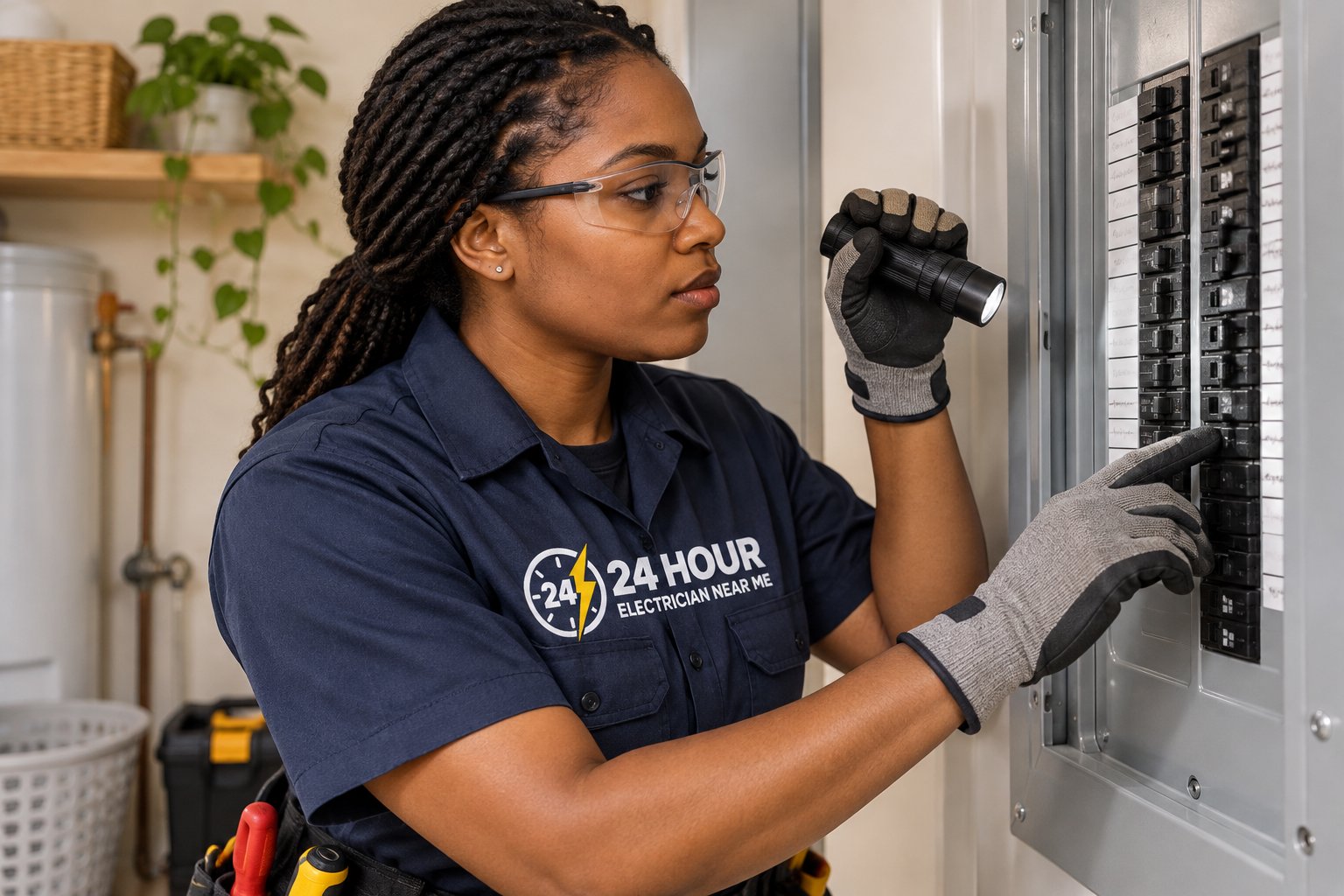
The drier, cooler months are the best time to do a calm review, before heat and storms set the pace. Start at the panel without opening it. Is the area around it clear, with room to stand and nothing stored in front? Is the directory legible, so that you know which breaker serves which room? If labels are faded or wrong, note it for the technician, since an accurate directory matters in an emergency.
Walk through the house and look at outlets and switches. A cover plate that is discolored, warm to the touch or cracked deserves attention. A receptacle that no longer holds a plug firmly, a switch that crackles or a light that flickers with movement are signs of wear. Press the test and reset buttons on ground-fault outlets in bathrooms, kitchens, garages and outdoors, following the manufacturer's instructions. A device that does not trip when tested, or does not reset, should be replaced.
Test smoke and carbon monoxide alarms using their test buttons and replace any with low-battery chirps or past their service date, which is printed on the unit. Look at exposed cords, power strips and extension cords. Any that are frayed, warm or run under rugs should be retired.
This is also a good season to plan work you have been postponing. Schedule an inspection of the panel by a professional if the house is older, if you have noticed any symptoms or if you are about to add load. Because contractors are less pressed than in storm season, scheduling is easier. Our guide on electrical safety with children and pets offers a room-by-room view that pairs well with this walk-through.
Spring: preparing for heat and for the storm season
As temperatures climb, the air conditioner becomes the biggest electrical load in the house. Before it runs daily, look at the outdoor condenser with the system off at the thermostat. Is the disconnect cover intact, with no rust? Are cables entering the unit protected? Is the base level and clear of debris and vegetation? You are not opening anything, only looking.
Notice how the lights behave when the air conditioner starts. A brief dim is common, but a deep dip, a hum or repeated flicker suggests a loose connection, a failing capacitor or a service that is working hard. Report it to a technician early in the season, since a repair in spring is calmer than a failure in the hottest weeks.
This is also the time to prepare for hurricane season, which begins in early summer. Review your plan for outages. If you have a generator inlet, interlock or transfer switch, have it tested and make sure everyone in the household knows how it is used. If you do not have one and want one, spring is the season to plan, since permits and installations take time. Our hurricane season electrical checklist lays out the steps in detail.
Check exterior fixtures, outdoor outlets and weatherproof covers. Cracked gaskets, missing covers and corroded screws let moisture in. Replace what is damaged before the rainy season starts. Look at the service mast, weatherhead and meter box for loose or leaning parts, and trim trees near your own equipment only with proper safety, never near the utility's lines.
Early summer: the first heavy-load weeks
When heat arrives in earnest, the system is tested. Pay attention to breakers that trip in the afternoon. A breaker that trips once during an unusual combination of loads may simply have been overloaded. A breaker that trips repeatedly at the same time of day signals either a circuit that is too heavily loaded, a failing appliance or a loose connection that heats up under load.
Feel, without prying, the area around the panel and outdoor disconnects. A noticeably warm cover is a reason to call. Listen for buzzing from the panel, the meter or the condenser disconnect. A smell of hot plastic or ozone is never normal.
Rainy afternoon thunderstorms begin. After a nearby lightning strike, check for devices that no longer work, blank displays and modems that will not restart. Make a note of anything that fails and tell a technician, since a surge may have weakened other components. Consider surge protection if you have none. Our guide on whole-home or point-of-use surge protection explains the options and what each can and cannot do.
Ground-fault outlets outdoors may start tripping in the rain. A device that trips only during rain is telling you that moisture has reached a live part. Do not tape it, bypass it or keep resetting it. Have the source traced.
Peak hurricane season: readiness and restraint
From late summer into early autumn, the likelihood of a significant storm is highest. Keep your emergency supplies and your electrical plan current. Know where the main breaker is and make sure everyone old enough to understand can find it. Keep flashlights and battery lights accessible so no one needs candles.
If a storm is forecast, charge devices, move electronics away from windows and consider unplugging sensitive equipment. Do not turn off the main breaker unless advised for flooding or damage. If flooding threatens, move items off the floor and know that electrical equipment that has been under water should not be energized until it has been inspected.
During an outage, avoid improvised power. Never run a generator in a garage, on a porch or near windows. Never plug a generator into a wall outlet to power the house. Use only a properly installed inlet and transfer arrangement. Our guide on generator safety, backfeed and carbon monoxide explains why.
When power returns, bring loads back gradually. Turn on essentials first and wait before starting the air conditioner and other motors. This reduces the stress of restoration and helps you notice any trouble. See our page on appliances failing after power is restored if something behaves oddly.
After a storm: a structured look at what changed
After a major storm, walk around the outside at a safe distance. Look for pulled-away lines, a bent mast, a cracked or hanging meter box, conduit that has separated and anything scorched. Do not touch or move equipment. Keep away from downed lines and call 911 and the utility.
Inside, look for water. Check the area around the panel, outlets near windows and doors, garage outlets and any fixtures in ceilings below roof leaks. Water in a panel, a fixture or an outlet is dangerous. Leave affected circuits off. If water is present at the panel, leave the main breaker off and call, and do not stand in water to reach it.
Listen and smell. Buzzing, crackling or a burning smell after power returns means something is wrong. Turn off the affected circuit or the main if you can do so safely and call. Even if everything seems fine, it is worth a professional look if the house took water or wind damage. Our guide to electrical safety after a hurricane lists what to check before using the system.
Document damage with photographs for insurance. Keep damaged devices, labels and notes. Rules for claims differ, so check your own policy. A technician can write down what was found and what was repaired, which may be useful later.
Autumn: recovering and resetting
As the season eases, take stock. Replace anything that was stressed. Surge protectors have limited capacity and may have absorbed events during the season. Many have indicator lights that show whether protection is still active. If the light is off, replace the unit.
Check outdoor equipment again. Wind and rain loosen covers and gaskets, and salt may have been carried inland by storm winds. Fresh corrosion on a meter socket, a condenser disconnect or an outdoor outlet is a sign to have it examined. Clean salt residue from exterior fixtures only with the power off at the breaker and with a damp cloth, never with a hose directed at electrical equipment.
Revisit your outage plan while it is fresh. What worked? What did not? Perhaps the family discovered that two refrigerators and the air conditioner were more than a small generator could handle, or that the lack of an interlock made the process awkward. The off-season is the time to plan improvements.
Review the panel directory again. Any circuits that were added, changed or temporarily rerouted should be labeled. A clear panel saves time in every future call.
Winter: guests, lights and seasonal residents
Winter brings seasonal residents and visitors, and many homes that were quiet in summer become busy. Reopening a house that has been closed for months deserves a careful look. Before you switch everything on, check for signs of moisture, pests that may have chewed cords, mildew near outlets and any smell. Turn on circuits gradually and test devices. If anything seems off, wait and call.
Holiday lighting adds load and risk. Use lights and cords rated for the location, outdoors with weather-rated covers on the receptacles and with ground-fault protection. Do not run cords through doors or windows in a way that pinches them, and do not overload strips. Turn lights off when you leave. Replace any strings with cracked insulation or damaged sockets.
On the few cold nights, portable heaters appear. Heaters are among the heaviest plug-in loads, and they should be plugged directly into a wall outlet, never into a power strip or extension cord. A heater that trips a breaker is warning you that the circuit is overloaded. Do not enlarge the breaker. Our page on dedicated circuit installation explains how a circuit can be added for a large load.
With more people in the house, the demand on kitchen circuits rises. If breakers trip when guests arrive, it may be time to review the kitchen circuits.
Items to bring to a professional at any time of year
Certain observations do not wait for a season. Call promptly for a burning or hot plastic smell, scorch marks, sparking, a buzzing panel, a breaker that will not reset or keeps tripping, a warm or discolored outlet or switch, an outlet that gives a tingle, lights that flicker or surge, a service mast or meter that is damaged, or any sign of water in electrical equipment. For anything involving fire, smoke or a person in danger, call 911 first.
Beyond those, a periodic professional review is a sensible complement to your own checks. A technician can inspect the panel, test protective devices, check connections where it is safe and permitted, review the service equipment and comment on capacity. They can also tell you whether the age or brand of your equipment raises questions. Our page on the electrical safety assessment explains what such a review covers.
Keep records. A simple notebook or photo folder with dates, observations, repairs and the names of those who performed them gives continuity. When you call, you can describe exactly what you have seen.
A calendar is a guide, and it cannot prevent every problem. It reduces surprises and helps you speak clearly about problems when they arise.
What to have ready when you call
Have your address, the age of the home if you know it and a clear description of what you have observed. Note when it started, where it is, whether a breaker tripped and whether you noticed any smell, sound or heat. Photographs of the panel and the affected area, with covers in place, are helpful.
If you have been following a calendar, share your notes. Patterns across seasons, such as a problem that appears only in summer afternoons, are valuable clues.
Quotes are given by phone for simple work. Larger or complicated jobs need an on-site visit first. A service call charge applies and is explained on the phone before dispatch. When you are ready, call and a scheduler will ask a few questions and arrange the next step.
Questions people ask
How often should I check the electrical system in my home?
There is no single required interval. A short seasonal routine of safe observations works well in South Florida: test protective devices as the manufacturer directs, look at outlets, covers and outdoor equipment, and note any symptoms. Older homes or homes with symptoms may justify a professional review sooner.
Is it safe to open my electrical panel to check connections?
No. Panels contain live parts even with the main breaker off, and the incoming conductors stay energized. Look at the panel from outside, keep the cover on and let a qualified person do any internal inspection or tightening. You can safely check labels, clearance, and signs of heat or rust on the outside.
What should I do before hurricane season?
Review your outage plan, have any generator inlet or transfer switch tested, check outdoor covers and the service mast, and consider surge protection. Know where the main breaker is. Planning installations in spring avoids the rush. Never plan to power a house through a wall outlet or a generator indoors.
Why do my outdoor outlets trip when it rains?
Moisture is reaching a live part, often through a cracked cover, missing gasket or damaged box. The ground-fault device is doing its job. Do not bypass it. A technician can trace the leak, replace covers, gaskets or the device and make sure the box is sealed.
Can I clean corrosion off outdoor electrical equipment myself?
Light cleaning of exterior surfaces of fixtures is reasonable with power off at the breaker and a damp cloth. Do not spray water at electrical equipment, and do not open boxes, meters or disconnects. Corrosion inside devices usually means replacement, which a qualified electrician should perform.
How are electrical inspections and repairs quoted?
Quotes are given by phone for simple tasks. Larger or complicated jobs need an on-site visit first. A service call charge applies and is explained on the phone before anyone is dispatched. Have your address, notes and photographs ready when you call.
For "An Electrical Maintenance Calendar for South Florida", a phone call comes first. Describe the circuit, the breaker or the equipment, and we will talk through the safe next steps and whether the job needs an on-site look.
Related pages
- Hurricane Checklist: A pre-season electrical checklist for South Florida homes: panels, outdoor equipment, generators and surge protection to review before the first storm.
- After the Hurricane: Post-storm electrical hazards: damaged service equipment, flooded panels, generator misuse, and how to know when it is safe to restore power to a home.
- Safety Assessment: Guide to a limited electrical safety assessment in South Florida: what is checked, warning signs, how findings are recorded and next steps.
- Surge Protection Choice: How whole-home and point-of-use surge protection differ, how they work together and when a South Florida property needs one, the other or both.
- Utility vs Home: How to tell a utility outage from a fault at your own property, with simple safe checks to run before anyone is called and what each result means.
- GFCI or AFCI: GFCI devices protect people from shock and AFCI devices guard against arcing fires. Learn what each does and where each is expected in a home.